
How to make a cortado
A double shot cut with an equal volume of lightly textured milk in a 4.5 oz glass. The recipe, the milk texture, and why most home versions come out wrong.
What you'll need
- A 4 to 5oz glass : The 4.5 oz Libbey Gibraltar is the common cafe glass. Any small glass or ceramic cup in that range works.
- A double basket and 18g of fresh beans : Medium roast espresso blends work best. Light roasts can taste thin under milk; very dark roasts turn ashy.
- A small steaming pitcher : A 12 oz pitcher is the smallest size most home wands handle well. A 20 oz pitcher with this little milk leaves no depth to build a whirlpool.
- Whole milk : 3 to 4% fat. Skim won't hold a silky texture; barista-formulated oat milk is the easiest non-dairy substitute.
TL;DR
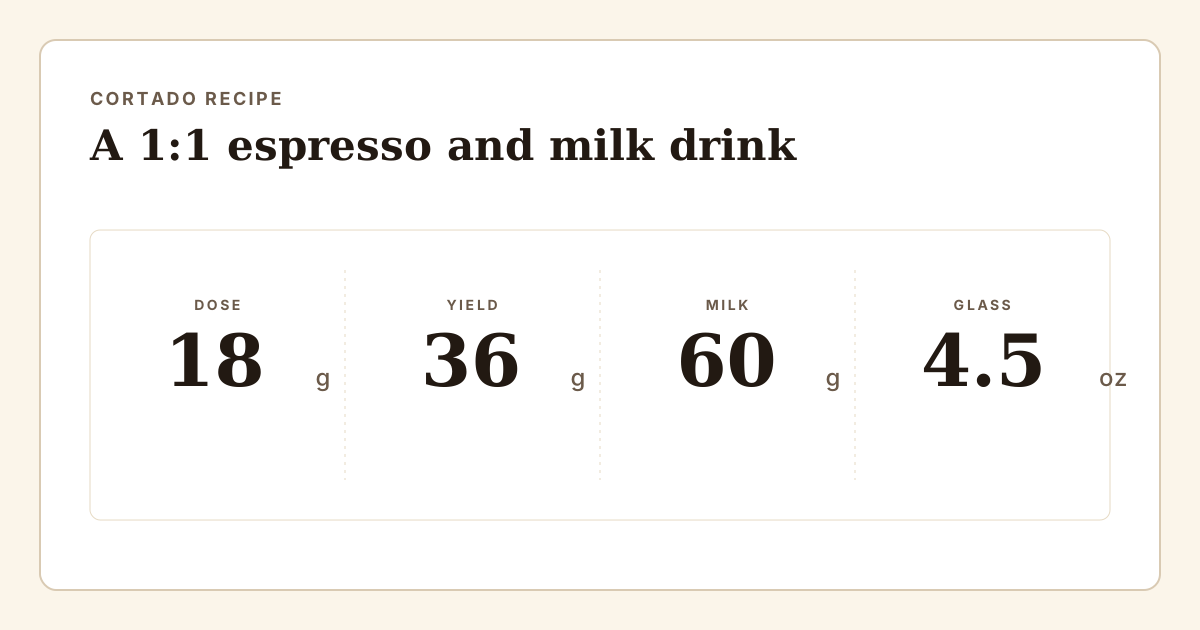
A cortado is a double shot of espresso (about 36 g) cut with an equal volume of lightly textured steamed milk, served in a 4.5 oz glass. Pull a normal 1:2 espresso shot, steam whole milk to about 55 to 60°C (130 to 140°F) with very little foam (thinner than a latte, much thinner than a cappuccino), and pour about 60 g of it in. Total volume lands around 4 oz. It should taste like espresso softened and sweetened by the milk, with the coffee still leading.
What a cortado actually is
The cortado comes from Spain, where the name means espresso “cut” with a little warm milk to take the edge off. Some Latin American versions run sweeter; the Cuban cortadito, for example, usually has sugar whipped into the espresso. The US specialty-cafe version, sometimes called a Gibraltar, stays close to the Spanish one: a double shot with an equal volume of steamed milk and no sugar.
The defining feature is the ratio: roughly 1:1 espresso to milk by volume. Crema makes espresso bulky, so by weight that is about 36 g of espresso to 60 g of milk. Approximate espresso-to-milk ratios for the neighbouring drinks:
- Macchiato: espresso with a spoon of foam, roughly 1:0.5.
- Cortado: espresso with equal textured milk, 1:1 by volume. About 4 oz total.
- Piccolo: ristretto with milk to about 3 oz, roughly 1:2.
- Flat white: double shot with milk to about 6 oz, roughly 1:3 by weight. See how to make a flat white.
- Cappuccino: double shot with milk to about 6 oz under a distinct foam dome. See how to make a cappuccino at home.
- Latte: double shot with milk to 8 oz or more, roughly 1:5 or milkier. See how to make a latte at home.
If the espresso tastes as clear as the milk and the drink is gone in four or five sips, it’s probably a cortado. If it takes ten sips and mostly tastes of warm milk, it has drifted toward a small latte.
The recipe
In the cup:
- 18 g dose in, 36 g espresso out, 25 to 30 seconds. Standard 1:2 double.
- About 60 g of whole milk in the glass, steamed to 55 to 60°C (130 to 140°F) with a thin microfoam (a few millimetres of foam, no more).
- Pour the milk into the espresso until the glass is nearly full. Total volume around 4 oz.
Glass: a 4.5 oz Gibraltar or any small tumbler in the 4 to 5 oz range. A 6 oz cappuccino cup will look half empty and cool the drink faster.
Bean choice: medium roast espresso blends work best. Light roasts can taste thin and sharp under milk, and very dark roasts can turn ashy. A chocolatey, nutty medium is the classic cortado bean. See how to choose espresso beans if you’re picking a bag specifically for milk drinks.
Step by step
1. Pull the shot into the glass
Weigh 18g into the basket, distribute, tamp, and pull directly into the cortado glass on the scale. Stop at 36 g. If the shot pulls sour or bitter, fix that before you steam milk; 60 g of milk will not hide it. If the shot’s off, work through dialing in before adding milk.
2. Purge and steam
Purge the wand. Pour about 100 g of cold milk into a cold 12 oz pitcher. That is more than the drink needs, but much less milk than this leaves too little depth to control the wand; you will pour about 60 g and have a little left over. Set the tip just below the surface, turn on full steam, and stretch for only 1 to 2 seconds: a brief hiss of air, much shorter than the stretch for a cappuccino.
Then submerge the tip 5 to 10mm deeper and spin the milk into a vortex. Turn off the steam at about 55 to 60°C (130 to 140°F), when the pitcher base is hot but still holdable for a couple of seconds. That is slightly cooler than the 60 to 65°C used for a latte, because a cortado is drunk in a few minutes rather than sipped slowly. Use a thermometer for the first ten or so drinks until your hand learns the feel.
The result should look like wet paint: glossy, thin, no visible bubbles, and folding back into itself when you swirl the pitcher. It should be a little thinner than latte milk. See how to steam milk for latte art for the general steaming mechanics; the only difference for a cortado is you stretch less.
3. Pour
Swirl the pitcher to keep the milk integrated. Start the pour with the spout 4 to 5cm above the glass to push through the crema, then drop the spout close as the glass fills. A small heart is possible, but there is very little room in a 4.5 oz glass. A clean pour that finishes with a small white dot in the middle is easier at this volume and looks tidy.
Fill until the glass is full to about 5mm from the rim.
4. Drink it soon
A cortado is meant to be finished within a few minutes, while it’s still warm. The small volume cools quickly, so if you prefer to sip slowly over twenty minutes, a latte or flat white will hold its temperature better.
Why home cortados usually miss
Too much milk. The most common error. Pouring until the drink looks pale and full usually lands at 1:2 or 1:3, which is a small flat white. Weigh the milk you pour a few times to calibrate your eye; 60 g looks like less than you expect.
Too much foam. A cortado has almost no foam. If you steamed milk the way you’d steam it for a cappuccino and just used less of it, you have foam-dense milk that separates from the espresso and sits on top. The milk needs to be thin enough to fold into the shot, not float on it.
Milk too hot. Past about 70°C (160°F) milk loses sweetness and starts to taste cooked. With so little milk in the glass, there is nothing to mask it.
A variable shot. With this much espresso relative to milk, every shot-to-shot difference comes through. If your shots swing from one day to the next, work through why espresso shots are inconsistent first.
Common mistakes
Pulling a single shot instead of a double. A cortado wants a full double (36g). A single shot with 30 g of milk tastes thin, and any small defect in the shot dominates. If your basket is a single, pull two singles or move to a double basket for milk drinks.
Using a large pitcher. A small amount of milk in a 20 oz pitcher is too shallow to submerge the tip and build a whirlpool. Use a 12 oz pitcher for one cortado; a 20 oz pitcher suits two larger drinks.
Attempting a full tulip. A 4.5 oz glass leaves room for only two or three pushes of milk, so multi-stack patterns tend to come out lopsided. Simple pours look better at this size.
Skipping the swirl before pouring. Steamed milk starts separating within seconds. Pour without swirling and the first part is thin liquid milk while the last is a plug of foam. Swirl the pitcher right before you pour.
Reaching for skim or regular oat milk. Skim milk makes stiff, dry foam rather than silky microfoam. Regular oat milk often textures poorly and can separate against hot espresso. Whole milk or a barista-formulated oat milk gives the most reliable results.
Troubleshooting
My cortado tastes bitter and burnt. Either the shot is over-extracted or the milk is over-heated. If the espresso alone tastes fine, blame the milk temperature; steam to a lower target next time (about 55°C / 130°F). If the espresso itself is harsh, see why is my espresso bitter.
My cortado tastes sour and thin. The shot is under-extracted. Milk won’t cover a sour shot in a drink this small. Re-dial the espresso; why is my espresso sour covers the fixes. Also confirm the beans aren’t stale, since aged beans often taste sour in milk long before they taste bad straight.
The milk sits in a layer on top of the espresso instead of mixing. The milk is over-textured; you stretched it like a cappuccino. Cut the stretch to a second or so. Also swirl the pitcher right before pouring, and start the pour from a little higher so the milk sinks through the crema.
The glass is only half full after 60 g of milk. A 36 g double plus 60 g of textured milk fills a 4.5 oz glass to about 90%. If yours is well short of that, check the shot yield on the scale; a shot that ran short or a larger glass is the usual cause. If the glass overflows before you reach 60 g, the milk is carrying too much foam.
The drink cools off before I finish it. Warm the glass first with water from the hot water tap or by rinsing it under the group head. A cold glass pulls heat out of a drink this small very quickly.
I can’t get a clean pour; the milk comes out in clumps. Usually too much foam has collected on top. Swirl until the surface is glossy, tilt the pitcher so the spout sits close to the milk, and pour a thin, steady stream. Next time stretch less and spend longer in the whirlpool.
Frequently asked
What's the difference between a cortado and a Gibraltar?
Practically nothing. Gibraltar is a US cafe name for a cortado served in the Libbey Gibraltar glass, popularized by San Francisco specialty cafes in the mid-2000s. The recipe is the same: a double shot with an equal volume of lightly textured steamed milk. Order a Gibraltar outside the US and you may get a blank look; order a cortado in a US specialty cafe and you will usually get the same drink.
Cortado vs macchiato vs piccolo, how do I keep them straight?
A macchiato is espresso with a small dollop of foam on top, roughly 1:0.5. A cortado is espresso cut with an equal volume of textured milk, 1:1, no dry foam. A piccolo is a ristretto shot topped up to about 3 oz in a small glass, closer to 1:2 and closer to a tiny latte. The cortado sits between the macchiato and the piccolo in milk volume, and it has the least foam of the three.
Can I make a cortado with a Nespresso or a moka pot?
You can approximate one, but the ratio math changes. A capsule espresso is thinner than a real double, so use one espresso-size capsule (not a lungo) with about 40 g of milk. Moka pot coffee is strong but less syrupy; cut about 30 g of it with 30 g of steamed milk. Neither tastes like a cafe cortado because the coffee base is different, but the proportions carry over.
Do I need a special cortado glass?
No, but a 4.5 oz glass is cheap and sized so a double shot plus its milk fills it. A wider or larger cup makes the drink look short and lets it cool faster. Any 4 to 5 oz vessel works.
Why does my cortado taste weaker than a cafe one?
Two likely causes. Either your shot is under-extracted (pulling fast, tasting sour and thin) which milk then buries entirely, or you're using too much milk. A cortado is roughly equal volumes of espresso and milk, which works out to about 60 g of milk on a 36 g shot. At 100 g of milk or more the drink is closer to a small flat white.