
Why is my espresso bitter?
Bitter espresso is over-extraction. The three real causes, in order, plus the cleaning and bean issues that masquerade as a recipe problem.
TL;DR
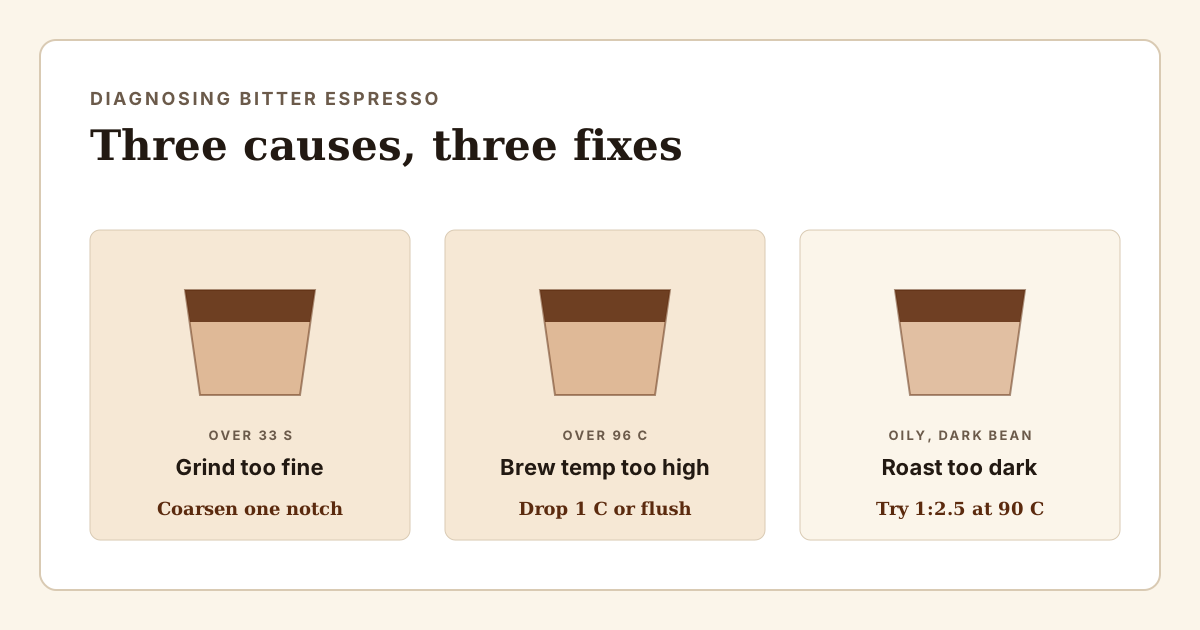
Bitter espresso is almost always over-extraction: water spent too long pulling soluble compounds out of the puck, including the harsh ones. The three causes, in order of likelihood: grind is too fine, brew temperature is too high, or the roast is too dark. Coarsen the grind one notch, keep dose and yield fixed, and re-pull. If that doesn’t fix it in two shots, the bean or the machine is the problem, not the recipe.
If your shot tastes bitter and sour at the same time, that’s not over-extraction. That’s channeling: skip to the troubleshooting section below, or start from the espresso troubleshooting decision tree if you’re not sure what you’re tasting.
What bitter actually means
Bitter is the taste of over-extracted coffee solubles: chlorogenic acid lactones, certain phenolics, and the carbonized compounds in darker roasts. They come out of the puck late in the shot, after the sugars and acids have already been extracted. A balanced espresso pulls the good stuff and stops before the bitter compounds dominate. In a bitter shot, the water kept running and dragged those late compounds into the cup.
Sensorially, bitter is:
- Dry, astringent finish that grips the back of the tongue.
- Burnt-toast or ashtray notes, especially with darker roasts.
- Lingering aftertaste 30+ seconds after you swallow.
- Often paired with a thin, dark, syrupy pour that “blondes” (turns pale) only at the very end of the shot.
If the shot is sharp and lemony, that’s sour, not bitter. Different problem, opposite fix. If it’s harshly acidic and dry at the same time, that’s channeling, which produces both ends of the spectrum in one cup.
The three real causes
1. Grind too fine (most common)
Fine grind means more surface area and more resistance, so water moves through slowly and extracts further. If your shot is bitter and the time clock reads over 33 seconds for a 1:2 ratio, this is your problem. Coarsen one notch on the grinder, purge a couple grams to clear the old setting, and pull again.
What it looks like when you’ve over-corrected: the next shot pulls in 18 seconds and tastes sour. That’s fine. You’ve bracketed the right setting; split the difference and you’re dialed in.
2. Brew temperature too high
Water above roughly 96°C / 205°F at the puck extracts the bitter compounds faster than the sweet ones. Most prosumer machines run hotter than they claim out of the box, and many darker roasts taste bitter at “default” temps because the default was set for medium roasts.
Fixes, in order of how much your machine lets you do:
- PID machines: drop the brew temp by 1°C and re-pull. For dark roasts, 90–92°C often beats 93°C.
- Non-PID single boilers (Gaggia Classic, Silvia): “temperature surf” by flushing a few seconds of water through the group before locking in the portafilter. The flush drops the group head temperature into a more reasonable window.
- Thermoblock machines with no control: you’re stuck with what the manufacturer chose. Compensate with grind and roast instead.
What it looks like when you’ve over-corrected: shot tastes sour and underdeveloped even with a slow pull. Bring temp back up 0.5°C.
3. The roast is dark and you’re treating it like a medium
Dark roasts (oily beans, second-crack development, anything labeled “Italian,” “French,” or “espresso roast” in the supermarket sense) are already partially carbonized. They start bitter and need a shorter, cooler extraction than light or medium roasts. If you’re pulling a dark roast at 93°C with a 1:2 ratio in 30 seconds, of course it’s bitter. That recipe was designed for a different bean.
For dark roasts, try:
- Ratio 1:2, or tighter (down to 1:1.5). Long ratios keep pulling the harsh late compounds; tightening concentrates the sweetness dark roasts do have. Traditional Italian bars pull dark roasts near 1:1.5 for a reason. Full breakdown in espresso ratios explained.
- Temperature 88–91°C.
- Shorter time, around 22–25 seconds.
- Coarser grind than you’d use on a medium roast.
If you’ve done all that and it’s still bitter, the bean is just too dark for your taste. No recipe rescues a beat-up roast.
Less common but worth checking
Stale beans
Beans 6+ weeks past roast lose their sweet aromatic compounds first; the bitter ones stick around. A stale bean tastes flat and bitter, with a muted, papery finish. Check the roast date on the bag (not the “best by” date, which is meaningless). If it’s older than 6 weeks for a typical roast or 4 weeks for a light roast, that’s the issue.
Dirty group head or basket
Old coffee oils oxidize and rancidify. They taste bitter and slightly sour, and they ride along into every shot until you clean. If your machine hasn’t been backflushed with detergent in the last two weeks, do that before changing anything else. The fix is free and often dramatic. A black, gritty stream when you backflush plain water tells you it was overdue.
Pre-ground or pre-doses sitting too long
Coffee starts losing volatiles within seconds of grinding. If you grind in the morning for shots through the day, every shot after the first is more bitter than the first. Grind per-shot. This is non-negotiable.
Water that’s too hard or too alkaline
High-alkalinity water (over 80 ppm bicarbonate) buffers the acids in coffee and lets the bitters dominate. If your tap water is hard, switch to a coffee-specific bottled water (Volvic, Crystal Geyser) or a remineralized RO blend and taste the difference. The shot will brighten noticeably. This is also why a machine pulls better espresso for the first month after descaling.
Common mistakes
Going coarser without re-checking the time. If you grind coarser and the shot still pulls in 35 seconds, the dose is too high or the basket is wrong. Use the timer as the feedback loop, not the grind dial.
Blaming the bean before cleaning the machine. Old portafilter gaskets, scale buildup, and crud in the shower screen all taste bitter. Run a detergent backflush and wipe the screen before buying a new bag.
Adjusting two variables at once. If you change grind and temperature and ratio in the same shot, you can’t tell what worked. Hold dose and yield fixed; move one thing.
Pulling longer ratios to “soften” bitterness. Stretching a 1:2 to a 1:3 dilutes bitter compounds but also keeps extracting them. If the underlying recipe is wrong (grind too fine, temp too high), a lungo just gives you a weaker version of the same bitter shot. Fix the cause.
Trusting the machine’s stock temperature. Many entry-level machines (and a fair number of midrange ones) ship 2–4°C hotter than the spec sheet. If you’ve never measured your machine’s actual brew temp with a Scace device or a thermocouple, you don’t know what you’re working with.
Treating dark roasts as a recipe problem rather than a bean problem. Some beans are roasted to a degree where bitter is the dominant note by design. No technique recovers them. If you don’t like dark roast, buy lighter beans.
Troubleshooting
My shot is bitter AND sour at the same time. That’s channeling, not over-extraction, and the fix is puck prep, not grind. See why does my espresso channel for how to spot and fix it.
The shot looks fine (25–30 seconds, 1:2 ratio) but still tastes bitter. Most likely the temperature or the bean. Drop brew temp 1°C if you can; if you can’t, try the same recipe on a different bean (a known medium roast from a specialty roaster). If the new bean tastes balanced, the original was too dark or too stale. If the new bean is also bitter, your machine is running hot.
It only started tasting bitter this week, with no recipe changes. Bean aging or cleaning. Check the roast date, then backflush with detergent. One of those two fixes solves 90% of “suddenly bitter” cases.
The shot is bitter only in milk drinks, not as a straight espresso. Then it’s not actually bitter; it’s just under-developed for milk. Milk masks acidity and amplifies the perception of body and roast character, so a light-roast shot that tastes balanced neat can taste thin and dry in a latte. For milk drinks, pull a slightly longer shot (1:2.2) on a medium-to-medium-dark roast.
Bitter with crema that looks beautiful (thick, dark, lasting). Dark roast tell. Heavy crema is partly a function of CO2 in fresh dark-roasted beans; it looks great and tells you nothing about taste. Beautiful crema and bitter flavor often arrive together on supermarket espresso roasts.
I tried everything and it’s still bitter. Pull a shot of a known-good third-wave bean (something like a washed Ethiopian from a respected local roaster, roasted within two weeks) at 1:2, 93°C, 27 seconds. If that shot is bitter, your machine has a problem: likely temperature, possibly a fouled brew path. Time for a service or a Scace measurement. If the third-wave shot is balanced, your original bean was the issue.
Frequently asked
Is bitter espresso the same as strong espresso?
No. Strong is concentration (how much dissolved coffee per unit of water). Bitter is which compounds got dissolved. A well-pulled ristretto can be very strong without being bitter, and a weak lungo can taste bitter if it over-extracts. People conflate the two because cheap espresso happens to be both.
Why does my home espresso taste more bitter than the same beans at the cafe?
Three usual reasons: cafes use commercial grinders with flatter particle distributions, their machines hold brew temperature more precisely under load, and they pull through fresher beans (a cafe goes through a bag in a day; you go through one in two weeks). The recipe gap is usually smaller than the equipment gap.
Does pre-infusion help with bitterness?
Sometimes, but indirectly. Pre-infusion (a low-pressure wetting phase before full pressure) reduces channeling, which reduces the bitter-and-sour combination that channeled shots produce. It doesn't fix over-extraction from a too-fine grind or too-hot water.
Should I add sugar to mask bitterness?
If you enjoy it, sure. But sugar in the cup doesn't tell you whether you're improving as a barista. Pull the unsweetened shot first and judge it on its own; sweeten the second one if you want. If you need sugar to make every shot drinkable, fix the shot.
My espresso is bitter only when I make it for guests. What gives?
You're probably making more shots back-to-back than usual, and on a single-boiler machine the group head temperature climbs with each shot. By the third or fourth in a row, you're brewing 2-3°C hotter than the first. Flush a few seconds of water between shots to reset, or wait 60 seconds.