
Why is my espresso sour
Sour espresso is under-extracted. Diagnose the cause in order (grind, time, temperature, dose, beans) and fix the right thing.
TL;DR
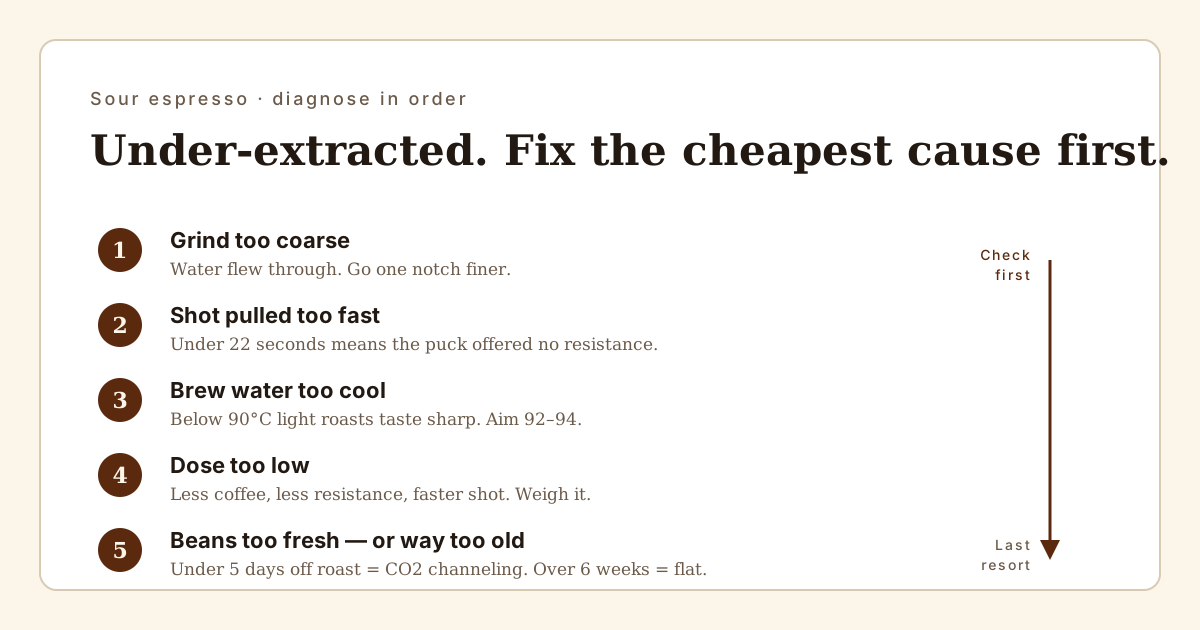
Sour means under-extracted. Water moved through the coffee too fast, pulling out the bright acids but not the sugars that balance them. The fixes, in order of likelihood:
- Grind finer. Most common fix. Go one or two notches finer and pull again.
- Pull longer. If the shot finishes in under 22 seconds, the contact time was too short. A finer grind extends the time naturally.
- Increase brew temperature. Especially for light roasts. Aim for 200–205°F.
- Check beans. Stale (8+ weeks past roast) or fridge-cold beans extract poorly.
- Pull a longer shot. A 1:2 ratio finishing at 25 seconds may be too short for a light roast. Try 1:2.5 or 1:3.
Each of these takes one shot to test. Change one variable at a time.
If you’re not sure your shot is specifically sour vs. some other off-taste, start with the troubleshooting decision tree for the broader diagnostic flow. This guide is the deep dive for sour shots specifically.
What “under-extracted” means
Different compounds in coffee dissolve at different rates: acids first, sugars in the middle, bitters last. An under-extracted shot grabbed the acids and stopped before the sugars caught up. Result: pure acid, no sweetness, sour.
The fix is always to extend the extraction: more time, more contact, or both. Grinding finer slows the water down by packing the puck tighter; raising the temperature dissolves more compounds in the same time; extending the yield runs water through for longer.
Five fixes, ordered by likelihood
1. Grind finer
The default fix because it’s almost always right. A finer grind creates more surface area and packs the puck tighter, slowing the water down and extending contact time. Move one notch finer, pull a shot, taste. If it’s still sour, go another notch.
You’ll know you’ve gone too far when the shot starts tasting bitter or chokes (can’t pull through). At that point, back off half a notch.
2. Check the time
If your shot is finishing in under 22 seconds, the water didn’t have enough time to extract sugars. Time is mostly downstream of grind size, but if your grind is already fine and time is still short, the dose may be too low (less coffee = less resistance) or the basket may be wrong for the dose.
Aim for 25–30 seconds for the 1:2 ratio. Light roasts tolerate longer (28–35 seconds and a 1:2.5 ratio).
3. Brew temperature
Cold espresso extracts less of everything but particularly the sugars and bitters that balance acids. If your machine ran a steam cycle right before the shot, the boiler might be cool. Pull a flush of hot water through the empty group head before locking in the portafilter.
If your machine has temperature control, try 202°F for medium roasts and 204–205°F for light roasts. If it doesn’t, let it warm up for at least 20 minutes before the first shot of the morning.
4. Bean freshness
Stale beans (8+ weeks past roast) lose volatile aromatic compounds first. The flavor that’s left is mostly acid and bitterness, which reads as sour-and-flat. There’s no recipe fix. Replace the beans.
Beans that have been in the fridge or freezer also extract weirdly until they warm up to room temperature. Let beans rest at room temp for at least 30 minutes if they’ve been cold-stored.
5. Light roast specifically
If your beans are light-roast and recently roasted, some sourness is the bean’s character. Don’t try to eliminate it; balance it. A longer shot (1:2.5 or 1:3, finishing at 30+ seconds) extracts more of the underlying sugars without burning the surface flavors. Pair with a higher temperature. The light-roast-specific recipe and adjustment order are in how to dial in light roast espresso.
If you’ve never pulled a light-roast espresso before, expect it to taste different from medium roast. Bright, fruit-forward, more like filter coffee. That’s the bean’s character, not under-extraction.
A common arc for home baristas: spend a couple months thinking light-roast espresso is just sour by definition, slowly notice that the “sourness” has fruit shape and structure to it, then realize the issue was palate calibration, not extraction. Bright acidity is what light roasts do; flat one-dimensional sour is what under-extraction does. Different things.
Common mistakes
Adjusting grind and dose at the same time. You can’t tell which change moved the shot. Hold dose constant, change one thing per pull.
Using too short a shot. A 1:2 finishing in 20 seconds is under-extracted regardless of grind. The recipe assumes 25–30 seconds; if you’re hitting time too early, the issue is recipe, not grind.
Tasting too cold. Espresso continues evolving in the cup. The acids dominate when it’s near boiling; the sugars come forward as it cools. Stir, wait until it’s drinkable temperature (around 130°F), then judge.
Treating sourness as a “this bean is bad” verdict. Most beans can pull a balanced shot with the right recipe. Two or three failed shots usually means the recipe is off, not the coffee.
Troubleshooting
I went finer twice and it’s still sour. Check the dose. If you’re under your basket’s intended dose (under 17g in an 18g basket), the puck has gaps and water finds the fastest path through, ignoring most of the coffee. Re-weigh your dose.
The shot pulls fast and tastes sour, even on the finest grind setting. The grinder’s burrs may be dull, or there’s a calibration issue. Check the grinder’s grind range; many grinders need a quarter-turn past their factory zero point to actually reach espresso fineness.
It’s sour cold and bitter hot, or vice versa. Almost always channeling. Improve distribution (WDT tool or a deliberate stir) and tamp evenness. A bottomless portafilter will tell you immediately whether the water is moving through evenly.
Even balanced shots taste a little sour to me. Could be palate calibration; espresso enthusiasts trained on dark roast often read normal acidity as sourness. Try side-by-side with a known-good cafe shot to recalibrate.
Frequently asked
What does sour espresso actually taste like?
Sharp, puckering acidity. Like biting into an unripe lemon or green apple. It hits the sides of your tongue immediately and lingers. Sour is different from bright acidity (the pleasant fruit-like notes in light-roast beans). Sour is harsh and one-dimensional.
Can the bean itself be the cause?
Light-roast beans naturally have more acidity, which can read as "sour" to a palate accustomed to dark roast. If your beans are recently roasted, light-roast, and from a single origin known for acidity (Ethiopian, Kenyan), some sourness is the bean's character, not a defect. Tame it by extending the shot or grinding finer; don't try to eliminate it entirely.
Is sour the same as acidic?
No. Acidity is the family of flavor compounds that gives espresso its brightness and complexity. Citric, malic, and tartaric acids. "Sour" usually means those acids are unbalanced because the sugars and bitter compounds that should accompany them weren't extracted. Good espresso has acidity balanced by sweetness; a sour shot has the acidity without that balance.
My shots are sour AND bitter at the same time. What's going on?
Channeling. Water found a fast path through one part of the puck (under-extracted there → sour) while sitting too long against another part (over-extracted there → bitter). The fix is distribution and tamp evenness, not grind. Going finer or coarser won't help if water isn't moving through the puck uniformly.
Does brew temperature matter for sour shots?
Yes, significantly for light roasts, less for dark. Cold-brewed espresso can't extract enough sugars to balance the acids. Most prosumer machines brew at 200°F by default; if your machine has temperature control, try 202–205°F for light roasts. If it doesn't, give the machine a longer warm-up and pull a "flush" of hot water through the group head right before the shot.