
Espresso machine cleaning schedule: daily, weekly, monthly, quarterly
A no-nonsense cleaning cadence for home espresso machines. What to do every shot, every week, every month, and every quarter, and why each one matters.
What you'll need
- Cafiza (or equivalent espresso machine cleaner) : Sodium percarbonate based. The blue Cafiza tub lasts most home users two to three years.
- A blind (blank) backflush disc : Rubber or steel disc that fits your portafilter basket. Often included with the machine; if not, $5.
- A real descaler : Citric acid or a purpose-made descaler like Durgol. Not vinegar; vinegar attacks brass and leaves a smell that takes weeks to flush out.
- Microfiber cloths, two of them : One for the steam wand only, one for everything else. Cross-contamination of milk residue onto the group head is gross and avoidable.
- A group head brush : Stiff nylon, angled. The cheap ones work fine; you'll replace it once a year.
TL;DR
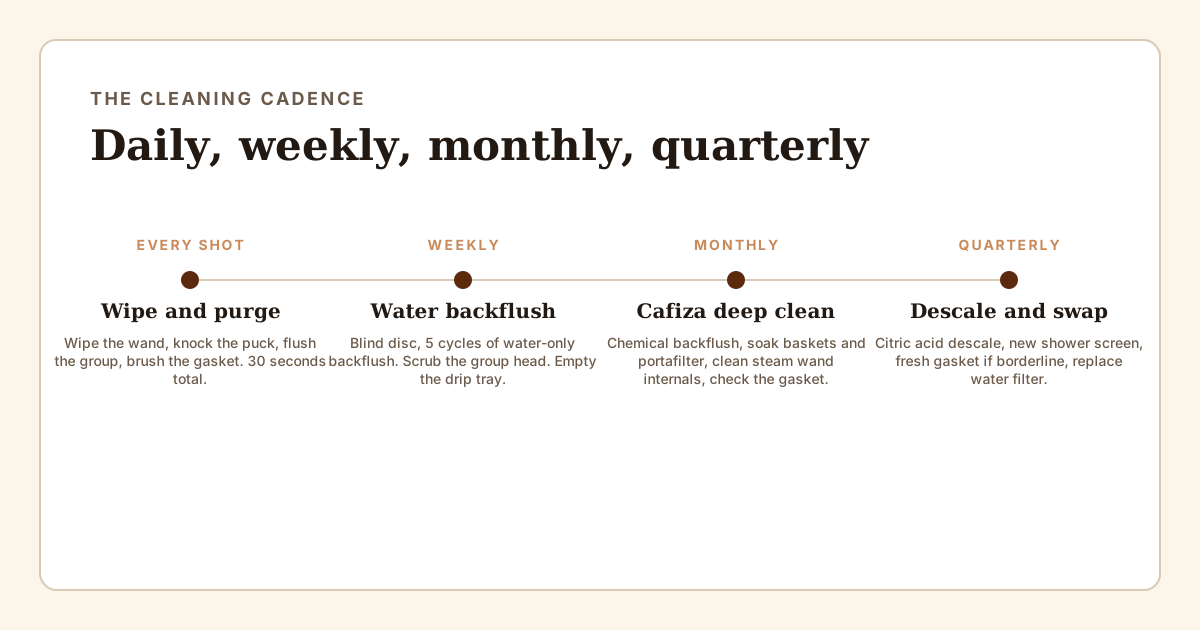
Wipe the steam wand and purge the group after every shot. Backflush with water and brush the group head weekly. Chemical backflush with Cafiza, soak the portafilter and baskets, and clean the steam wand internals monthly. Descale and replace the shower screen quarterly, or sooner if you’re on hard water. Skipping the daily steps is what kills home machines, not skipping the quarterly ones.
Most home machine failures (stuck three-way valves, scaled boilers, sour-tasting shots from a previously dialed-in bean) trace back to one of these four cadences being neglected. Treat the schedule below as a floor.
After every shot (daily, 30 seconds)
Do these four things, every shot, without exception. They take less time than the shot itself.
- Purge the steam wand before and wipe immediately after. Open the steam valve for one second before steaming to clear any condensate. After steaming, wipe the wand with a dedicated damp microfiber cloth and purge again to clear milk from inside the tip. Milk left inside a wand cooks onto the internal walls within minutes and is almost impossible to remove later.
- Knock the puck and rinse the basket. Don’t leave a spent puck sitting in the portafilter. It oxidizes, the basket pores clog, and the next shot tastes off before you’ve even pulled it.
- Purge the group head. Pull the portafilter out, run a 2-second flush from the group. This clears spent grounds from the shower screen and brings fresh water to the group for the next shot.
- Wipe the group gasket with the group brush. One quick swirl. Coffee fines stuck to the gasket are the single most common cause of a portafilter that “won’t seat right” after a few weeks.
Failure mode if you skip: The first symptom is usually the steam wand. Milk dries inside the tip and the holes start producing uneven steam, which wrecks your microfoam without telling you why. By the time you notice, you’ve got two weeks of crusted milk inside the wand to dig out.
Weekly (5 minutes)
Once a week, on a day you’ll remember (Sunday morning works for most people because the machine is already on):
- Water backflush. Put the blind disc in the portafilter, lock it in, run the brew cycle for 10 seconds, stop, wait 5 seconds, repeat 5 times. This forces water back through the three-way valve and flushes spent coffee from the solenoid. Even on a clean machine you’ll see brown water come out of the drip tray; that’s what you’re getting rid of. Full procedure, machine compatibility, and what to do when it goes wrong: how to backflush an espresso machine.
- Scrub the group head with the brush. Hot machine, brush in a circular motion around the gasket and shower screen for 15 seconds, then flush again. You’re after the dark ring of oil that builds up around the edge of the shower screen.
- Empty and rinse the drip tray and water tank. Drip trays grow biofilm if you let them sit with stale water. Rinse with hot soapy water, no detergent residue.
- Wipe the body of the machine. Cosmetic but useful: dried milk splatter on stainless steel etches the finish over months.
Failure mode if you skip: The three-way valve sticks. You’ll know because the shot won’t have its usual “pfft” of pressure release when it finishes, and the puck will be soupy when you knock it out instead of a dry hockey puck. Stuck valves can usually be freed with an aggressive chemical backflush, but a few cycles of neglect can require disassembly.
Monthly (20 to 30 minutes)
Of the four cadences, this is the one that slips first, and a few months later the espresso that used to be great has quietly gone mediocre.
- Chemical backflush with Cafiza. Half a teaspoon (about 2 g) of Cafiza into the blind disc, lock the portafilter in, run the brew for 10 seconds, stop, wait 10 seconds, repeat 5 times. Then remove the portafilter, flush the group for 10 seconds, reinsert with the blind disc (no Cafiza), and do another 5 cycles of water-only backflush to rinse. The rinse step is non-negotiable; Cafiza residue tastes vile and is mildly caustic.
- Soak the portafilter, baskets, and shower screen. Drop them in a bowl of hot water with a teaspoon of Cafiza for 15 to 20 minutes. The water will turn dark brown. Rinse thoroughly. Don’t soak the portafilter handle: most have a wood or phenolic grip that the soak will discolor. Just the metal head. The full routine, including the weekly basket soak and the parts that wear out, is in how to clean an espresso machine portafilter.
- Clean the steam wand internals. Unscrew the steam tip (most are hex or knurled, hand-tight). Soak the tip in Cafiza solution for 15 minutes alongside the baskets. Run a pipe cleaner or a thin wire through the inside of the wand to clear the dip tube. Refit, purge with steam to confirm even flow from all holes. Full method, the weekly-soak upgrade for daily milk steamers, and the stuck-tip fixes are in how to clean a steam wand.
- Inspect the group gasket. Press the portafilter in. If it locks past 6 o’clock (past horizontal), the gasket is compressing. Past 7 o’clock means it’s time to replace. Gaskets are $3 to $8 and take 5 minutes to swap on most machines.
Failure mode if you skip: Shots taste increasingly bitter and astringent even with fresh beans and the same recipe. The rancid oil coating inside the group head and three-way valve is leaching into every shot. People often blame the beans or chase recipe changes for weeks before realizing the machine itself is the source.
Quarterly (45 minutes plus a soak)
Every three months. Put it on the calendar.
- Descale. Empty the tank, fill with descaling solution (30 g citric acid per liter, or follow the bottle for Durgol). Run a third of the tank through the group, a third through the steam wand, a third through the hot water spout if you have one. Let the rest sit in the boiler for 20 minutes. Drain. Refill with clean water and flush at least 3 full tanks through every circuit. The smell test is the rinse test: if you can smell descaler in the output, keep flushing. Full step-by-step, with the citric-acid dilution and the heat-exchanger caveats, is in how to descale your espresso machine.
- Replace the shower screen. Or at least remove it (one screw on most machines), soak in Cafiza overnight, and reinstall. Screens are $5 to $15 and getting a fresh one quarterly is cheaper than the espresso you’ll waste on a clogged one.
- Replace the group gasket if it’s borderline. Even if it still seals, gaskets harden over time and start leaking under pressure. A leaking gasket causes channeling that mimics a dial-in problem.
- Check the water softener / filter. If your machine has an internal softener cartridge (most prosumer machines do), swap it. If you use a Brita or similar on the input, replace the filter.
Failure mode if you skip: Scale builds up in the boiler and on the heating element. The first signs are subtle (slower temp recovery, slightly weaker steam) but the failure mode is dramatic: a scaled heating element runs hotter to compensate, eventually burns out, and replacement is a $200+ repair on most machines. Descaling is the cheapest insurance you can buy.
Hard water changes everything
If you’re on municipal water above 150 ppm total dissolved solids (most of the US southwest, much of the UK, most of Europe outside Scandinavia), the quarterly descale becomes a six-to-eight-week descale. Get a TDS meter ($15) and test your tap. If you’re above 200 ppm, switch to bottled water, RO with remineralization, or a third-wave-water recipe. Descaling a heavily scaled machine never gets you back to factory condition; prevention is the only real strategy.
Soft water (under 50 ppm) has the opposite problem: it’s aggressive and can leach minerals from the boiler. The sweet spot for espresso is 50 to 100 ppm with some bicarbonate buffering. This matters more than most beginners realize.
Common mistakes
Using dish soap on the portafilter or baskets. Soap residue is harder to rinse than coffee oils and tastes worse in the cup. Cafiza or hot water only.
Backflushing a machine that doesn’t have a three-way valve. Most pump machines do; some entry-level ones (older Gaggia Classics pre-2015, certain DeLonghi models) don’t. Backflushing a machine without a three-way valve forces pressure back into the pump and can damage it. Check your manual before the first backflush.
Descaling with vinegar. Already covered, but worth repeating: it damages brass, leaves a smell that lingers for weeks, and isn’t even particularly effective at dissolving heavy scale. Citric acid powder costs $8 a pound and lasts years.
Skipping the rinse cycles after chemical backflush. Cafiza residue in your next shot tastes like soap and chemical burn. Five water-only backflushes after every chemical one. Non-negotiable.
Cleaning the steam wand last. Milk that dries on a hot wand bonds to the chrome and is twice as hard to remove as milk wiped off a warm one. Wipe immediately, every time, before you do anything else.
Treating the schedule as optional once the machine “feels fine.” A machine that feels fine is just one whose problems haven’t surfaced yet. By the time symptoms appear, you’re already looking at a longer recovery or a service bill.
Troubleshooting
My machine is hissing or leaking from the group head during a shot. Group gasket. Almost certainly. They wear out faster than the quarterly check assumes if you tamp aggressively or pull a lot of shots. Swap it; it’s a 10-minute job on most home machines and the part is under $10.
Backflush water comes out clear, even though I haven’t done it in weeks. Either you’re already cleaner than you think (unlikely on a machine you haven’t backflushed), or your three-way valve isn’t routing water back through the group properly. Try a chemical backflush; if it stays clear, get the valve inspected.
Descaling didn’t seem to do anything; flow rate is still slow. The blockage is downstream of the boiler, probably in the shower screen or the group head channels, not in the boiler itself. Remove the screen, soak overnight in Cafiza, and use a thin wire to clear the channels in the group head dispersion block.
Steam pressure has dropped over the last few months. Usually scale in the steam circuit (different path than the brew circuit, so brew can be fine while steam degrades) or a clogged steam tip. Soak the tip in Cafiza, descale the steam path specifically (run descaler through the wand, not just the group), and check the boiler pressurestat if pressure is still low.
The machine smells like chemicals after I clean it. You under-rinsed. Run three full tanks of fresh water through every circuit, pulling water through the group, the wand, and the hot water spout. The smell should be gone. If it persists, you may have used too much descaler or left it in too long; nothing to do but keep flushing.
Frequently asked
Do I really need to backflush every week if I only pull two shots a day?
Yes. Coffee oils accumulate based on shots pulled, not days passed, but home machines that sit unused also collect stale residue in the three-way valve. Once a week with water (no detergent) at minimum; chemical backflush every two weeks is fine for low-volume users.
Can I use vinegar to descale?
No. Vinegar is acidic enough to dissolve scale but it also attacks brass and copper internals, leaves a persistent smell in the boiler, and takes 15+ flush cycles to fully rinse. Citric acid (cheap, food-grade, sold as a powder) does the same job without the damage. Use 30 g per liter of water.
How do I know if my machine needs descaling sooner than quarterly?
Two signals: noticeably longer time to reach brew temp, and reduced flow rate at the group head with a clean basket. If you live in hard water territory (above 150 ppm) and don't use a softener, descale every six to eight weeks instead of quarterly.
My machine says 'no descaling needed, use filtered water.' True?
Half true. Filtered water (a Brita or similar) reduces scale but doesn't eliminate it. Reverse osmosis or a dedicated espresso water recipe (third-wave water, or DIY with distilled + minerals) actually does. Most 'never descale' claims assume RO-quality input water that very few home users actually have.
Do I need to clean the grinder on this schedule too?
Yes, but separately. Wipe the hopper weekly, brush out the burr chamber monthly, and do a full burr disassembly and clean quarterly. Rancilio-style grinder cleaning tablets (Grindz, Cafiza grinder version) work for a quick chamber clean between full disassemblies.