
How to make a cappuccino at home
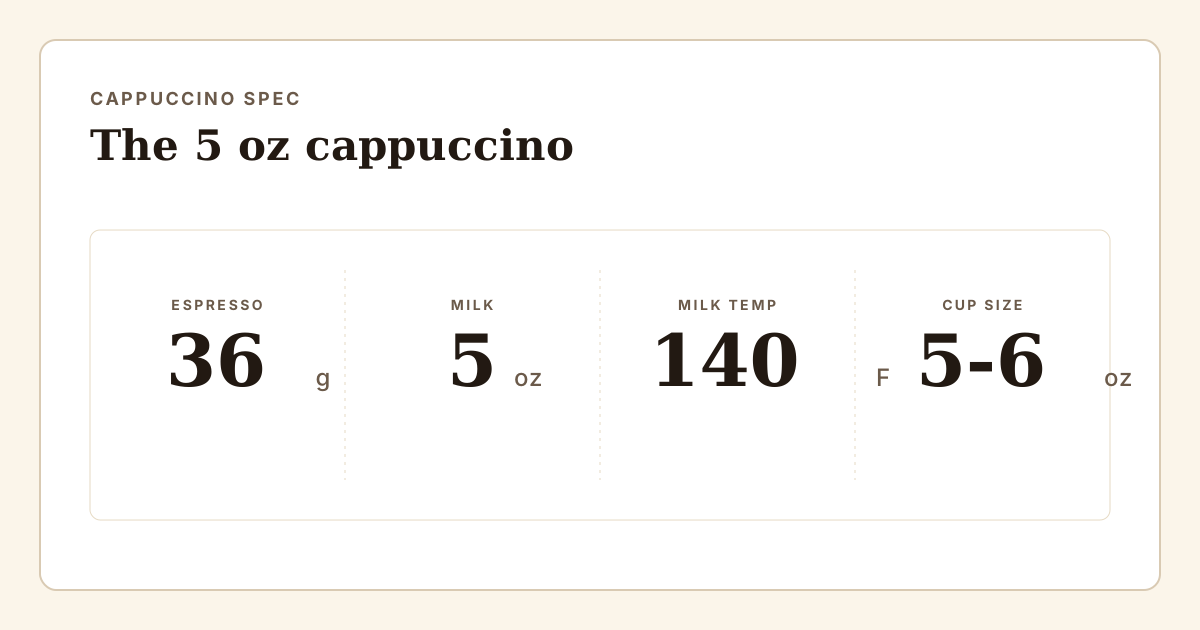
A real Italian-style cappuccino in 90 seconds: 36 g espresso, 5 oz of steamed whole milk at 140°F, served in a 5 to 6 oz cup.
What you'll need
- A 12 oz stainless steel steaming pitcher : Twice the volume of the milk you're steaming. A 6 oz pitcher won't work for a cappuccino; the milk has nowhere to grow.
- A 5 to 6 oz ceramic cappuccino cup : Smaller than you think. The American 'cappuccino mug' is usually 10-12 oz, which is actually a latte cup.
- Cold whole milk : Standard pasteurized, not ultra-pasteurized. Check the carton; UHT milk foams worse.
- A clip-on milk thermometer : Optional but useful for the first two weeks. 140°F is the target. After that you'll feel it through the pitcher.
- A damp wand cloth : Dedicated to the steam wand only. Wipe immediately after every steam or you're cleaning cement off the tip later.
TL;DR
A cappuccino is a double shot of espresso (about 36 g) topped with 4 to 5 oz of steamed milk that’s roughly half foam, half liquid, served in a 5 to 6 oz cup. Pull the shot first, steam the milk to 140°F (60°C) with visible glossy microfoam, and pour. The whole drink takes 90 seconds once you’re practiced. The hardest part isn’t the espresso, it’s stretching the milk enough to get real foam without going past silky into stiff meringue.
What a cappuccino actually is
A traditional Italian cappuccino is a small drink: 5 to 6 oz total, served in a ceramic cup, espresso to milk roughly 1:3 to 1:4 by volume. Half of the milk volume is foam. That’s the whole specification.
A latte is the same drink, scaled up to 8 to 12 oz with proportionally less foam. A flat white is between them, denser, more liquid texture. A “wet” cappuccino leans toward latte; a “dry” cappuccino is mostly foam over espresso. The classic version is in the middle: equal liquid and foam by volume in the cup, with the foam thick enough to hold a spoon up briefly but loose enough to pour latte art.
If you’ve only had Starbucks cappuccinos, recalibrate. Those are 12 oz with stiff dry foam scooped on top. The real thing is smaller, denser, and integrated.
The recipe
For one cappuccino in a 5.5 oz cup:
- Espresso: 18 g in, 36 g out, 25 to 30 seconds. Standard 1:2 double.
- Milk: 5 oz (about 150 ml) of cold whole milk, poured into a 12 oz pitcher.
- Final temp: 140°F (60°C). Hot enough to feel hot, cool enough to taste sweet.
- Texture: glossy, paint-like microfoam. No visible bubbles on the surface.
Whole milk is the default. The fat carries flavor and the proteins make stable foam. Skim foams faster but goes stiff and tastes flat. Oat milk works (use a barista-formulation; regular oat milk separates). Almond is hard and inconsistent. If you’re starting out, use whole dairy until your technique is solid, then experiment.
Step by step
1. Prep the milk and the cup
Pour 5 oz of cold milk into a cold 12 oz steaming pitcher. The pitcher should be twice the milk volume; the milk needs headroom to expand. Pre-warm the cup with hot water from the machine and tip it out. Cold ceramic dumps 10°F off your drink in the first sip.
2. Pull the shot directly into the cup
Lock the portafilter in, place the warm cup under it, pull a 36 g double. If you’re shaky on espresso technique, work through how to dial in espresso first. A bad shot makes a bad cappuccino no matter how good the milk is.
3. Purge the steam wand
Open the steam valve for 2 seconds before plunging it into the milk. This clears condensed water that would otherwise dilute the milk. Wipe the wand tip.
4. Steam the milk
The complete method (stretching, texturing, the swirl, target temperatures) lives in how to steam milk for latte art. What changes for a cappuccino:
- Stretch longer than you would for a latte. A cappuccino wants the most foam of the three milk drinks, so let the “tssk-tssk-tssk” air phase run until the milk has roughly doubled in volume and reached the bottom of the spout or just under. That’s a long stretch by milk-drink standards.
- Target 140°F and stop. Cappuccino milk is still glossy microfoam, not stiff diner foam; it’s just thicker than latte milk.
- The ratio you’re aiming for is half foam, half liquid by volume once it’s in the cup. If the foam sits as a separate dry cap, you stretched into meringue instead of paint.
Close the steam valve before lifting the wand out, then wipe and purge it immediately.
5. Swirl, then pour
Swirl the pitcher hard until the surface is glossy wet paint with no visible bubbles, then tap once or twice to pop any large ones. Cappuccino foam is thicker, so it separates fast in the pitcher; don’t let it sit.
Pour from height (4 to 6 inches above the cup) into the center of the espresso to break the crema and integrate. When the cup is about half full, lower the spout close to the surface, slow down, and pour through the foam line to finish. The drink should rise to the rim with a small dome of foam on top.
6. Drink it within 2 minutes
Microfoam collapses. The texture you just built holds for about two minutes before the foam separates from the liquid. Cappuccinos don’t reheat; the proteins denature and the foam dies.
Steaming on a home machine
The steaming faults common to every milk drink (overstretching into stiff foam, scalding past 160°F) are covered in how to steam milk for latte art. The one that’s specific to making a cappuccino at home is wand power.
Sub-$500 single-boiler machines (Bambino, Gaggia Classic) make perfectly good cappuccinos, but the wand is slower and less forgiving than a prosumer dual boiler. Plan for 20 to 30 seconds of steam time instead of the 8 to 10 seconds a cafe machine takes. That’s fine; you just have to start the long cappuccino stretch immediately and not panic when it takes a while to come up to temperature. A weak wand punishes hesitation more than anything else.
Common mistakes
Pouring espresso into pre-steamed milk. The shot should be ready first, then milk is steamed and poured immediately into it. Espresso loses crema and turns bitter sitting in a cup; milk loses microfoam in 90 seconds. Steam the milk while the shot is pulling, or pull, then steam.
Steaming in a tiny pitcher. A 6 oz pitcher with 5 oz of milk has nowhere to grow. The milk climbs the wand and you can’t whirlpool. Use a 12 oz pitcher minimum for one cappuccino, 20 oz for two.
Filling the pitcher too full. Milk volume nearly doubles. Fill to the bottom of the spout at most. Above that, you’ll overflow during stretching and lose the foam over the edge.
Skipping the swirl. A pitcher of well-textured milk that’s been sitting for 10 seconds is already separating. Swirl hard until the surface is glossy and homogeneous before pouring. If you can see bubbles on the surface, keep swirling.
Using ultra-pasteurized milk. UHT milk (most shelf-stable, organic, and lactose-free milks in the US) foams worse than regular pasteurized milk. The proteins are partially denatured already. If your milk steaming is fighting you, check the carton; switch to standard pasteurized whole milk and try again.
Wiping the wand later. Steamed-on milk turns to cement on a hot wand tip in 30 seconds. Purge and wipe with a damp cloth the moment you finish steaming, every single time. Skip this once and you’re spending five minutes with a pin and a soak.
Troubleshooting
My foam has big visible bubbles. You either stretched too long in phase 1 or didn’t whirlpool long enough in phase 2. Big bubbles mean unbroken air; the whirlpool is what shears them into microfoam. Try stretching for 1 second less and texturing for 5 seconds more on the next milk.
The milk tastes burnt or flat. Overheated. You’re past 150°F. The lactose-derived sweetness drops off a cliff above this temperature. Pull the wand out earlier; the pitcher should be hot enough that you have to let go within a second of touching the side, but not painful.
The foam separates and sits on top of the espresso instead of integrating. Foam too stiff (overstretched) or pour technique too gentle. Pour the first half of the milk from height (4 to 6 inches) right into the center of the crema so it breaks through. If the foam still sits on top, you stretched too much; aim for the wand tip to stop hissing within 3 to 4 seconds.
My wand doesn’t whirlpool, just bubbles straight up. Tip position. The wand needs to be off-center and angled so the steam pushes the milk in a circle around the pitcher. Try tilting the pitcher 15 degrees and positioning the tip near the spout side, pointing toward the back wall. If your wand is single-hole (common on entry machines), this matters even more.
I can’t get latte art on a cappuccino. Cappuccino foam is thicker than latte foam by design, which makes art harder. If you want art, stretch slightly less (aim for 1.5x volume instead of 2x) and pour more confidently from closer to the cup. Or pull a flat white instead; it’s the easiest milk drink for art.
Everything tastes weak. Check the cup size. A “cappuccino mug” sold in US housewares is often 10 to 12 oz, twice the traditional size. A double shot in a 12 oz cup with 10 oz of milk is a latte, not a cappuccino, and it’ll taste milky and thin. Get a 5 to 6 oz ceramic cup and the ratios fix themselves.
Frequently asked
Cappuccino vs latte vs flat white, what's the actual difference?
Same espresso base, different milk volume and foam ratio. Cappuccino: 5-6 oz total, half foam by volume. Flat white: 5-6 oz total, thin layer of microfoam, mostly liquid. Latte: 8-12 oz total, thin foam, mostly liquid. The cappuccino is the foamiest and smallest of the three.
Can I make a cappuccino without a steam wand?
Sort of. A handheld milk frother or a French press can produce foam, but it's dry, airy foam, not microfoam, and the texture is wrong. The result is closer to a 1980s diner cappuccino than a modern one. If your machine has only a panarello (a frothing-aid attachment), remove the plastic sleeve and you'll have a basic steam wand that works with practice.
Do I need single-origin specialty espresso for a cappuccino?
No. Cappuccinos work better with medium to medium-dark roasts that have enough body to stand up to the milk. Bright, fruity light roasts can get lost. A classic Italian-style blend, or any medium roast labeled 'for espresso,' is a safer bet than a $25/bag Ethiopian natural for this drink.
Why does my home cappuccino taste worse than the cafe even though my espresso is good?
Almost always milk steaming. Cafes steam at 1.5+ bar of steam pressure; home machines run 1.0-1.2. The technique is different and the result is harder to get right at home. Spend a week steaming milk every day (you don't even have to drink it; just practice the texture) and the gap closes fast.
How much foam is 'right' for a cappuccino?
The traditional Italian rule is one-third espresso, one-third steamed milk, one-third foam by volume. In practice, modern cappuccinos lean a bit wetter (half liquid, half foam in the milk portion) to allow latte art. Either is correct. If the foam is sitting visibly on top as a separate layer instead of integrated, it's too dry.
Can I use cold foam or a cold cappuccino?
A cold cappuccino isn't really a thing in the traditional sense; cold milk doesn't foam the same way and the drink loses its identity. What you want is an iced latte with cold foam on top, or a shakerato (espresso shaken with ice). Both are good drinks. Neither is a cappuccino.