
How to dial in espresso
Get a balanced shot from any new bag of beans by adjusting grind, dose, and yield in a tight, repeatable order.
What you'll need
- A scale that reads to 0.1 g : Anything cheap with milligram precision works; the precision matters more than the brand.
- A timer : The one on your phone is fine. The shot timer built into your machine works too.
- A consistent grinder : Stepless or fine-stepped beats coarse-stepped. The grinder you have is almost certainly enough.
- A fresh bag of beans : Roasted within the last 4 weeks. Older beans never dial in cleanly.
TL;DR
Use a 1:2 ratio (e.g. 18 g of ground coffee in, 36 g of espresso out) and aim for the shot to finish in 25 to 30 seconds from the moment you press the brew button. If the shot pulls fast and tastes sour, grind finer. If it pulls slow and tastes bitter, grind coarser. Change one variable at a time. You should be dialed in within three or four shots.
Once a bean is dialed in, the daily routine for repeatable shots is in how to pull a perfect espresso shot. This guide is the iterative process; that one is the day-to-day routine.
The basic recipe
Espresso is a three-number recipe: dose in, yield out, time. For a typical double-basket on a home machine:
- Dose: 18 g of ground coffee. Use whatever your portafilter basket is rated for and stick with it. Most prosumer baskets are 18 g; some are 14 or 20.
- Yield: 36 g of espresso in the cup. That’s a 1:2 ratio, the most common starting point for modern light-to-medium roast espresso.
- Time: 25 to 30 seconds, including the 3 to 5 seconds of pre-infusion if your machine does that.
Dialing in a single shot? Same recipe at half scale: 7 to 10 g in (whatever the single basket is rated for), 1:2 out, same time window. So a 9 g single basket targets 18 g in the cup. Expect the single to need a slightly finer grind than your double, and expect more channeling; the shallow puck is less forgiving of sloppy distribution.
Your job, when dialing in a new bean, is to keep the dose and yield fixed and adjust the grind size until the time lands in the 25–30 second window. That’s it. The rest of this guide is the order to do it in.
Step by step
1. Set your scale and timer
Put a scale under the cup, tare it. Set a timer where you can see it. If your machine has a built-in shot timer, use that.
2. Weigh the dose
Grind into the portafilter, then weigh. Aim for 18.0 g, plus or minus 0.1. If you’re 17.5, grind a little more in; if you’re 18.5, brush some out. Don’t try to “compensate” with a tighter tamp.
3. Distribute and tamp
Tap the side of the portafilter to settle the grounds, give it a quick distribution (a WDT tool, a stir, or a few taps), then tamp straight down with steady pressure. Pressure exactness doesn’t matter; levelness does. A cocked tamp causes channeling, which destroys your dial-in. A channeled shot will taste sour and bitter at the same time, sending you chasing a recipe problem that doesn’t exist.
4. Pull the shot
Lock the portafilter in, place the cup, start the brew and the timer at the same instant. Stop the brew when the scale reads 36 g. Note the time.
5. Taste and adjust
Now decide which direction to move:
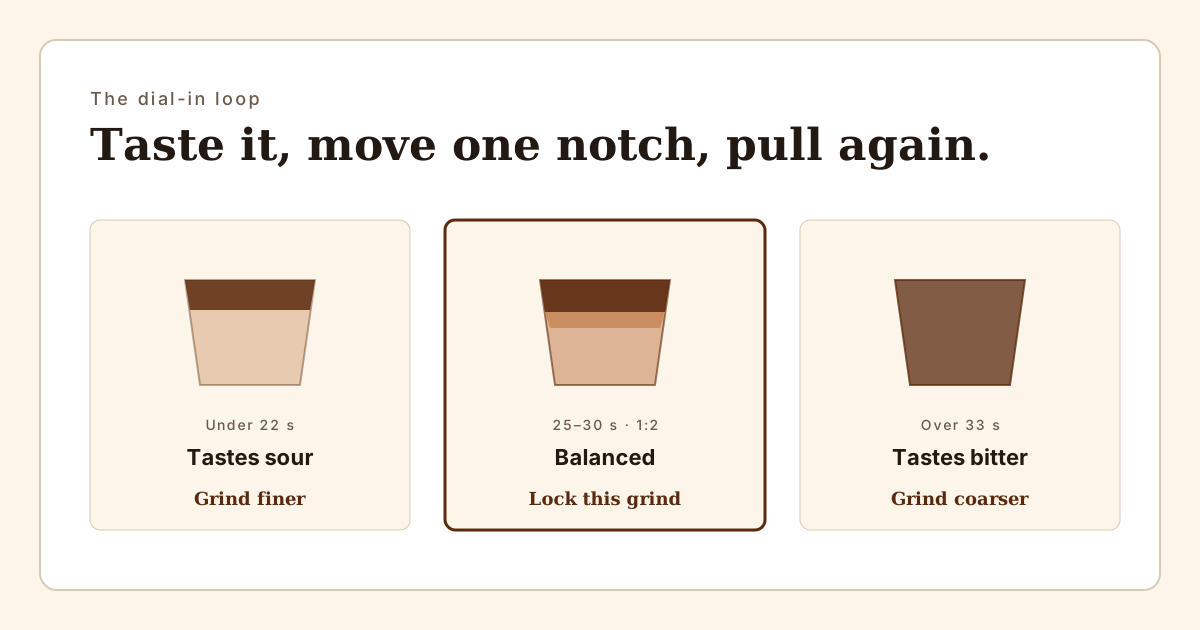
- Shot pulled fast (under 22 seconds), tastes thin or sour. The water moved through too quickly. You’re under-extracting. Grind finer. Make the change small: a single notch on a stepped grinder, a hair on a stepless one.
- Shot pulled slow (over 33 seconds), tastes harsh, bitter, or burnt. The water spent too long in contact with the grounds. You’re over-extracting. Grind coarser.
- Shot pulled in the 25–30 second window and tastes balanced. You’re dialed in. Lock that grind setting for this bean.
Pull the next shot. Repeat until the time lands in range and the cup tastes balanced. Two to four shots is normal; five or more usually means something else is off.
The dial-in chart
The whole feedback loop in one table. Dose and yield stay fixed; grind is the only knob.
| Shot time | Taste | Diagnosis | Adjustment |
|---|---|---|---|
| Under 22 s | Thin, sour, sharp | Under-extracted | Grind finer, one step |
| 22–25 s | Slightly sour | On the edge | Grind finer, half step |
| 25–30 s | Balanced, sweet | Dialed in | Lock the grind |
| 30–33 s | Slightly harsh | On the edge | Grind coarser, half step |
| Over 33 s | Bitter, ashy, dry | Over-extracted | Grind coarser, one step |
Two shots that disagree with the chart mean the problem is upstream of the recipe: sour and bitter together is channeling, and a shot that swings wildly between pulls at the same setting is a dose or distribution problem, not a grind problem.
Dialing in clicks the first time you pull two shots back to back, change one notch on the grinder between them, and taste the difference cleanly. Before that it can feel mystical. After it, you trust the feedback loop.
Common mistakes
Changing more than one variable at a time. If you adjust grind and dose between shots, you can’t tell which change moved the shot. Hold dose and yield fixed, move grind alone.
Tasting before the shot has rested. Espresso changes character in the first 30 seconds in the cup. Stir briefly, wait until it’s cool enough to taste cleanly (around body temperature), and then judge.
Treating the 25–30 second window as gospel. It’s a heuristic, not a rule. Light roasts often pull beautifully at 32–35 seconds; some darker roasts taste best at 22. Use the window to get close, then trust the cup.
Re-dialing every morning. Once a bean is dialed in, it should hold for at least a few days. If it shifts daily, the bean is degassing or the grinder is drifting. The recipe isn’t the problem.
Not weighing the dose. Without a fixed dose, every shot is a different recipe and dialing in is impossible. Buy the scale before you upgrade anything else.
Troubleshooting
If a previously-dialed shot has started going off and you can’t tell what changed, work through the troubleshooting decision tree before re-dialing. Most “dial-in suddenly broke” cases are actually beans aging or a cleaning issue, not the recipe.
The shot chokes (doesn’t flow at all) even on a coarse grind. Almost always too much coffee in the basket, or the grounds are clumping and forming a plug. Re-weigh, distribute more deliberately, then re-pull.
The shot gushes (fast, no resistance) even on a fine grind. Usually channeling: water is finding a single path through the puck. Improve distribution and tamp evenness before going finer. A bottomless portafilter will tell you immediately whether it’s channeling.
The shot is balanced one day and sour the next, with no recipe change. Check the bean date. Beans 6 weeks past roast are often past their prime; they get more sour and more variable as they age.
The grind settings on the grinder don’t seem to do anything. Most grinders have to grind through 0.5 to 1.0 g of beans after a setting change before the new size is in effect. Always purge a few grams after adjusting before pulling the dial-in shot.
Frequently asked
What does "dialing in" espresso actually mean?
Dialing in is the process of adjusting your grinder (and occasionally dose or yield) until a specific bag of beans pulls a balanced shot on your specific machine. Every bean needs its own grind setting, so "dialed in" always means "dialed in for this bean, on this grinder, this week." The core loop is simple. Pull a shot at a fixed dose and yield, taste it, move the grind one step, and repeat until the shot lands in the time window and tastes balanced.
How do I dial in a single shot of espresso?
Same process, smaller numbers. A single basket typically takes 7 to 10 g in (check the basket rating), and the 1:2 ratio still applies, so 9 g in means 18 g out, in the same 25 to 30 second window. Two warnings. Single baskets are noticeably harder to pull clean because the shallower puck channels more easily, and the grind setting that works in your double basket will not transfer exactly. If you have the choice, dial in the double first, then adjust the single from there. Expect it to run slightly finer.
Is there a dial-in chart I can follow?
Yes, see the adjustment chart in this guide. It maps the three shot outcomes (fast and sour, slow and bitter, in-window and balanced) to the single adjustment each one calls for. Print it or keep it near the machine. The chart gets you to the right neighborhood; your taste makes the final call.
How long should it take to dial in a new bean?
Two to four shots usually. If you're past five and still off, the issue is more likely a process problem (inconsistent dose, channeling, stale beans) than the wrong recipe.
Can I dial in without a scale?
Not really. Volume is too inconsistent; a 2 oz shot can be a 30 g pour or a 50 g pour depending on crema. Get a 0.1 g scale before anything else.
Why does the same recipe taste different the next morning?
Beans degas for a week or two after roast and continue changing for weeks after that. Re-dial slightly every few days for the first two weeks of a bag, then once a week as it ages.
My espresso machine doesn't have a pressure gauge. Does that matter?
For dialing in, no. You're adjusting grind to hit a target time. The pressure gauge is helpful for diagnosing equipment problems, not for everyday recipe tuning.
What if my shots taste fine but pull faster or slower than the "rules" say?
Trust your tongue. The 25–30 second window is a starting point, not a verdict. If a 22-second shot tastes balanced on this bean, that's the right shot for this bean.