
How to steam milk for latte art
Stretch, texture, and pour glossy microfoam that holds a heart, tulip, or rosetta on every drink.
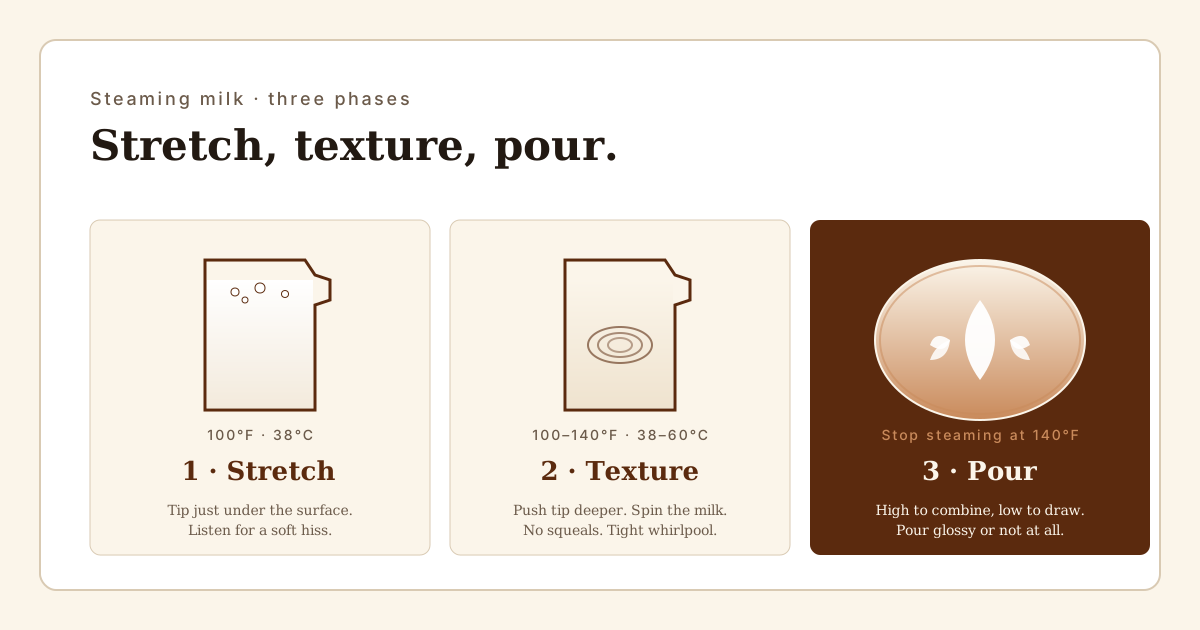
What you'll need
- A 12 oz / 350 ml stainless steel milk pitcher : A spouted pitcher is easier to pour through. The stainless lets you feel the temperature with your hand.
- Cold whole milk : Straight from the fridge. Whole milk gives the most forgiving texture; oat or barista-blend alternatives also work.
- A clean purge cloth : For wiping the steam wand after every use. Don't skip this. Dried milk on the wand is a hygiene problem and ruins the next drink.
- A working steam wand : At least one strong hole, two is better. If your wand barely produces steam, fix that before you fight your milk.
TL;DR
Steam in two stages: stretch for the first 2–3 seconds (introduce air, raise the milk volume), then texture for the rest of the time (incorporate the air into the body of the milk). Stop at 140°F. Pour from height first to integrate the milk into the espresso, then drop the pitcher close to the surface to draw shapes.
Stretch first, then texture
Every steamed-milk pour breaks into two phases. Confusing them is the single biggest reason home espresso milk looks like dish foam.
Stretching is the audible “tsss” phase where you pull the wand tip near the surface and let it inject air. You’re growing the milk’s volume by ~30% and creating tiny bubbles. This phase is short: 2 to 3 seconds for a small pitcher. Any longer and the bubbles stop being microfoam and start being foam-foam.
Texturing is the silent or low-pitched phase that follows. The wand tip is fully submerged, generating a whirlpool. The whirlpool breaks the existing bubbles into smaller and smaller ones until the surface looks glossy and paint-like. This phase takes the milk from “frothy” to “polished.”
A correctly-steamed pitcher of milk is glossy, dense, and silent. It should hiss, then quiet down. If you hear “tsss” all the way through, you over-stretched. If you never hear “tsss” at all, you under-stretched and you’ll get hot milk with no body.
Step by step
1. Fill and prep
Fill the pitcher to where the spout starts to bend, about a third for a 12 oz pitcher when making one drink. Cold milk only. Wipe the wand and purge it for one second to clear condensate.
2. Position the wand
Tilt the pitcher slightly. Submerge the wand tip just below the surface, off-center, so when you turn on steam the milk swirls in a single direction. The wand should be deep enough to barely touch air but shallow enough to pull some.
3. Stretch (2–3 seconds)
Open the steam valve fully. You should hear a clear “tsss” as air gets pulled in. Watch the milk volume. When the surface has risen about a finger-width, you’re done stretching. That’s the baseline for latte milk; a flat white wants even less air than this, with the stretch cut short so the foam stays a thin, glossy layer.
4. Submerge to texture
Without stopping the steam, lower the pitcher (or raise the wand position) so the tip is fully submerged. The whirlpool should pull the existing bubbles down through the milk, breaking them up. The sound goes from hissy to a low rumble.
5. Stop at 140°F
If you don’t have a thermometer, stop when the pitcher is just barely too hot to hold comfortably. Past 160°F the dairy proteins denature, the milk tastes cooked, and the foam collapses, so cut the steam early rather than chasing heat. Close the steam valve, then pull the wand out. Wipe and purge immediately. Never the other way around.
6. Tap and swirl
Tap the bottom of the pitcher on the counter once or twice to break any large bubbles. Swirl the milk vigorously to keep the foam integrated with the liquid below. Pour within 10 seconds; milk separates fast.
The pour
Latte art is two motions: integrate, then draw.
Hold the pitcher 4–6 inches above the cup and pour a thin stream into the center of the espresso. The height keeps the foam suspended in the pitcher and only the liquid milk goes through. The cup fills with brown liquid; nothing visible on top yet.
When the cup is two-thirds full, drop the pitcher to within a half-inch of the surface and increase your pour rate. The foam now flows out and floats on top, making a white spot. Move the pitcher backward through the spot to drag a heart, or wiggle side-to-side for a tulip.
The classic three-shape progression: heart → tulip → rosetta. Master the heart cleanly before moving on.
Common mistakes
Over-stretching. The most common error. If your milk is bubbly and stiff, you stretched 5+ seconds instead of 2–3. Listen for the moment to stop: when the milk has visibly grown by a finger-width, the air phase is done.
Steaming straight up the middle of the pitcher. No whirlpool means the air bubbles never break apart. You’ll have hot milk with a layer of foam on top, no microfoam in between. Tilt the pitcher and offset the wand to create swirl.
Stopping the steam before 140°F. Cold milk doesn’t pour the same; it’s heavier and the foam separates faster. Get all the way to temperature before you stop.
Pouring before swirling. If you pour the moment you finish steaming, the foam is sitting on top and the liquid is underneath. You’ll dump all the foam at once and get a flat drink. Swirl until the surface is shiny and the milk looks integrated.
Not wiping the wand. A wand left wet between uses grows bacteria fast. Always wipe with a damp cloth and purge for a second before AND after every drink. The full routine, including the weekly soak that keeps steam pressure up, is in how to clean a steam wand.
Troubleshooting
The milk has big visible bubbles after steaming. Either you over-stretched (most likely) or the wand was too close to the surface during texturing. Tap firmly on the counter and swirl aggressively to break them. On the next drink, stretch for one second less.
The foam separates from the milk in the pitcher within 10 seconds. You under-textured. The whirlpool didn’t run long enough to integrate the air. Next time, keep texturing past where you “feel done,” until the surface is mirror-glossy.
The milk got too hot to hold and the foam went flat. You blew past 140°F. Dairy proteins denature around 165°F and stop holding foam. Once milk is overcooked, you can’t fix it. Start over with fresh cold milk.
My latte art works in the pitcher but disappears the moment I pour. The foam is sitting on top and the liquid is underneath. Swirl harder before you pour, until you can’t tell where the foam ends and the milk begins.
A realistic learning curve
The honest timeline: the first 20 drinks are mostly hot milk with a blob on top. Somewhere between drink 30 and drink 50, the first clean heart starts showing up, usually right after a session where you finally stop over-stretching. Tulips and rosettas are months later, and they require a steady-pressure pour that takes practice your wrist hasn’t built yet.
If your first attempts look like white blobs on brown puddles, that’s the curriculum, not failure. The thing that actually breaks the plateau is recording yourself pouring, watching back, and noticing that you’re moving the pitcher up and down instead of holding a steady height. Almost everyone has that exact bad habit and almost no one notices it without seeing video.
Frequently asked
What milk works best for latte art?
Whole dairy milk is the most forgiving. Its protein and fat content makes a stable, glossy microfoam. Oat milk works well if you use a barista-formulated version. Skim milk produces big airy bubbles that don't pour cleanly. Skip ultra-filtered milks for art; they texture inconsistently.
Can I do latte art without a steam wand?
You can fake it with a French press or handheld frother for a frothy cappuccino, but you can't reliably pour latte art. The shapes depend on dense, uniformly-textured microfoam that those tools don't produce. If you're serious about art, a steam wand is the prerequisite.
Why does my milk come out bubbly instead of glossy?
You stretched too long (introduced too much air) or the wand tip was too close to the surface. Stop stretching after about 2 seconds and submerge the tip slightly to keep texturing without adding more air. Bubbly milk needs to be re-textured by tapping and swirling, but it's a sign to adjust technique on the next drink.
What temperature should steamed milk be?
140°F (60°C) is the standard target. Hotter than 160°F denatures proteins, which kills the texture and makes the milk taste cooked. If you don't have a thermometer, the pitcher should be hot enough to hold for one second but not two, about the temperature of a hot bath.
How long should milk steaming take?
8 to 15 seconds for a small drink (4 oz of milk), longer for larger pitchers. If it's taking 30+ seconds, your wand is underpowered or the boiler isn't up to temperature. Steaming is fast on a good machine.