
How to make a latte at home
Pull a real double, steam milk to the right texture, and pour it together. The end-to-end latte routine without cafe-grade gear.
What you'll need
- An espresso machine with a real steam wand : A panarello frother won't get you cafe-texture milk. Metal wand, at least one open hole.
- A 12 oz stainless steel milk pitcher : Match the pitcher to the drink. A 20 oz pitcher for a single 8 oz latte makes texturing nearly impossible.
- Whole milk, cold from the fridge : 3-4% fat. Skim foams big but tastes hollow; oat is the best non-dairy substitute but behaves differently.
- A scale and timer : Same tools you use for dialing in. Latte milk is forgiving; the shot underneath is not.
- A clean damp cloth for the wand : Wipe and purge the wand the instant you finish steaming. Crusted milk on the wand tip ruins the next drink.
TL;DR
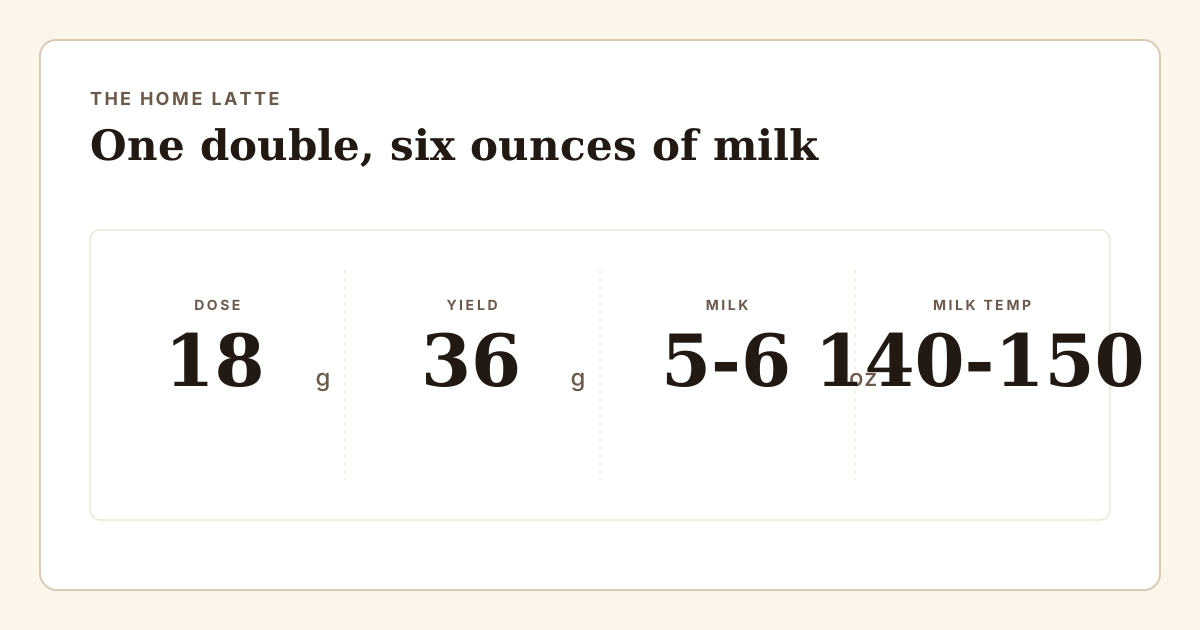
A home latte is a double shot of espresso (18 g in, 36 g out) plus 5 to 6 oz of whole milk steamed to about 140 to 150°F (60 to 65°C) with a thin layer of microfoam. The shot is half the drink and most of the flavor; the milk is most of the technique. Steam by submerging the wand tip just below the surface for 3 to 5 seconds (the stretch), then plunging it deeper to spin the milk in a tight whirlpool until the pitcher is too hot to hold comfortably. Pour from low and close once the cup is two-thirds full.
If you’re still dialing in your espresso, fix that first: how to dial in espresso. Milk forgives a lot; it doesn’t forgive a sour or channeled shot.
The drink, by the numbers
A standard cafe latte at home:
- Espresso: 18 g dose, 36 g yield, 25 to 30 seconds. A 1:2 double.
- Milk: 5 to 6 oz of cold whole milk (about 150 to 180 ml).
- Cup: 6 to 8 oz ceramic, pre-warmed. Cold ceramic steals 10°F instantly.
- Final temp: Drinkable in 30 seconds, not scalding.
- Foam layer: ~1 cm of glossy microfoam on top, integrated through the whole drink, not floating dry on the surface.
Cappuccino is the same shot with less milk and more foam. Flat white is the same shot with less milk and less foam. Get the latte right first; the others are tweaks on the same routine.
Step by step
1. Pull the shot first
Lock the portafilter, start the brew, and let the shot land in the cup you’ll serve from (pre-warmed). The shot should be sitting there waiting for the milk, not the other way around. Espresso changes character fast in the cup, but milk waits worse: the foam separates within 20 seconds of stopping the steam.
If you have a single-boiler machine, you’ll need to wait for the boiler to switch over to steam mode after the shot. That’s fine. Pull, switch, prep the pitcher while it heats.
2. Pour cold milk into a cold pitcher
Fill the pitcher to just below the bottom of the spout. For a 12 oz pitcher, that’s about 5 to 6 oz of milk, which is the right amount for one 8 oz latte. Cold milk and a cold pitcher matter: they give you more time to texture before the milk hits temperature. Warm milk gives you maybe 5 seconds of stretching before it’s already too hot.
3. Purge the steam wand
Open the steam valve for 2 seconds over the drip tray before you put the wand in the milk. This clears condensed water that would otherwise water down your milk. Skip this and your first cappuccino tastes thin.
4. Steam the milk
For the full steaming walkthrough, wand hygiene included, see how to steam milk for latte art. The latte-specific differences:
- Stretch only 3 to 5 seconds. A latte wants the least foam of the milk drinks after a cortado: enough volume to grow the milk by about a third, no more. If you keep hearing the “tss-tss-tss” air sound past five seconds, you’re building cappuccino foam.
- Target 140 to 150°F and stop while the pitcher base is still holdable for two seconds. Past 160°F the milk scalds and the foam collapses.
- You’re aiming for about 1 cm of glossy microfoam, integrated through the whole drink, not floating dry on top. That thin, even layer is what lets a latte carry simple art without going stiff.
5. Swirl, tap, pour
Swirl the pitcher in a tight circle to integrate the foam back into the milk. If you have visible big bubbles, tap the pitcher firmly on the counter once or twice; they pop. The surface should look like wet paint: glossy, mobile, no dry foam.
Pour into the cup from high (about 3 inches above) at first, stream aimed at the center of the espresso. This puts milk under the crema. When the cup is about two-thirds full, drop the pitcher tip close to the surface and slow the pour. The white starts to surface here. Wiggle gently side-to-side if you want a basic heart or rosetta, or just pour straight through if you don’t care about art yet.
On the milk
Whole dairy is the gold standard for one reason: fat carries flavor and stabilizes microfoam. Skim foams huge but the foam is brittle and the drink tastes hollow. 2% is a workable compromise. Half-and-half is too fatty; it won’t texture cleanly.
For non-dairy: barista-formula oat milk (Oatly Barista, Minor Figures, Chobani Extra Creamy Oat) is the only plant milk that consistently behaves like dairy. The regular versions don’t have enough fat or protein to hold foam. Soy works but tastes beany under light roasts. Almond foam collapses within seconds; don’t bother. Coconut milk separates.
Cold matters. Milk that’s been out of the fridge for 20 minutes is already 10°F warmer, which steals 5 seconds of stretching window. Pour from the fridge directly into a chilled pitcher every time.
Common mistakes
Steaming before pulling the shot. New baristas reverse the order because milk feels harder. Don’t. The shot has crema that dies in 30 seconds; the milk holds its texture for maybe 20. Whichever you finish second is the one that’s fresh in the cup. Make it the milk.
Stretching for the entire steam cycle. That tearing sound shouldn’t last past the first few seconds on a latte; keep injecting air and you get cappuccino-thick foam instead of latte microfoam.
Pouring from too high the whole time. A high pour pushes milk through the crema and buries the white. That’s correct for the first half. If you stay high the whole pour, the milk never surfaces and you get a brown drink with no contrast. Drop the pitcher close for the second half.
Using a 20 oz pitcher for one 8 oz latte. Too little milk in too big a pitcher and the wand tip can’t find the surface to stretch. Match the pitcher size to the drink: 12 oz pitcher for one latte, 20 oz for two.
Overheating because “hot drinks should be hot.” Cafe lattes are served at 150°F. If your drink is too hot to sip for 5 minutes, you cooked it past the point where the milk tastes sweet.
Troubleshooting
My milk has big visible bubbles on top. You stretched too long, or you didn’t get a whirlpool going during the texturing phase. Swirl and tap the pitcher hard on the counter; that pops most of them. Next time, shorten the stretch and lower the wand sooner so the milk spins.
The foam is thin and watery, no body. Either you didn’t purge the wand first (water in the line) or you didn’t stretch at all. The “tss-tss” sound should be audible for at least 2 to 3 seconds at the start. No sound, no foam.
The wand screeches loudly and milk sprays everywhere. The tip is too far below the surface during the stretch phase, or your steam pressure is high and you’re on a powerful machine. Lower the pitcher (raise the wand toward the surface) until the tearing sound starts. The screech means you’re injecting air violently instead of gradually.
My latte art instantly sinks into the crema. Your milk is too thin (under-textured) or your pour is too high for too long. Texture until the milk looks like wet paint, swirl right before pouring, and drop the pitcher close to the surface earlier.
The drink tastes flat even though the shot was good and the milk was textured right. You probably overheated the milk. Steamed milk should taste sweeter than cold milk because heat releases lactose. If it tastes flat or eggy, you cooked past 160°F. Pull the trigger 10°F sooner next time.
Single-boiler machine: by the time I steam, the shot is cold. Reverse the order only on single-boiler setups: pull the shot, immediately switch to steam, steam the milk while the boiler ramps. The 20 to 30 seconds of espresso sitting is less damaging than waiting 60 seconds for steam mode. Or upgrade to a heat exchanger when you’re ready.
My oat milk won’t foam. You’re using the regular version. Barista-formula oat milks (the carton says “barista” on it) have added fats and stabilizers for steaming. Regular oat milk doesn’t have enough protein structure to hold foam.
Frequently asked
What's the difference between a latte, a flat white, and a cappuccino?
Same espresso base, different milk ratios and textures. Latte: 6-8 oz of milk with about 1 cm of microfoam. Flat white: 5-6 oz, denser and thinner foam layer. Cappuccino: 5 oz with a thick 2 cm foam cap and drier texture. The shot is identical; you're changing what goes on top.
Can I make a latte without an espresso machine?
You can make a milk drink that resembles one. A Moka pot or Aeropress concentrate plus milk frothed with a French press or handheld whisk gets you a coffee-and-milk drink, not espresso latte. The crema, body, and texture are different. It's fine; just don't expect cafe parity.
Why does my milk taste burnt or eggy?
You overheated it. Milk proteins start breaking down above 70C/158F and taste cooked above 75C. Stop steaming at 60-65C (140-150F). A thermometer or the back of your hand on the pitcher (uncomfortably hot but holdable for 2 seconds) tells you when to stop.
How much milk for a standard latte?
For an 8 oz cup with a double shot (about 2 oz of espresso), steam 5-6 oz of cold milk. Milk expands roughly 30-40% when properly textured, so 6 oz cold becomes about 8 oz steamed. Pour until the cup is full.
Do I really need a separate grinder for latte milk to matter?
Yes, because the espresso underneath matters. A weak, channeled, or under-extracted shot disappears under milk and you end up with warm sweet milk that tastes vaguely of coffee. Most beginners blame their milk technique when the shot is the problem.