
How to store espresso beans for maximum freshness
Block oxygen, light, heat, and moisture in that order. The storage hierarchy, the freezer trick that actually works, and why the fridge ruins beans.
What you'll need
- The original valve bag : Roaster bags with one-way valves outperform most consumer canisters. Don't throw them out.
- A vacuum or valve canister : Airscape, Fellow Atmos, or Planetary Design. Active air removal, not just an airtight lid.
- A vacuum sealer (optional but ideal for freezing) : FoodSaver or similar. Turns the freezer from a holding pen into actual long-term storage.
- Freezer bags or small portion containers : Single-dose portions only. A whole bag opened and refrozen daily defeats the purpose.
- A dark, cool drawer : Not above the espresso machine. The warmest spot in the kitchen is the worst spot for beans.
TL;DR
Keep beans in their original valve bag, sealed tight, at room temperature, away from light. If the bag’s gone or you bought in bulk, transfer to an airtight opaque canister (Airscape, Fellow Atmos) within minutes of opening. Freeze beans you won’t finish within 3 weeks of roast, in single-dose portions, vacuum sealed. Never refrigerate. The four enemies, in order of damage: oxygen, light, heat, moisture.
Freshness peaks around days 7 to 21 post-roast for espresso. Past day 35, even perfect storage can’t save the cup; you’re slowing decline, not reversing it.
The four things that kill beans
Coffee staling isn’t one process. It’s four, running in parallel, and your storage strategy is just blocking them.
Oxygen oxidises the lipids and aromatic compounds that make espresso taste like anything. This is the dominant staling pathway. A bag left open on the counter loses noticeable aroma in 48 hours and tastes flat in a week. The valve on a roaster’s bag is one-way: it lets CO2 out (so the bag doesn’t burst) but doesn’t let O2 back in. That’s why the original bag, resealed properly, beats most “upgrade” containers.
Light, specifically UV, breaks down chlorogenic acids and accelerates oxidation. Beans in a clear glass jar on a sunny counter taste tired within a week even if the seal is perfect. Opaque or amber glass only.
Heat speeds every chemical reaction in the bean, including the bad ones. The standard advice “store in a cool dry place” exists because every 10°C increase roughly doubles reaction rates. A cupboard above the espresso machine, which sits at 35°C while the machine warms, is one of the worst spots in the kitchen. The drawer across the room is better.
Moisture is the slow one. Roasted coffee is hygroscopic; it pulls water from humid air and the surface oils go rancid faster once wet. This is the entire reason refrigeration is wrong: every time you open the container, warm humid air hits cold beans and condenses on them.
The storage hierarchy
Ranked best to worst for beans you’re actively drinking:
1. Original valve bag, squeezed and clipped
Roasters spend real money on bags with one-way valves and foil-lined barriers. They’re better at keeping coffee fresh than almost any consumer container. The technique: after each use, push the air out (fold the bag, press down), then clip or roll the top tight. Store the bag inside a drawer or cupboard.
This costs nothing and outperforms most $40 canisters in tests. The only reason to upgrade is convenience (a canister is easier to scoop from) or aesthetics.
2. Vacuum or valve canister (Airscape, Fellow Atmos, Planetary Design)
If you want a canister, get one that actively removes air, not just one that “seals.” A passive airtight jar still has the full headspace of oxygen sitting on top of the beans from the moment you close it.
- Airscape uses an inner plunger lid that you push down until it touches the beans, expelling air through a one-way valve. Mechanical, no batteries, hard to mess up.
- Fellow Atmos has a pump-action lid that pulls a partial vacuum. Looks nicer; the seal degrades over a year or two of use.
- Planetary Design Airtight is the cafe-counter standard, less elegant but bombproof.
Transfer beans to the canister within minutes of opening the original bag, not days later. Every hour the bag sits open before transfer is hours of freshness lost.
3. Plain airtight jar (Mason, Le Parfait)
Better than an open bag, worse than a vacuum canister. Use opaque or store the jar in a dark cupboard. A clear Mason jar on a lit counter is a freshness disaster regardless of seal quality.
4. The bag with the top folded over
Functional for a few days. After that, oxygen has fully equilibrated with the bag contents and the beans stale on the shelf as if the bag were open.
Don’t bother with: ceramic crocks, “coffee vaults” without valves, the freezer compartment of your fridge.
Freezing: the one trick that actually extends shelf life
The single biggest freshness lever home baristas underuse. Done right, frozen beans taste like day-10 beans when you pull them out a month later. Done wrong, you wreck the bag.
The rules:
- Freeze fresh, not stale. Beans go in the freezer within 10 days of roast date, not when you notice the bag is going off. Freezing pauses staling; it doesn’t reverse it.
- Portion into single doses. A whole bag pulled out and thawed daily defeats the purpose: each thaw cycle condenses moisture on the beans. Vacuum seal or zip-bag 50 to 100 g portions, one per session.
- Vacuum seal if you can. A FoodSaver or similar removes the oxygen problem entirely. Without vacuum, double-bag in freezer ziplocks with the air pressed out.
- Grind from frozen. Don’t thaw. Frozen beans actually grind more uniformly (the bean shatters more consistently when brittle), which is a small bonus. Pull the portion straight from the freezer to the grinder hopper.
- No refreezing. A thawed portion goes in the cupboard and gets used within a few days. Back in the freezer means moisture inside.
Frozen, vacuum-sealed beans hold for 3 to 6 months with minimal degradation. Without vacuum, 4 to 8 weeks. After that they’re still drinkable but the brightness and aromatics are noticeably faded.
Why the fridge is the worst option
This is the most common storage mistake and the one that ruins the most beans. The refrigerator combines every failure mode:
- High humidity. Fridges run at 60 to 80% RH; beans absorb moisture continuously.
- Temperature cycling. Every door opening warms the beans, every closing cools them, condensing water on the surface.
- Odour absorption. Coffee is a phenomenal odour sponge. A week next to onions and you’ll taste onions.
- No useful slowdown. Fridge temperatures (3 to 5°C) aren’t cold enough to meaningfully pause staling reactions, but they’re cold enough to cause condensation problems.
Freezing works because it’s cold enough to actually stop reactions (below about -15°C) and dry enough (low absolute humidity) that condensation only happens at the surface during thaw. The fridge sits in the worst middle ground.
Timing: when “fresh” actually means fresh
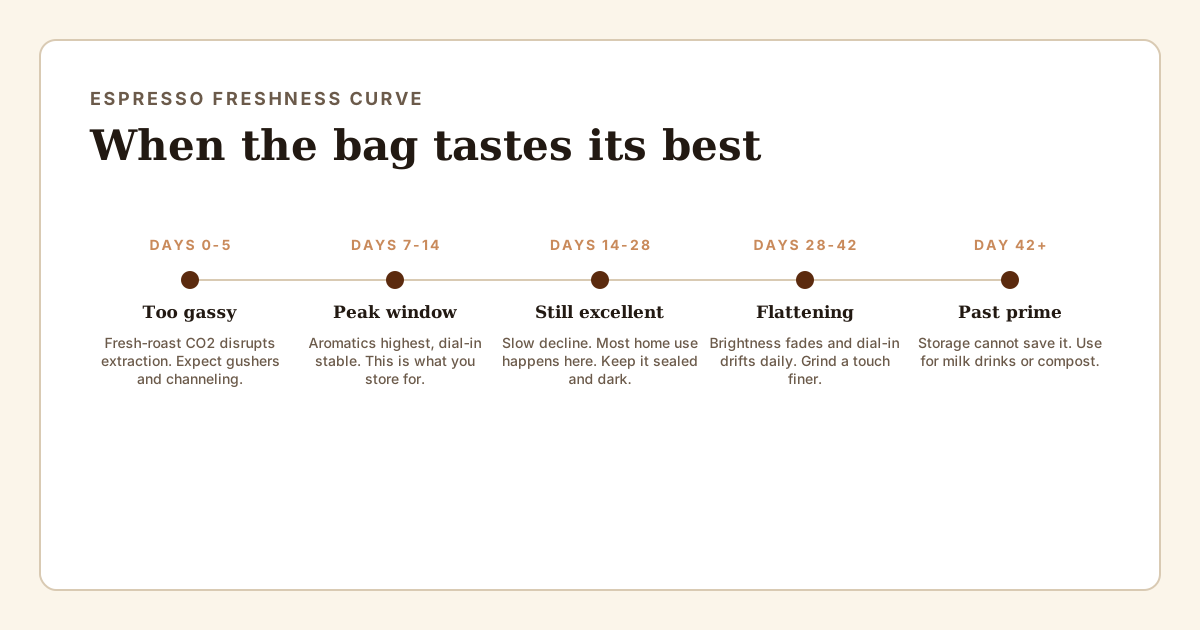
Espresso has a degas window that filter coffee doesn’t. Beans straight off the roaster are too gassy; the CO2 disrupts extraction and you get gushers and channeling no matter the grind. The usable curve for espresso:
- Days 0 to 5 post-roast: too gassy. Wait.
- Days 7 to 14: peak. This is what you’re storing for.
- Days 14 to 28: still excellent, slowly declining. Most home use happens here.
- Days 28 to 42: noticeable flattening. Still drinkable, dial-in starts drifting daily.
- Day 42+: past prime. Storage can’t fix this. Use for milk drinks where the bean character matters less, or compost.
The implication: buy in quantities you’ll finish in 3 to 4 weeks (and see how to choose espresso beans for buying fresh in the first place). A 1 kg bag that takes you 8 weeks to drink isn’t better value than two 500 g bags, even if it’s cheaper per gram. The second half tastes worse than the first.
If you can only buy in 1 kg lots, freeze half on arrival.
Common mistakes
Buying in bulk to save money, then drinking stale coffee for a month. The per-gram saving doesn’t matter if half the bag is past peak by the time you reach it. Either freeze the back half or buy smaller.
Storing on top of or next to the espresso machine. The warmest spot in the kitchen, sometimes by 10 to 15°C. A drawer two meters away is far better. The convenience isn’t worth the freshness cost.
Decanting into a beautiful clear glass jar on the counter. It looks like a Pinterest kitchen and it tastes like cardboard within a week. If the jar must be on display, fill it with two days’ worth and refill from the sealed bulk container.
Trusting “airtight” without vacuum. A jar with a rubber seal keeps new oxygen out but doesn’t remove the oxygen trapped on top of the beans when you close it. For a half-full jar, that’s a lot of headspace air sitting on the beans for days.
Refrigerating. Already covered, but worth repeating. People assume the fridge is just a milder version of the freezer, when really it’s a humid box full of odours that beans soak right up.
Freezing the open bag. The bag has been breathing for days, the beans are already partway stale, and the freezer just locks in that state. Freeze fresh or don’t freeze.
Troubleshooting
My beans were dialed in last week and now the shot runs fast and tastes flat. The bean is aging out, not your technique. Past day 25 to 30, espresso dial-in drifts daily as the bean loses CO2 and oils oxidise. Grind a touch finer to compensate; if the cup still tastes hollow, you’re past the bean’s useful life regardless of grind.
I opened a frozen portion and the beans are wet/condensed. You thawed before grinding. Next time, grind straight from frozen; the beans equilibrate inside the grinder and brew chamber without moisture landing on the surface. This batch is still drinkable but won’t hold for long; use within two days.
My valve bag puffed up like a balloon in the cupboard. That’s CO2 from a fresh roast, completely normal in the first 7 to 10 days. The valve should release it; if your bag has no valve (some cheap roasters skip them), open and burp daily for the first week or transfer to a vented canister.
I can smell coffee through the bag/canister. Aroma is escaping, which means oxygen can get in. Either the seal is failing or the container isn’t actually airtight. For bags, check the zipper isn’t blocked by grounds; for canisters, run the lid under water and listen for hisses when squeezing.
I bought beans with no roast date on the bag. Assume worst case (2 months old) and buy elsewhere next time. Specialty roasters print roast dates; supermarket coffee usually only has a “best by” date 12 to 18 months out, which is useless. The absence of a roast date is itself a signal about the bean.
Whole bean or pre-ground for storage? Whole bean, always. Pre-ground coffee stales within hours of grinding regardless of storage; the surface area exposed to oxygen is roughly 10,000 times higher. If you don’t have a grinder, that’s the next purchase, not a better canister.
Frequently asked
Can I store beans in the freezer long-term?
Yes, with two conditions: freeze them fresh (within 10 days of roast, not when they're already going off), and portion into single doses before freezing. Vacuum sealed, frozen beans hold 3 to 6 months with minimal flavor loss. Double-bagged without vacuum, 4 to 8 weeks. Grind straight from frozen; don't thaw.
Is it bad to keep beans in the original bag?
No, it's usually the best option. Roaster bags have one-way CO2 valves and foil barriers that beat most consumer canisters. The technique matters: squeeze the air out before clipping, store in a dark drawer, and the original bag will hold freshness as well as a $40 vacuum canister.
Why is the fridge so bad for beans?
Three reasons. Humidity (fridges run at 60-80% RH and beans absorb moisture); temperature cycling (every door opening condenses water on the cold beans); and odour absorption (coffee picks up onion, garlic, anything else in there). Fridge temperatures aren't cold enough to actually pause staling, so you get all the downsides and none of the upside.
How long do espresso beans actually stay fresh?
For espresso specifically: peak is days 7 to 21 post-roast, still excellent through day 28, declining noticeably from day 28 to 42, past prime after day 42. Storage slows decline; it doesn't reverse it. Buy quantities you can drink in 3 to 4 weeks, or freeze the excess on day one.
Should I store beans whole or ground?
Whole, always. Pre-ground coffee has roughly 10,000 times the surface area exposed to oxygen and stales within hours regardless of how you store it. If you don't own a grinder, that's a more important purchase than any storage container.
Does it matter what container material I use?
Opaque beats clear (light damages beans), and inert beats reactive (avoid copper or untreated metals in contact with beans). Stainless steel, food-grade plastic, and ceramic are all fine. The seal and the air removal matter far more than the material itself.