
How to choose espresso beans
Roast date matters more than origin. The four things on the bag, the roast level question, and how to read past the marketing copy.
What you'll need
- A reliable roaster : Local micro-roaster or a reputable mail-order roaster (Counter Culture, Onyx, Heart, Verve). Not the supermarket aisle.
- An airtight container : Plain glass or ceramic with a one-way valve lid. Skip the brown-paper bag once it's open.
- A grinder you can adjust : Different beans need different grind sizes. If your grinder doesn't go fine enough or coarse enough, your bean choice gets compressed to the ones that work at your fixed setting.
TL;DR
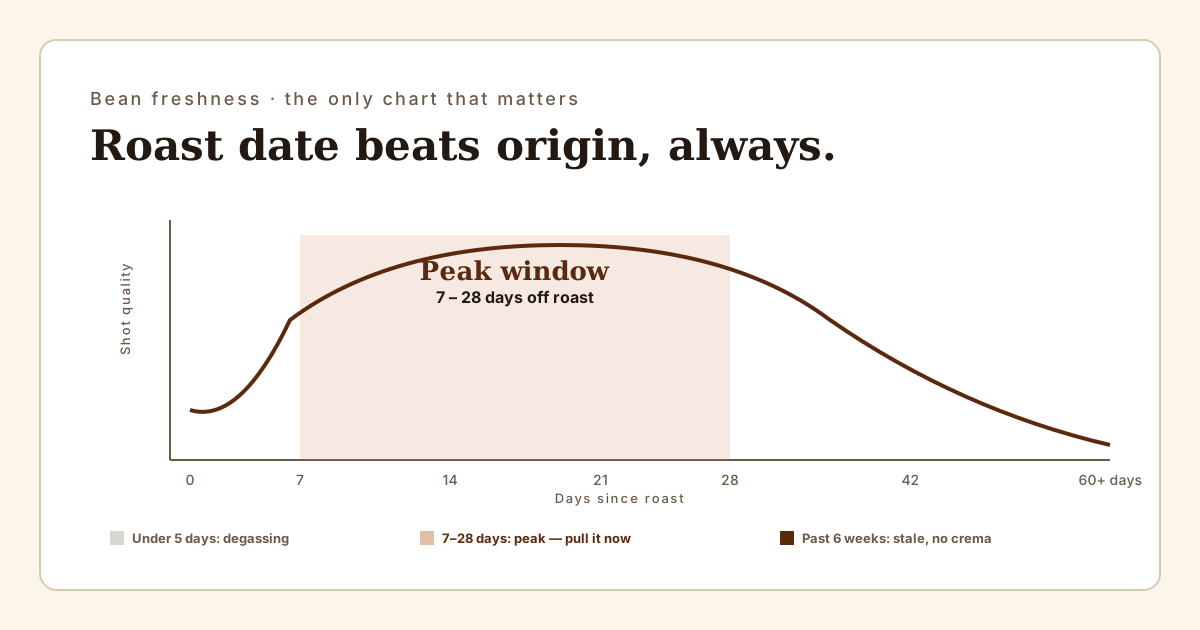
The single most important number on a bag of espresso beans is the roast date. Beans are at their best 5–21 days after roast; before day 5 they’re too gassy, after day 28 they’re sliding into stale. Buy from a roaster who prints the date and pick whatever fits your taste profile (medium for chocolate-and-nuts, light for fruit-and-acidity, dark for body-and-low-acidity). Origin and processing matter, but only if the roast date is recent.
Once you have a bag of fresh beans in hand, the daily routine for pulling shots with them is in how to pull a perfect espresso shot. For finding the right grind setting on a new bag, see how to dial in espresso.
The four things on a good bag of beans
Every coffee bag has marketing copy. The information that actually predicts how the espresso will taste:
1. Roast date
A plain calendar date: “Roasted on April 28, 2026.” Not “Best by,” not “Sell by.” If the bag only has a “best by” date, the roaster is hiding the roast date and the beans are probably old.
Aim for beans 5–21 days from roast when you brew them. Most roasters ship the day they roast or the day after, so order timing matters: 7-day shipping plus a 1-day delay before you open it puts you at day 8. Perfect.
The first time you pull the same recipe on a 5-day-old bag and a 5-week-old bag of the same coffee, the difference settles the date argument permanently. The fresh shot has body and aromatics that are simply absent from the old one. After that, you stop debating whether the date matters.
2. Origin
Where the coffee grew. Country at minimum (Ethiopia, Colombia, Brazil, Guatemala); a specific farm or cooperative is better. Single-origin bags name one source; blends list multiple.
Origin determines the underlying flavor profile:
- Ethiopia / Kenya: bright, fruity, floral. Lemon, blueberry, jasmine.
- Colombia / Costa Rica / Guatemala: balanced, sweet, chocolatey. Caramel, milk chocolate, citrus.
- Brazil: nutty, low-acid, chocolatey. Peanut, cocoa, brown sugar.
- Indonesia (Sumatra, Sulawesi): earthy, full-bodied, low-acid. Cedar, herbs, dark chocolate.
These are tendencies, not guarantees. A specific farm can taste nothing like its country average.
3. Processing
How the cherry was processed after harvest. Three common methods:
- Washed (most common). Clean, bright, lets origin character show through.
- Natural (sun-dried with the fruit on). Sweeter, fruitier, often blueberry or strawberry notes.
- Honey (in between). A middle ground.
For espresso specifically, washed is the safest pick. Naturals can be excellent but are also more variable batch-to-batch.
4. Roast level
How dark the roaster took the beans. Light, medium-light, medium, medium-dark, dark. Each affects extraction differently:
- Light roast: dense beans, harder to extract, brighter acidity. Needs higher temperature (204–205°F) and finer grind.
- Medium roast: the easy default. Wider dial-in window, classic chocolate-and-nuts notes.
- Dark roast: less dense, easier to extract, lower acidity, more body and bitterness. Grinds coarser.
A bag that lists flavor notes (“blueberry, milk chocolate, citrus”) is telling you what the roaster tasted. A bag that lists only “dark chocolate, smoky, full-bodied” is telling you it’s a dark roast and that’s about it.
Choosing for your taste
Three quick mappings from “what kind of cup do you want?” to “what to buy”:
“I want it to taste like the cafe down the street”
A medium-roast Brazilian or Colombian blend, washed processed, recently roasted. Chocolate, caramel, low acidity, predictable. Brands worth ordering: Stumptown Hair Bender, Counter Culture Hologram, Onyx Monarch.
”I want fruit and acidity”
A light-roast Ethiopian, washed or natural, single-origin. Bright, citrus, sometimes berry. Pulls best at slightly longer ratios (1:2.5) and higher temperatures. Brands: Heart Stereo, Verve Streetlevel, anything labeled “Yirgacheffe” or “Sidamo."
"I want body and low acidity”
A medium-dark to dark roast Indonesian or a Brazil. Heavy, syrupy, chocolate-and-cedar. Forgiving on technique. Brands: Peet’s Major Dickason’s, Lavazza Super Crema (mass market but consistent), most “Italian roast” Sumatra blends.
Common mistakes
Buying based on price only. $25 for a 12 oz bag is normal for specialty coffee. $7 for a 12 oz bag is supermarket coffee. It might be drinkable but it’s months old.
Buying based on bag art. Modern roasters compete on packaging. Colorful bags don’t predict flavor. Read the date.
Buying too much at once. A 5 lb bag means you’re brewing 4-week-old coffee for the back half. Buy in 8–12 oz quantities, more frequently.
Storing beans in the freezer. Common advice that’s only half right. Freezing whole beans in airtight containers preserves them, but the fridge does not. Humidity damages them, and the open bag picks up onion-and-garlic notes from the rest of the fridge faster than you’d expect. For weekly use, room-temperature airtight storage is fine. For longer-than-2-weeks storage, freeze; thaw the bag fully to room temperature before grinding.
Buying ground coffee. Ground beans go stale in hours, not weeks. If you don’t have a grinder, get a grinder before you buy specialty beans.
Troubleshooting
The beans I love at the cafe taste flat at home. Almost always the brew, not the bean. Cafes have commercial grinders and 200°F+ water; home setups often have less of both. Try grinding finer and warming the machine longer.
My bag doesn’t have a roast date. Email the roaster or buy somewhere else. A reputable specialty roaster always prints the date; absence usually means the beans went through a distributor and sat for weeks.
The beans are 6 weeks old. Are they trash? Not trash. Still usable for milk drinks where the milk masks the flatness. Don’t pull straight espresso from beans that old; the cup will taste hollow.
Light roasts taste sour at every recipe I try. Some light-roast beans are difficult to dial in on entry-level machines (low brew temperature can’t extract them). Check your brew temperature; if it’s under 200°F, the bean isn’t the problem. The machine is.
Frequently asked
What roast level is best for beginners?
Medium roast is the most forgiving. The flavors are familiar (chocolate, caramel, nuts), the dial-in window is wider than light roast's, and slight technique mistakes show up less. Once you've pulled balanced shots from a few medium-roast bags, then explore lighter roasts to discover what your palate likes.
Are blends better than single-origins for espresso?
Blends are more forgiving (the roaster has tuned the recipe for espresso), single-origins are more interesting (you taste a specific farm's character). Most espresso-focused roasters offer both. New to espresso, blends are easier; once you can pull consistent shots, single-origins teach you more.
How long do beans actually stay fresh?
Best quality is **5–21 days post-roast**. Anything pulled before day 5 is too gassy and tastes flat; anything past day 28 is sliding into stale. The roast date is more important than the origin or the price. If a bag doesn't have a roast date, assume it's old.
Can I use whole bean from the supermarket?
Most supermarket whole bean is months past roast. You can taste it. The exception is roasters who supply premium grocers (Counter Culture, Stumptown, Intelligentsia in some stores) with current dates. Always check the bag for a roast date, not a "best by" date. Those are unrelated.
What does "espresso roast" actually mean?
Historically, "espresso roast" meant darker. Beans roasted past second crack to produce body, low acidity, high chocolate notes. In modern specialty coffee it can mean almost anything; a "light espresso roast" exists. The label tells you the roaster's intent, not a guarantee. Read the bag's flavor notes (do they sound like the cup you want?) more than the roast-level label.