
Espresso roast levels explained: light, medium, dark
How light, medium, and dark roasts taste, why they extract differently, and which roast level fits your gear and the drinks you actually make.
What you'll need
- Beans with a roast date on the bag : Not a 'best by' date. If the roaster won't print the roast date, find a different roaster.
- A grinder that matches your roast ambitions : Light roasts demand more grinder than dark. Don't buy a Gesha for an Encore ESP.
- Temperature control on the machine : PID or adjustable brew temp matters more across roast levels than within one. 90C to 96C covers the useful range.
- A scale and timer : Different roasts need different ratios and times. You can't tune by feel.
TL;DR
Roast level controls acidity, body, and how forgiving the bean is to pull. Light roasts taste bright and complex but demand a good grinder, fresh beans, and patience. Medium is the easiest target for home espresso and the safest default. Dark roasts are forgiving, milk-friendly, and what most people think “espresso” tastes like, but they hide bean origin almost entirely. If you’re new, start medium; if you only drink lattes, dark is fine; if you want to taste origin, go light and budget for the grinder.
What “roast level” actually means
Roast level is a measurement of how far the roaster developed the bean past first crack. Green coffee enters the roaster around 200°C, browns through the Maillard stage, hits “first crack” (an audible pop, around 196°C bean temperature) where most of the chemistry that produces coffee flavor happens, and then keeps going until the roaster drops it.
The longer it stays after first crack, the darker it gets:
- Light roast. Dropped shortly after first crack ends. Bean surface is dry, color is cinnamon to milk-chocolate brown. Agtron 65 to 80, roughly.
- Medium roast. Pushed a bit further, into the gap between first and second crack. Surface still dry, color is milk-chocolate to dark-chocolate brown. Agtron 45 to 65.
- Dark roast. Taken into or past second crack (a second, quieter popping). Oils migrate to the surface and the bean looks shiny. Color is dark brown to almost black. Agtron under 45.
The retail labels (“French roast,” “Italian roast,” “blonde”) are marketing terms with no industry-wide definition. The Agtron number, or the roaster’s published roast curve, is the only specific way to compare. In practice, look at the bean: dry surface = lighter, shiny oil = darker.
This matters for espresso because each roast level extracts differently, tastes different, and needs different recipe parameters. They are not interchangeable in the same recipe.
Light roast espresso
Light roast tastes of pronounced acidity (citrus, berry, stone fruit), florals, a tea-like body, and clear origin character. A good light-roast Ethiopia tastes like blueberries; a light-roast Colombia tastes like apple and caramel. This is the style most third-wave roasters (Onyx, Sey, Tim Wendelboe, Heart) build their reputation on.
It’s also the hardest to pull. Light-roast beans are denser than dark ones because less moisture and structure has been driven off. Denser beans resist water flow, so you grind finer, and they want longer extraction times (often 32 to 40 seconds for a 1:2). They’re also less soluble, meaning under-extraction is the constant failure mode. Sour, thin, “watery” shots come from light roasts that didn’t extract enough.
To pull it well you need:
- A grinder that can deliver a tight, fine particle distribution. The Baratza Encore ESP is the floor; a Niche Zero, Eureka Specialita, or DF64 is more comfortable.
- Higher brew temperature. Push to 94 to 96°C if your machine allows.
- Often a longer ratio (1:2.5 or 1:3) and a longer time. Don’t force a light roast into the textbook 25 seconds.
- Fresh beans, rested 10 to 21 days off roast. Light roasts degas slower than dark ones.
When it goes wrong, you get sour, sharp, lemon-juice acidity with no sweetness, which is the signature of under-extraction. Grind finer, push the ratio longer, raise the temperature. If it still tastes like that and the shot is in spec, the bean isn’t fresh or the grinder can’t deliver the fines. The full adjustment sequence, in the order to try each variable, is in how to dial in light roast espresso.
Medium roast espresso
Flavor: The compromise that works. Acidity is present but rounded (caramel, milk chocolate, dried fruit, nuts). Body is fuller than a light roast, sweetness is the dominant impression. You still get some origin character but it’s softened. Most North American specialty roasters’ “espresso blend” lands here.
Why it’s the default: Medium-roast beans extract in a wide, forgiving window. A 1:2 ratio at 25 to 30 seconds and 93°C works as a literal starting point and usually tastes good immediately. The dialing-in process is shorter, the grind is less twitchy, and the shot tastes balanced even when your technique isn’t perfect.
What you need: Almost any capable grinder and machine. This is the roast level that home espresso gear is engineered around. If a recipe online doesn’t specify roast level, assume medium.
Failure mode: Boring shots. Medium roast done badly tastes like “generic coffee.” If you’re not getting any flavor distinction between beans, you’re either over-extracting (grind coarser, shorter ratio) or buying a roast that’s actually closer to a commodity dark roast wearing a medium label.
Dark roast espresso
Flavor: Bittersweet chocolate, toasted nuts, smoke, caramel that’s edging into burnt sugar. Origin disappears: a dark-roast Ethiopia and a dark-roast Brazil taste much closer to each other than their lighter versions. Body is heavy, acidity is suppressed. This is the flavor profile of Italian espresso (Lavazza, Illy), most diner coffee, and most “espresso roast” supermarket bags.
Why it works for milk drinks: Steamed milk masks subtle flavors. A $30/lb light-roast Gesha in a 12 oz latte tastes the same as a $14/lb medium. But the chocolate-and-caramel notes of a dark roast cut through milk, which is why traditional cappuccino culture is built on darker roasts. If you only drink lattes, paying for light roast is wasted money.
Why it’s forgiving: Dark beans are porous and less dense. They extract fast and require coarser grinds. The window for a balanced shot is wider, and you can pull a drinkable shot on a mediocre grinder. The trade is that dark roasts go stale faster (the oils on the surface oxidize within two weeks) and the cup is less interesting.
What you need:
- Slightly coarser grind than medium.
- Lower brew temperature. 90 to 92°C. Pulling a dark roast at 95°C will taste burnt and ashy.
- A 1:2 or even 1:1.5 ratio. Long ratios on dark roasts taste hollow and bitter.
- A clean grinder. Dark-roast oils gum up burrs faster than any other roast level.
Failure mode: Acrid, ashy bitterness that tastes like burnt toast. Over-extracted. Grind coarser, drop the temperature, shorten the ratio.
Starting recipes by roast level
The numbers scattered above, in one place. Dose 18 g into a double basket for all three; only the water, heat, and time change. These are starting points to dial in from, not verdicts, and the ratio mechanics are covered in depth in espresso ratios explained.
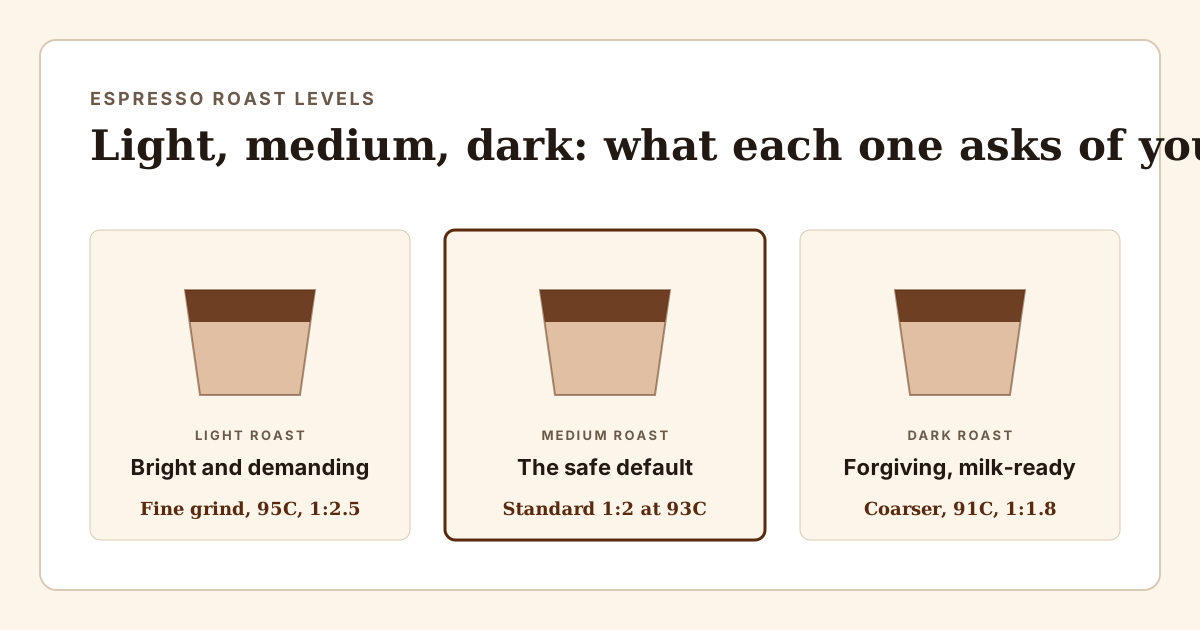
- Light roast: fine grind, 1:2.5 ratio (45 g out), 94 to 96°C, 32 to 40 seconds. Stretch to 1:3 if it stays sharp.
- Medium roast: the textbook recipe. 1:2 ratio (36 g out), 93°C, 25 to 30 seconds.
- Dark roast: coarser grind, 1:2 ratio or tighter (down to 1:1.5, so 27 to 36 g out), 90 to 92°C, 22 to 25 seconds. Long ratios turn dark roasts hollow and bitter.
Pairing roast to your setup and drink
A practical decision matrix:
- Bambino or Gaggia Classic + Encore ESP + you drink lattes. Medium to dark roast. Save light-roast experiments for after the grinder upgrade.
- Dual boiler + Niche Zero + you drink straight shots. Light to medium. This is what the gear is for.
- Manual lever (Flair, Robot) + hand grinder. Medium. Levers handle medium roasts gracefully; light roasts ask more of the grinder than most hand grinders deliver, and dark roasts gush.
- Super-automatic. Medium to dark. These machines can’t grind fine enough for light roast.
The other variable nobody mentions: how often you drink coffee. If you pull two shots a day, a 12 oz bag of light roast goes stale before you finish it. Dark roasts age faster but you also drink them faster. Match bag size and roast freshness window to your actual consumption.
Common mistakes
Treating “espresso roast” on the bag as meaningful. Any bean can be pulled as espresso. “Espresso roast” usually means “we roasted it darker,” not “this is better for espresso.” Buy by roast date and roaster reputation, not by label.
Using the same recipe across roast levels. A 1:2 at 25 seconds and 93°C is a medium-roast recipe. Plugging a light roast into it produces sour disappointment; plugging a dark roast in produces bitter disappointment. Adjust temperature, ratio, and time by roast.
Buying light roast for a setup that can’t deliver it. A $200 grinder will not pull a clean Gesha shot. The beans cost more than the bag of medium that would taste better on your gear. Match the roast to what your equipment can extract.
Storing dark roast like light roast. Dark-roast oils oxidize fast. A bag of dark roast at week 4 tastes rancid in a way a light roast at week 4 doesn’t. Buy dark in smaller quantities and use it quicker.
Assuming darker = stronger. Caffeine barely changes across roast levels (light roasts have marginally more by weight, because they’re denser). “Strong” in dark roast is perceived bitterness and body, not stimulant content.
Troubleshooting
My light roast tastes sour no matter what I do. Walk through it in order: are the beans rested at least 10 days off roast? Is your grinder actually capable of going fine enough (the dial near the bottom of its range)? Are you at 94°C or higher? Have you tried a 1:2.5 ratio at 35 seconds? If yes to all four and it’s still sour, the bean is over your equipment’s ceiling, or the roast is so light it’s underdeveloped (a real defect, not a style).
My dark roast tastes ashy and burnt. Almost certainly over-extracted. Drop the temperature 2°C, grind coarser by a notch or two, and shorten the ratio to 1:1.8. Also check the bag date: dark roast past 4 weeks tastes burnt because the oils have gone rancid, not because of how you’re pulling it.
I can’t tell the difference between two beans at the same roast level. Two things: your palate is calibrating (this takes months, it’s normal), and milk drinks flatten differences. Pull a straight shot, let it cool for 60 seconds, taste side by side with the other bean pulled the same way. If they still taste identical at medium roast, they probably are similar. At dark roast, that’s expected.
Should I home-roast to get exactly what I want? A reasonable path if you drink a lot of coffee and enjoy process. Entry-level home roasters (Behmor, Aillio Bullet on the high end) produce roasts that match commercial quality within a few months of practice. Not a shortcut to better espresso, but a different hobby that connects nicely.
The roaster’s flavor notes say “blueberry, jasmine” and mine tastes like coffee. Roaster notes describe the bean’s potential at ideal extraction, usually pulled as filter, not espresso. You’ll rarely get the listed notes one-to-one in espresso. Look instead for the family of flavors (fruity-floral, chocolate-nutty, citrus-bright) and judge whether your shot lands in the right family.
Frequently asked
Does dark roast have more caffeine than light?
Slightly less by weight, actually. Light roasts are denser, so a gram of light roast contains marginally more caffeine than a gram of dark. The difference is small enough to ignore in practice. Perceived 'strength' is bitterness and body, not caffeine.
Why does my supermarket 'espresso roast' taste burnt?
Most supermarket espresso roasts are dark, oily, and weeks to months past roast date. The oils have oxidized. It's not your machine, it's the beans. Buy from a roaster that prints a roast date and use the bag within 4 weeks.
Can I blend roast levels?
Yes, and traditional Italian blends often combine medium and dark components for body and crema. Blending at home is harder because you can't replicate the same blend twice without weighing each component. Start with single roasters' blends before doing your own.
Is light roast actually better, or is it just trendy?
Light roast preserves origin character; dark roast erases it in favor of roast character. Neither is objectively better. If you care about tasting where the coffee came from, light is better. If you want a consistent chocolate-caramel cup that handles milk, dark is better. The third-wave preference for light is a values choice (transparency, origin) more than a quality claim.
How fresh do beans need to be for each roast level?
Light roasts: rested 10 to 21 days off roast, drink by week 6. Medium: rested 5 to 14 days, drink by week 5. Dark: rested 3 to 10 days, drink by week 4. Dark roasts degas faster (more cell breakdown) and oxidize faster (surface oils), so the window is shorter on both ends.
What ratio should I use for light roast espresso?
Start at 1:2.5 (18 g in, 45 g out) at 94 to 96°C, finishing in 32 to 40 seconds, and stretch toward 1:3 if it still tastes sharp. Light roasts are dense and less soluble, so they need more water and more heat than the textbook 1:2 to extract their sweetness.
What ratio should I use for medium roast espresso?
The textbook recipe is built for it, so 1:2 (18 g in, 36 g out) at 93°C in 25 to 30 seconds. Medium roast is the most forgiving level, and if a recipe online doesn't specify a roast, this is the recipe and the roast it assumes.
Can I use medium or medium-dark roast for espresso?
Yes, and if you're starting out you probably should. Medium and medium-dark are the easiest roast levels to pull well on home equipment, they work in milk, and they extract in a wide, forgiving window. "Espresso needs a dark roast" is a holdover from Italian tradition, not a requirement.
What does "espresso roast" on a bag actually mean?
Usually just "we roasted this dark." There's no standard behind the label, and any bean at any roast level can be pulled as espresso. Compared to a plain dark roast, an "espresso roast" from the same roaster is often identical or nearly so. Buy by roast date and the roaster's actual roast-level description, not the label.