
Espresso ratios explained: ristretto, normale, lungo
The brew ratio is the single most important number in espresso. Here's what 1:1, 1:2, and 1:3 do to the cup, and when to use each.
What you'll need
- A 0.1 g scale : You cannot measure a ratio without one. Volume estimation is hopeless with crema in the cup.
- A timer : Phone, machine, or stopwatch. Time is the second number that locks a ratio in place.
- A fresh bag of beans : Ratios behave wildly differently on light vs dark roasts. Note the roast date.
- A grinder with fine steps : Moving between ratios means re-dialing grind. Coarse-stepped grinders make this painful.
TL;DR
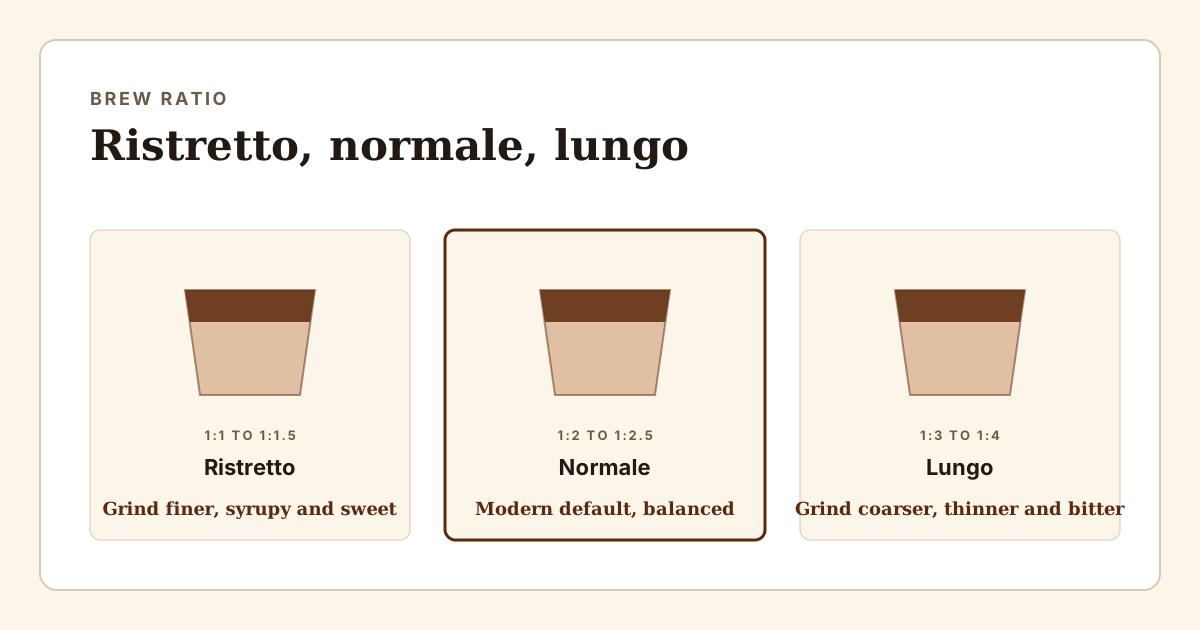
Brew ratio is espresso out divided by ground coffee in. Ristretto is around 1:1 to 1:1.5 (concentrated, syrupy, sweet), normale is 1:2 to 1:2.5 (the modern default, balanced), and lungo is 1:3 to 1:4 (thinner, more extracted, more bitter). They are not the same shot stopped at different points: each ratio needs its own grind setting to land in the 25-30 second window. Pick one per bean based on roast level and what you want in the cup.
If you haven’t dialed in a single ratio yet, start at 1:2 and read how to dial in espresso first. Ratios are the next layer of control after you can hit a balanced shot reliably.
What a brew ratio means
The brew ratio is the weight of liquid espresso in the cup divided by the weight of dry ground coffee in the basket. With 18 g of coffee in:
- 18 g out is 1:1 (ristretto)
- 36 g out is 1:2 (normale)
- 54 g out is 1:3 (lungo)
Two things matter about that definition.
First, it’s weight, not volume. A 36 g espresso looks like wildly different volumes depending on how much crema sits on top. Crema is mostly CO2 foam, weighs almost nothing, and collapses within a minute. Measuring by volume (“a 2 oz shot”) is how cafes pulled espresso in 1985, and it’s the source of every “my shot is too small/big” question that turns out to be a measurement problem.
Second, the ratio describes the shot as it leaves the machine. What’s in the cup includes everything the water carried out of the puck: caffeine, sugars, oils, acids, bitter compounds. A longer ratio means more water passed through the same coffee, so more of everything came out, including the harsh stuff that arrives late in the extraction.
Short ratios stop before the bitter compounds extract. Long ratios pull them along with the rest. Where you stop determines the character of the shot.
The three ratios and what they taste like
Ristretto (1:1 to 1:1.5)
18 g in, 18-27 g out, finer grind. Syrupy body, concentrated sweetness, intense aroma, very little bitterness. The shot tastes “thick” because dissolved solids are higher per gram of liquid.
Ristrettos shine on dark roasts and chocolatey, nutty medium roasts. The roast has already developed enough soluble sweetness that you don’t need a long extraction to find it. They’re the right call for milk drinks built on traditional Italian roasts: a ristretto buried in steamed milk holds its character better than a longer shot, which gets washed out.
Where ristrettos fail: light, dense, high-grown beans (Ethiopian naturals, Kenyan, most third-wave roasters’ offerings). These beans have their sweetness locked up later in the extraction. Stop early and you get sour, papery, astringent. People who try to ristretto a light roast and bounce off espresso entirely are usually fighting this exact mismatch.
Normale (1:2 to 1:2.5)
18 g in, 36-45 g out, medium grind. Balanced acidity, sweetness, and bitterness. Enough body to drink straight, enough clarity to taste origin character.
This is the modern specialty default and the right starting point for any new bean. If you’re not sure what ratio a coffee wants, pull it 1:2 first. Most light and medium roasts taste their best somewhere in this range, and the 25-30 second time window was calibrated against it.
A normale that tastes wrong is usually a different problem in disguise. If a 1:2 tastes bitter, the grind is probably too fine; if it tastes sour, too coarse. Adjust grind before touching the ratio.
Lungo (1:3 to 1:4)
18 g in, 54-72 g out, coarser grind. Thinner body and higher acidity, with more bitterness and caffeine pulled into a larger cup.
Lungos are unfashionable in specialty coffee, and there’s a reason: at 1:3 and beyond, you’re pulling water through coffee long enough to extract the harsh, woody compounds that ristretto and normale leave behind. On most beans, lungos taste like a normale that overstayed its welcome.
They work on light, acidic, fruit-forward beans where the additional extraction reveals complexity that a 1:2 stops short of. They also work as a longer morning drink for people who don’t want milk and don’t want to dilute with hot water (which is the Americano route). Outside those cases, skip the lungo.
A lungo is not a shot pulled with the same grind for longer. You have to grind coarser to keep the contact time in range; otherwise you’ll be at 50 seconds and the cup will be undrinkable.
How to switch between ratios
Changing ratio means changing grind. That is the step beginners skip. The contact time stays in the 25-30 second window across all three ratios. You move grind to compensate.
- Going from 1:2 to 1:1 (ristretto): grind finer by 2-3 notches on a typical stepped grinder. The puck needs more resistance because less water is passing through.
- Going from 1:2 to 1:3 (lungo): grind coarser by 2-3 notches. More water has to move through the puck in the same time window.
Workflow for trying a new ratio on a bean already dialed at 1:2:
- Adjust grind in the direction above. Purge 2-3 grams.
- Pull the new shot, weigh out to the new target, stop the machine.
- Check the time. If you’re outside 25-30 seconds, adjust grind one notch in the appropriate direction and pull again.
- Taste. Two to three shots usually gets you there.
If you skip the grind change and just stop the shot at 18 g instead of 36 g, what comes out is the first half of a normale, not a ristretto. It will be sour, thin, and underdeveloped because the contact time was wrong for the amount of liquid you’re extracting. People do this constantly and conclude they hate ristretto. They’ve never actually had one.
Common mistakes
Treating ratio as a stop point on the same shot. A real ristretto, normale, and lungo are three different recipes, each with its own grind. They are not one shot stopped at three different times.
Copying a cafe’s ratio without their beans. A roaster developing a 1:2.5 ratio for their espresso blend has tested it against that specific roast profile. Applying that ratio to a darker, older, or lighter bean is starting from a guess, not a recipe. Use it as a starting point and adjust.
Going to lungo to “get more drink.” If you want a bigger morning beverage, pull a normale and dilute with hot water (Americano). It tastes cleaner than a lungo and doesn’t extract the bitter late compounds. Pull a lungo because you want that flavor, not because you want a bigger drink.
Re-dialing the ratio every shot. Once a bean tastes good at 1:2.1, stay there. Drift from 1:2.0 to 1:2.3 across the bag is fine and normal as the bean ages, but jumping between 1:1 and 1:3 trying to “find the right one” usually means you haven’t dialed in the grind on any of them.
Using ratio to fix taste problems that aren’t ratio problems. A shorter ratio just hides the bitterness of an over-fine grind, and a longer ratio just waters down the sourness of stale beans. Fix the underlying issue.
Troubleshooting
My ristretto tastes sharp and sour, not sweet. Either your grind isn’t fine enough (the shot pulled too fast, under 20 seconds) or the bean wants a longer ratio. Check the timer first. If you’re hitting 25-30 seconds and it still tastes sour, the bean is probably light-roasted and not a ristretto candidate. Move to 1:2.
My lungo tastes like dirty water. The grind is too coarse, the bean doesn’t want lungo, or both. Try grinding one notch finer to see if extraction picks up. If the shot already tastes thin at 1:2.5, going further to 1:3 won’t help; it’ll just add more water to a weak extraction.
The same bean tastes great at 1:2 in the morning and at 1:2.3 in the afternoon. Why? Beans degas continuously, and the puck behaves slightly differently as the bag ages. Drifting your ratio by 5-10% across a bag’s lifetime is normal. If it’s drifting by 50%, something else is off (grinder retention, water temp, dose consistency).
I’m pulling 1:2 in 35+ seconds and it still tastes sour. Almost certainly channeling. Fix distribution before touching the ratio; a bottomless portafilter shows it immediately.
My machine has buttons for “ristretto” and “lungo.” Do those work? They control volume or time, not ratio. They don’t know your dose. They’re convenience presets that don’t know your dose. Use the scale and ignore the buttons until you understand what they’re changing.
Should I weigh in grams or use the machine’s volumetrics? Grams, always, until you’re consistent. Volumetric brewing (the machine stops at a programmed volume) only works if your dose, grind, and puck prep are already locked in. For learning, weight is the only honest measurement.
Frequently asked
Is a ristretto just a short normale, or do I need to re-grind?
Re-grind. If you stop a normale shot early at 1:1, you get a sour, underdeveloped half-shot, not a ristretto. A real ristretto pulls finer so the same 25-30 second contact time produces less liquid. Different recipe, different grind.
What ratio do cafes use?
Specialty cafes today pull 1:2 to 1:2.5 on most light-to-medium roasts. Traditional Italian bars pull closer to 1:1.5 on dark roasts. The 'standard' shifted in the last 15 years; older recipes online assume the old standard.
Does a longer ratio mean more caffeine?
Slightly, but less than you'd think. Most caffeine extracts in the first 15 seconds. A 1:3 lungo has maybe 10-15% more caffeine than a 1:1 ristretto from the same dose, not double.
Why does my ristretto taste worse than my normale on the same beans?
Ristrettos punish under-extraction. If your grinder can't go fine enough or your beans are light-roasted and dense, you'll get sour and astringent shots at 1:1. Some beans simply don't want to be ristrettos. If that happens, the bean is telling you it wants a longer ratio.
Is a lungo the same thing as an Americano?
No. A lungo is pulled long (more water through the puck during extraction). An Americano is a normal shot diluted with hot water after the fact. They taste different: the lungo extracts more solids including bitter ones, the Americano is just weaker.
Can I do ristretto and lungo on the same grind setting?
Not well. Each ratio wants its own grind to hit the 25-30 second window. Sharing a grind across ratios means one of them will pull too fast or too slow. Pick a ratio per bean and commit.