
Why does my espresso channel and how to spot it
Channeling makes shots taste sour and bitter at once. Here's how to spot it with a bottomless portafilter and fix it in order, fastest cause first.
What you'll need
- A bottomless (naked) portafilter : Around $25. The single best diagnostic tool in espresso. Fits whatever group size your machine uses (58mm, 54mm, 53mm).
- A WDT tool : A handful of fine needles in a handle. Stir before tamping; eliminates most channeling by itself.
- A level or self-leveling tamper : Calibrated or self-leveling removes tamp angle as a variable. The cheapest fix for the most common cause.
- A precision basket : VST, IMS, or Pesado. Stock baskets channel more than they should; aftermarket baskets fix this for $25.
- Fresh beans : Within 4 weeks of roast. Stale beans channel even with perfect prep.
TL;DR
Channeling is when water punches a narrow path through the puck instead of saturating it evenly, leaving most of the coffee under-extracted and a thin streak over-extracted. The cup tastes sour and harsh at the same time, the shot pulls faster than the recipe predicts, and a bottomless portafilter shows angry sprays, side jets, or a single dark spinner instead of a smooth honey stream. The fix is almost always upstream of the grinder: better distribution, a level tamp, and a basket that isn’t over- or under-dosed. Pull with a bottomless portafilter for a week and you’ll diagnose it in real time.
What channeling is
Espresso works because nine bars of pressure force water uniformly through a dense, even bed of grounds. The puck resists the water, the water dissolves coffee, and the resistance stays roughly constant across the bed. Everything else about the shot depends on that uniformity.
Channeling breaks the uniformity. Somewhere in the puck there’s a crack, a void, a soft spot, or a low edge, and water finds it. Once water has a preferred path, it widens that path with every passing millisecond (water erodes coffee, the channel gets faster, more water diverts to it). The rest of the puck sees barely any flow. You end up with one stream extracting at 30%+ and the bulk of the puck extracting at 12%.
This is why channeled shots taste sour and bitter simultaneously. The over-extracted channel contributes harsh, ashy bitterness. The under-extracted bulk contributes sour, weak, watery notes. New baristas often chase this with grind changes (“it’s sour, grind finer; now it’s bitter, grind coarser”) and never land anywhere. The problem is the puck prep, not the recipe.
How to spot it (visual tells)
If you buy one accessory for troubleshooting, make it a bottomless (naked) portafilter. It’s a portafilter with the spouts cut off so you can watch the underside of the basket while the shot pulls. Around $25. Buy one before any other accessory.
Here’s what to look for, ranked from most diagnostic to least:
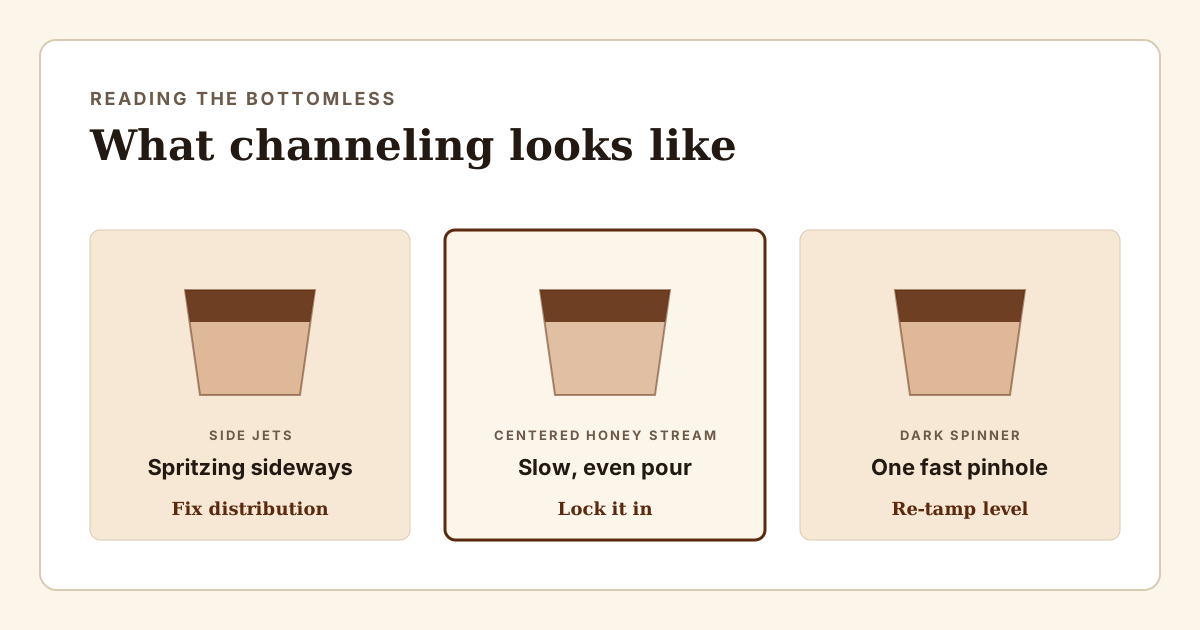
Side jets / spritzers. Thin, fast streams shooting sideways or at sharp angles out of the basket, especially in the first 5 to 10 seconds. Classic channeling. Water has found a path near the edge where the puck doesn’t seal against the basket wall.
A single dark “spinner” or pinhole stream. Most of the basket is dry or barely dripping, and one spot is producing a fast, dark stream. Severe channeling through a single defect.
Blonding too early. Pale, watery flow within 12 to 15 seconds when the recipe says you should still be in the rich, dark phase. The channel is bypassing the coffee bed, so dissolved solids drop off fast.
Puck cracked or torn after the shot. Pop the puck out and look at the top. Visible fissures, a moon crater, or one side dished out are signatures of where the water went. A clean puck has a smooth, uniformly damp top with no breaks.
Shot pulls fast and tastes both sour and bitter. The flavor signature without any visual cue. If you only have a spouted portafilter, this is the diagnostic to trust.
The opposite of a channeled shot looks like this: a slow start (3 to 6 seconds of nothing), then a single, slow, honey-thick stream that emerges from the center of the basket, grows to maybe pencil-lead thickness, and stays there until you stop the shot, with no side jets, spinning, or spray.
Why it happens
Channeling has four common causes, in roughly the order you should suspect them:
1. Uneven distribution before tamping
Grinders dispense coffee in clumps and uneven mounds. If you tamp on a mound, the dense side resists water and the loose side passes it. This is the #1 cause and the easiest to fix. A WDT tool (a few thin needles you stir through the dry grounds) levels density before tamping. Five seconds of stirring eliminates most channeling for most people. There’s no reason to skip it.
2. Cocked tamp
Tamping at an angle leaves one side of the puck denser than the other. Water takes the loose side. Beginners do this without realizing because they look at the tamper from above and don’t notice the handle tipping. Anything from 15 to 30 lbs of tamp pressure works. What matters is that the tamp is level. A calibrated tamper or a self-leveling tamper removes the variable; the full technique, including the rituals to skip, is in tamping technique.
3. Wrong dose for the basket
An under-dosed basket leaves a gap between the puck top and the shower screen. When the screen pressurizes, the puck domes upward, the edges separate from the basket wall, and water roars around the edges. An over-dosed basket gets compressed against the screen, the screen leaves an impression in the puck, and the grounds against the screen erode unevenly.
Most 18 g VST and IMS baskets want 18.0 to 18.5 g. Stock manufacturer baskets often want 1 to 2 g less than printed. Trust the headspace test over the number printed on the basket.
4. Basket and screen problems
A worn or warped basket has irregular hole spacing or a bent rim that won’t seal. A clogged shower screen forces water through whichever holes are still open, creating a localized jet. Pull the screen weekly, scrub it, and replace baskets every couple of years on heavy use.
Stale beans contribute too: they degas more violently and the CO2 burst can crack a puck during pre-infusion. Beans more than 6 weeks past roast are channeling-prone even with perfect technique.
The fix, in order
Work the list top down. Stop when channeling stops; don’t change everything at once or you won’t know what was wrong.
- Add WDT. Stir the dry grounds with a tool (or a paperclip bent straight) for 5 seconds before tamping. Reach the bottom of the basket.
- Tamp level. Look at the tamper from the side, not the top. The base should be parallel to the rim of the portafilter.
- Weigh the dose to the basket. Use a scale, not a “fill to the line” approach. Find the dose where the puck has a 2 to 3 mm gap below the screen when locked in (the headspace test: lock in the empty-handed portafilter after tamping, unlock it, look for a faint screen impression).
- Pre-infuse if you can. A slow ramp at 2 to 4 bars for 5 to 10 seconds wets the puck gently before full pressure hits it. Many channels form in the first second of full pressure on a dry puck. Machines with manual pre-infusion (Bambino Plus, Lelit, most prosumer) make this easy; lever machines do it inherently.
- Then, and only then, look at the grinder and beans. If channeling persists after the above, your beans are stale, your grinder is producing too many fines, or your basket is damaged.
Most people fix channeling permanently with steps 1 and 2 alone. The rest is for stubborn cases.
Common mistakes
Grinding finer to “fix” channeling. Finer grinds create more fines, which clump harder, which channels worse. If your shot is fast and tasting sour-bitter, going finer makes it more sour-bitter. Fix distribution before you adjust the grind.
Tapping the portafilter hard on the counter after tamping. This is everywhere on YouTube and it’s a channeling source. A hard tap cracks the puck against the basket wall and creates a perfect channel ring around the edge. Tap to settle the grounds before tamping, never after.
Believing the puck “looks fine” from above. The top of the puck tells you almost nothing. The channel forms underneath, where you can’t see it. A bottomless portafilter is the only way to see what actually happened during the shot.
Blaming the machine. Home espresso machines below $300 do have flow problems, but on any prosumer machine ($400+), channeling is 95% a puck-prep problem. Look at your prep before blaming the hardware.
Treating “wet pucks” as channeling evidence. A soggy puck after the shot is normal and means almost nothing. Some machines back-flush the basket after the pump stops; some don’t. Puck appearance during ejection is a weak signal compared to flow during the shot.
Troubleshooting
My bottomless shot sprays everywhere, every time, even with WDT and a level tamp. Check the basket rim for dings (drop damage warps the rim and breaks the seal) and check the shower screen for clogs. If both look clean, try a different basket; some stock baskets have poor hole patterns and channel even with perfect prep. An aftermarket precision basket (VST, IMS, Pesado) is $25 and fixes a surprising number of “I can’t pull a clean shot” cases.
The shot looks clean from the bottomless but still tastes sour-bitter. Then it’s not channeling. Re-check your dose-yield-time recipe, your bean freshness, and your water (very soft RO water under-extracts and produces a similar flat sour-bitter profile). See the dial-in guide and the troubleshooting decision tree.
Only the first shot of the day channels; the rest are fine. Cold group head. Run a 5-second blank flush before the first shot to warm the screen and basket. Cold metal contracts the basket fit slightly and changes how the puck seals.
I added WDT and now my shots run slow and bitter instead of channeling. WDT genuinely improves extraction, which means a recipe dialed in with channeling will over-extract once channeling is gone. Grind one or two notches coarser and re-dial. That’s progress: the shot is finally extracting the way the recipe intended. Re-dial from here.
The puck has a wet, soupy top after every shot. Almost always under-dosed for the basket. The grounds aren’t filling the puck space, headspace is huge, and water pools. Add a gram and re-test.
Channeling started after I changed beans, with no other change. Light roasts channel more than dark; they’re denser, harder, and produce more fines per gram. Stir longer with the WDT, tamp slightly lighter, and consider a longer pre-infusion. The same prep that worked on a medium roast often needs to be more careful on a light one.
Frequently asked
Do I really need a bottomless portafilter?
Yes, if you're trying to diagnose channeling. Spouted portafilters hide everything; you only see the output, not the flow at the basket. A bottomless turns an invisible problem into an obvious one. It's $25 and pays for itself the first week.
Is channeling always bad? I've heard light roasts always channel a little.
Some micro-channeling is normal and invisible to the tongue. What matters is whether the cup tastes sour-bitter and whether you see side jets or spinners on a bottomless. A few small wet spots on the basket underside during the shot is fine; a horizontal jet is not.
Do puck screens help with channeling?
A little, mostly because it distributes the initial water hit across the puck top instead of letting it pierce a single spot. Puck screens are a small, real improvement (worth the $15) but they don't fix bad distribution or a cocked tamp. WDT and level tamping do more.
Why does my shot channel on a bottomless but taste fine?
Because the channeled fraction is small relative to the total yield. Your tongue averages the whole cup. Light channeling can be invisible to taste. If the cup tastes fine and the shot time is in range, minor spritzing isn't worth chasing.
Can I prevent channeling with pressure profiling or pre-infusion alone?
Pre-infusion helps a lot, especially the slow ramps on Lelit, ECM, and Decent machines. It wets the puck gently before full pressure, which prevents most pressure-induced cracks. But it can't fix a puck with uneven density. Get the prep right first; pre-infusion is the safety net, not the fix.