
Why are my espresso shots inconsistent
Same beans, same grind setting, different shot every time. The four real sources of shot-to-shot variance at home, ranked, with the tolerances that tell you which one you have.
What you'll need
- A 0.1 g scale : The whole diagnosis depends on knowing your dose to a tenth of a gram. A 1 g kitchen scale hides the most common cause of variance.
- A shot log : Notes app or a paper pad by the machine. Four columns, being dose in, yield out, time, and taste. Three shots of data beats a week of guessing.
- A bottomless portafilter : Turns puck-prep variance from invisible to obvious. The cheapest diagnostic tool in espresso.
- A distribution tool or WDT needles : Only worth buying once the log shows the variance is in the puck and not in the dose.
TL;DR
Shot-to-shot variance almost always comes from four places, in this order of size: the dose weight, the puck prep, the machine temperature, and the age of the beans. Weigh the dose to 0.1 g and the yield to 1 g, prep the puck identically every time, give the machine 20 to 30 minutes from cold, and log three consecutive shots before you touch the grinder.
The tolerance that tells you whether you have a problem at all: at a fixed setting, dose within 0.2 g, yield within 1 g, and time within 2 seconds. Wider than that and something in the process is moving.
Log three shots before you change anything
Most people diagnose inconsistency from memory, which is where the diagnosis goes wrong. Memory records taste, and taste is the last link in a chain of four numbers. Write down dose in, yield out, shot time, and a one-word taste note for three shots in a row, changing nothing between them.
The pattern in those three rows tells you which cause you have:
- Dose column moves, everything else follows. Time and taste are downstream. Go to grinder retention below.
- Dose is pinned, time swings by 4 seconds or more. The puck is different each time.
- First shot is an outlier, shots two and three agree. Temperature, not technique.
- All four columns drift slowly over days. The beans are ageing, not the machine misbehaving.
- Numbers are all in tolerance, taste still swings. Look at the water, the cup, and what you ate. This is the rarest case, and it is usually not the espresso.
Three rows of data costs ten minutes. Guessing costs a week and a bag of coffee.
1. Dose weight and grinder retention
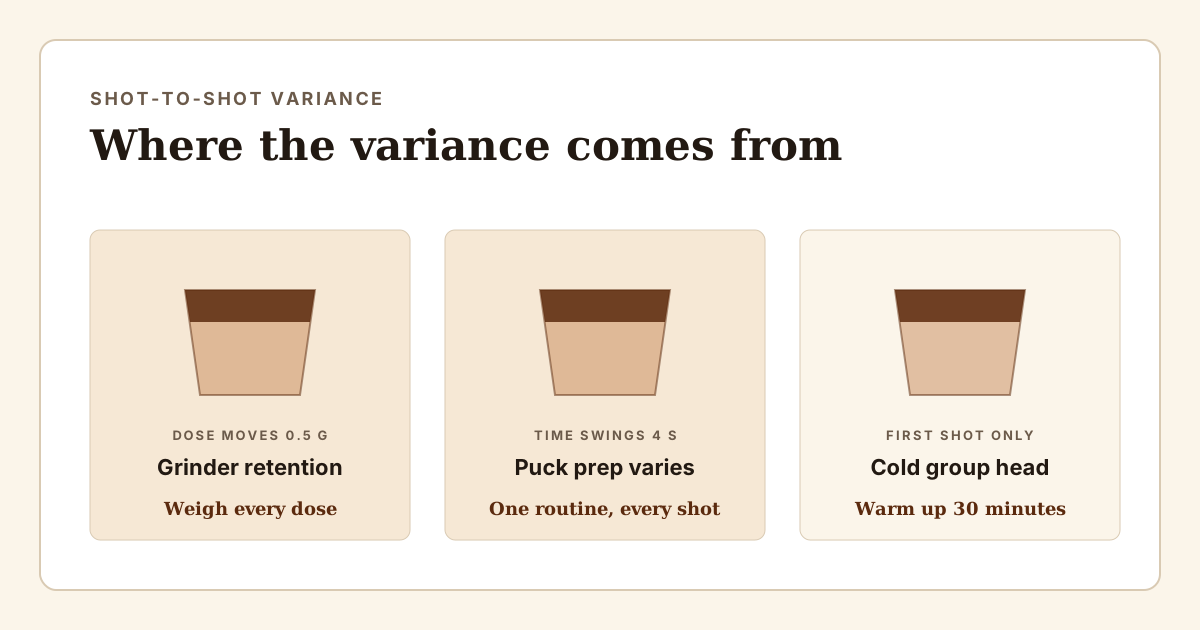
This is the biggest and least visible cause on home setups. Grinders hold grounds inside the burr chamber and chute. Those grounds come out during the next dose, so a grinder that swallows 0.5 g of one dose hands it back on the following one. Grind 18 g of beans and you might collect 17.5 g, then 18.4 g, then 17.9 g.
Half a gram on an 18 g dose is a 3% shift in the brew ratio and typically 2 to 4 seconds of shot time. That alone accounts for most “my machine is possessed” complaints.
What to do about it:
- Weigh every dose into the basket to 0.1 g. Not the beans going in, the grounds coming out. Adjust by adding or removing beans on the next grind.
- Spritz the beans with water before grinding. A single drop stirred through the beans (the Ross Droplet Technique) kills static, which is what makes grounds cling inside the chute and to the walls of the dosing cup.
- Purge 2 to 3 g through the grinder if it has been sitting since yesterday, or if you changed the setting. The first grounds out after a change are a blend of two settings.
A grinder that cannot hold particle size consistently is a different and more expensive problem, and the buying criteria for that are in how to choose an espresso grinder.
2. Puck prep
With the dose pinned, the next variable is what happens between grinding and locking in. Two pucks of identical weight can have very different internal structure, and water finds the loosest path through each one.
Grounds clump straight out of the grinder, and clumps leave voids. Distribution work breaks them up; WDT tools do it with needles and a tap-and-settle routine does most of it for free. Tamping then sets the final surface, and levelness matters more than pressure, which is covered in tamping technique.
Puck-prep variance has a signature in the cup: thin and sharp up front with a harsh finish, as if two different shots were poured together. Under a bottomless portafilter it is visible directly, as a jet firing sideways while the rest of the basket dribbles. That is channeling, and it is a prep problem rather than a recipe problem. Chasing it with grind adjustments makes the log messier without fixing anything.
The fix is not a better tool, it is the same tool used the same way. Pick a routine (grind into a dosing cup, WDT for 10 seconds in the same pattern, settle with three taps, tamp level) and refuse to vary it for a week.
3. Machine temperature
Espresso machines report “ready” when the boiler or thermoblock hits target. The group head, portafilter, and basket are large lumps of brass and steel that lag well behind, and they are what the water actually touches on its way to the coffee.
Practical consequences:
- From cold, give it 20 to 30 minutes with the portafilter locked in, whatever the ready light says. Five minutes is enough for the boiler and nowhere near enough for the group.
- Run a blank shot (no coffee, portafilter locked in) immediately before pulling if the machine has been idle for more than 15 minutes. It flushes cooled water out of the group.
- Shot spacing matters on single boilers. Pull, steam milk, then pull again and the second shot is hotter. Machine type changes the size of this effect, and the differences are laid out in single boiler vs heat exchanger vs dual boiler.
If your log shows shot one at 24 seconds and shots two and three at 29, you have found the cause and no grinder adjustment will fix it.
4. Bean age across the bag
A bag of coffee is not one ingredient. Fresh beans off roast hold CO2, which resists water flow and produces a fast, gassy shot with heavy crema. As the bag degasses over two to three weeks, the same grind setting flows faster and the shot shortens.
The result is a slow drift, not a random jitter: your dialed setting from day 5 pulls short by day 18. Re-dial once a week, always finer as the bag ages, and note the roast date on the log. Storage slows the drift but does not stop it, and the mechanics are in how to store espresso beans.
Under about 4 days off roast, the drift is fast enough that daily re-dialing is normal. That is not inconsistency, it is a bag that has not settled.
Common mistakes
Changing two things between shots. Grind finer and add a WDT pass in the same pull and the next shot tells you nothing about either. One variable per shot, always. This is slower for one morning and faster for the month.
Blaming the grinder before weighing anything. Retention and static are grinder behaviours that a scale defeats in ten seconds a shot. Buying a new grinder to fix a dose you never measured is the most expensive way to not solve this.
Treating the ready light as a temperature reading. It reports the boiler, not the brew path. Machines with small thermoblocks are the worst offenders here because they heat quickly and hold heat poorly.
Re-dialing off a single bad shot. One 20-second gusher after four good shots at 28 is usually a prep miss, not a setting that changed by itself. Pull a second shot before you touch the grinder.
Keeping the dose loose because “it’s only half a gram”. Half a gram is 3% of an 18 g dose, which moves the ratio further than most people’s deliberate ratio adjustments do. Precision at the start of the chain costs nothing and removes the noise from everything after it.
Comparing shots pulled into different vessels. A cold ceramic cup, a warm glass, and a plastic cup give three different first impressions of the same shot. Taste from the same vessel while diagnosing.
Troubleshooting
Shot times swing 5 or more seconds at a fixed setting. Weigh the dose coming out of the grinder for five shots. If it varies by more than 0.2 g, retention and static are the cause and weighing every dose fixes it. If the dose is stable, the puck prep is the variable.
The first shot each morning runs fast, the rest are fine. Cold group head. Extend the warm-up to 30 minutes with the portafilter locked in, and run a blank shot before the first pull. If it persists on a thermoblock machine, pull a throwaway shot with a full basket instead; the mass of wet coffee helps stabilise the group.
Same setting, same dose, one shot in four gushes. A prep miss rather than a settings problem. Pull one on a bottomless portafilter and watch the first 10 seconds: spray from a single point means the puck had a void or a crack in it.
Everything is stable but the shots got faster over the last week. The bag is degassing on schedule. Grind one step finer and expect to do it again in a week. Check the roast date; past 6 weeks the drift flattens because the aromatics have gone with it.
The log looks perfect and the coffee still tastes different day to day. Check the water first, particularly if you refill from a filter jug of unknown age. After that, look at cup temperature and at what you drank or ate in the previous hour. Palate variance is real and it is not a machine fault.
Shots are consistent on one bag and wild on the next. Bean density varies by origin and process, and a light or natural-process coffee can be far more sensitive to prep than a medium blend. Re-dial from scratch on a new bag rather than assuming the old setting transfers, and if the bean is light, the tighter rules in how to dial in light roast espresso apply.
Frequently asked
How much shot-to-shot variation is normal?
At a fixed grind setting with a weighed dose, expect the time to land within about 2 seconds either side of your target and the taste to stay recognisably the same. Swings of 5 seconds or more between back-to-back shots mean something in the process is moving, not the machine being moody. Across a whole bag over two weeks, drift is expected and you re-dial for it.
Should I weigh the dose every single shot?
Yes, until the log is boring. Weighing takes 10 seconds and removes the single largest source of variance on most home setups. Once you have proved your grinder returns the same dose within 0.2 g for a week, you can go by feel on weekday mornings and weigh again whenever the shots wander.
Is my cheap grinder the reason my shots are inconsistent?
Sometimes, but it is blamed far more often than it deserves. Retention and static are grinder problems and they are fixable with weighing and a spritz of water on the beans. Genuinely inconsistent particle size is a grinder problem you cannot work around, and it shows up as shots that vary even when the dose, prep, and temperature are all pinned down.
Why is the first shot of the day always different?
The group head, portafilter, and basket are still cold or only partly warmed. Metal takes far longer to reach equilibrium than the boiler does, so the machine reports ready while the brew path is still 10 degrees down. Give it 20 to 30 minutes from cold, leave the portafilter locked in, and run a blank shot right before you pull.
Do I need to re-dial every new bag of the same beans?
Yes, and it is not a failure. Roast date, bean density, and even ambient humidity shift between bags of the same coffee. Budget one or two shots at the start of a bag to find the setting, then expect to nudge the grind slightly finer as the bag ages past two weeks.