
Espresso pre-infusion explained
What pre-infusion actually does to the puck, when it helps, when it hurts, and how to set it on machines that let you.
TL;DR
Pre-infusion is a low-pressure wetting phase (usually 2 to 4 bar for 5 to 10 seconds) before the pump hits full 9 bar. It saturates the puck evenly, reduces channeling, and lets you grind a touch finer for higher extraction. It is genuinely useful on light roasts and problem pucks, and mostly cosmetic on well-prepped medium roast. If your machine has it, use it. If it does not, do not lose sleep.
What pre-infusion actually does to the puck
When dry ground coffee meets 9 bar of pressure instantly, two bad things can happen. First, water finds the path of least resistance through the driest, loosest spot in the puck and blasts through it, which is channeling. Second, the sudden pressure spike compresses the puck unevenly, creating cracks and voids where water then races.
Pre-infusion is the fix. Water enters the group at 2 to 4 bar (some machines just use line pressure, around 1 to 2 bar), soaks into the dry grounds, and lets CO2 escape without much resistance because there is no closed pressure yet. The puck swells, fills the basket, and becomes a uniform hydraulic barrier. Then full pressure hits an already-saturated, evenly-packed bed, and the water has no easy channel to exploit.
The measurable outcomes: extraction yield goes up 1 to 3 percentage points on the same grind, first drops appear later at the spout (typically 8 to 12 seconds instead of 5 to 7), and the shot has a longer, more even flow. The perceptual outcome on a good bean is more sweetness, more clarity, less astringency. On a bad bean or a poorly-prepped puck, pre-infusion cannot save you, and expecting it to is the most common source of disappointment.
The three flavors of pre-infusion
Not all machines mean the same thing when they say pre-infusion. Knowing which type yours has changes how you dial in.
1. Line-pressure pre-infusion
The pump does not run. A solenoid opens and lets tap-line water (typically 1 to 3 bar depending on your building) into the group. Common on plumbed HX and dual-boiler machines: Rocket Appartamento, older Profitecs, most E61 group machines. Duration is user-controlled by holding the brew paddle in the middle position, or fixed at a few seconds.
This is the gentlest form. It wets the puck at very low pressure, so you get long soak times without pushing water out the spout. The tradeoff: on tank-fed machines you get zero pre-infusion at all from an E61 group unless you retrofit a pump kit, because there is no line pressure.
2. Pump-driven low-pressure pre-infusion
The pump runs but through a restrictor or at a programmed lower voltage, holding pressure at 2 to 4 bar for a set duration. This is what Breville calls “pre-infusion” on the Bambino Plus and Barista series, and what most modern prosumer machines with electronic controls do (Lelit Elizabeth, Profitec Pro 400).
More aggressive than line-pressure. Because water is being actively pushed, first drops arrive sooner, and long pre-infusions (over 10 seconds) can start extracting before you hit full pressure. That is not always bad, but it changes what “shot time” means.
3. Programmable pressure profiling
Machines with a gear pump or paddle-controlled pressure (Lelit Bianca, Decent, Slayer, Profitec Pro 700 with flow control) let you set the pre-infusion pressure and duration precisely, and often ramp up rather than jump to 9 bar. This is pre-infusion as a design variable rather than a preset.
Powerful, but the learning curve is steep. If you have one of these machines and are still figuring out grind, do not touch the profile. Get a repeatable flat 9 bar shot dialed in first, then experiment.
When pre-infusion helps and when it does not
Light roasts: helps a lot. Light roast beans are dense and hard to extract, so the extra 1 to 3 percent yield from pre-infusion turns a sour shot into a balanced one. Combined with the specific advice in how to dial in light roast espresso, pre-infusion is close to required on lights.
Medium roasts: modest help. Well-prepped pucks pull fine without it. Pre-infusion mostly shows up as a slightly rounder, sweeter cup and a lower channeling rate. Nice to have.
Dark roasts: often neutral or slightly negative. Dark roasts extract easily and pre-infusion can push them into over-extraction and ashy bitterness. Use short pre-infusions (3 to 5 seconds) or skip it.
Aged or stale beans: pre-infusion cannot save stale beans. If your beans are past 6 weeks post-roast, the flatness is not a pre-infusion problem. See how to store espresso beans for maximum freshness.
Poorly-distributed pucks: pre-infusion helps a little because it evens out flow before pressure locks in, but a proper distribution routine with a WDT tool helps ten times more. Fix the puck first.
How to set it up
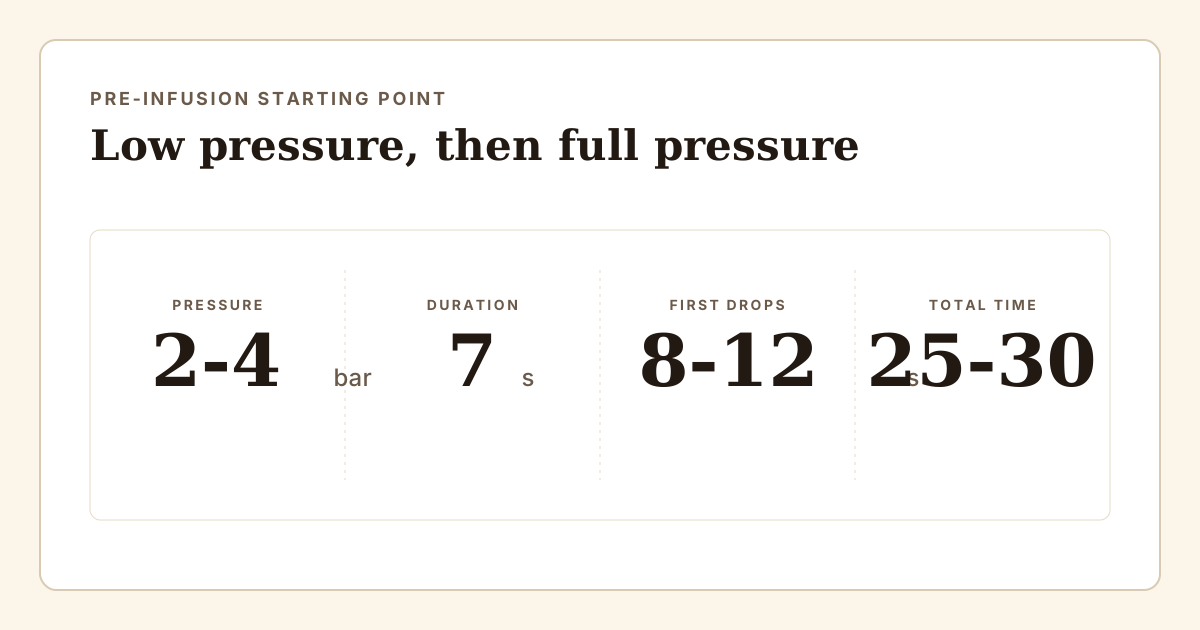
If your machine has an adjustable pre-infusion, here is the starting point that works for most beans:
- Pressure: whatever the low-pressure setting is (usually 2 to 4 bar, not user-adjustable on most machines).
- Duration: 7 seconds for medium, 8 to 10 seconds for light, 3 to 5 seconds for dark.
- Grind: one to two notches finer than you would without pre-infusion. Pre-infusion lets a finer grind flow without stalling, and finer is where the flavor gain lives.
- Total shot time target: still 25 to 30 seconds from pump-on to cutoff, pre-infusion included.
Pull a shot, taste, and adjust grind first. Only touch pre-infusion duration if grind changes alone cannot hit both time and flavor. A rule of thumb: if the shot pulls in range but tastes hollow, extend pre-infusion by 2 seconds. If it tastes over-extracted or ashy, shorten by 2 seconds.
Common mistakes
Treating pre-infusion as an on/off flavor upgrade. It is a technique for controlling how water enters the puck, not a magic button. Turning it on without adjusting grind usually gives you a longer, weaker shot and a disappointed reviewer.
Not counting pre-infusion time in shot time. The 25 to 30 second window is total time under water, not just full-pressure time. A shot with 10 seconds of pre-infusion and 25 seconds of pull is a 35 second shot, which for most beans is too long.
Using long pre-infusions on dark roasts. Dark roast solubles come out fast. A 12 second pre-infusion at 3 bar can extract half the shot before you hit 9 bar, and the finish will be ashy. Keep it short or skip it.
Blaming pre-infusion for a channeling problem. If your shots channel with pre-infusion on, they will channel without it too. Channeling is a puck-prep issue: uneven grounds, cocked tamp, or dose too low for the basket. Fix the puck.
Copying a barista’s Slayer profile onto a Breville. Pressure profiles from one machine do not transfer. The pumps, group volumes, and flow rates differ. Use published profiles as a rough direction, not a recipe.
Troubleshooting
First drops appear at the spout during pre-infusion. Either the pre-infusion is too long, the pre-infusion pressure is too high, or the grind is too coarse. First drops should appear only after full pressure hits, typically 8 to 12 seconds in. If they appear at 5 seconds, cut pre-infusion duration by half and re-pull.
Shot stalls (no flow) after pre-infusion ends. The puck absorbed water, swelled, and now the grind is choking full pressure. Coarsen the grind by one notch. This is the most common newcomer surprise when enabling pre-infusion for the first time.
Pre-infusion shots taste worse than no-pre-infusion shots on the same bean. Likely over-extraction. Shorten the pre-infusion, coarsen the grind slightly, or both. Also check the roast date: pre-infusion amplifies whatever the bean is, and a bean past its window will taste more tired with pre-infusion than without.
My E61 machine “has pre-infusion” but a shot on the tank behaves the same as one plumbed in. E61 pre-infusion relies on line pressure. On a tank-fed setup with no line pressure, the group’s pre-infusion chamber does very little. This is a real hardware limitation, not user error. A lever-actuated flow control device is the retrofit if you care.
The shot pulls in the right time but tastes flat and thin. Pre-infusion pushed extraction the wrong way, or the grind never got fine enough to compensate. Go finer by two notches and re-pull. If it stalls, back off one notch. You are hunting for the finest grind that still flows in 25 to 30 seconds total, which is where pre-infusion earns its keep.
Frequently asked
Does pre-infusion make espresso taste better?
It can, on light roasts and finicky beans, by reducing channeling and pushing extraction a little higher. On well-distributed pucks of medium and dark roast it often makes no perceptible difference. Treat it as a tool for specific problems, not a universal upgrade.
How long should pre-infusion be?
Start at 5 to 8 seconds of low-pressure wetting at 2 to 4 bar, then hit full pressure. If first drops appear at the spout before you cut to full pressure, back off a second or two. If the shot still gushes and channels, extend to 10 to 12 seconds and go finer on the grind.
Is pre-infusion the same as a bloom in pour-over?
Related but not identical. A pour-over bloom is about degassing wet grounds at atmospheric pressure. Espresso pre-infusion wets the puck under 2 to 4 bar of pressure, which also compacts it. The mechanism overlaps but the numbers do not translate.
My machine has no pre-infusion. Am I missing out?
Probably not. A good tamp, thorough distribution with a WDT tool, and fresh beans get you 90 percent of the benefit. Pre-infusion helps most when the puck has flaws, and fixing the flaws is cheaper than buying a new machine.
Should I count pre-infusion time in my shot time?
Yes. The 25 to 30 second window includes pre-infusion. If your machine pre-infuses for 8 seconds and then pulls for 22, that is a 30 second shot, and it should taste like one.