
How to dial in light roast espresso
Light roasts need higher temperature, longer contact time, and a wider ratio than dark. The recipe changes that actually matter, in the order to try them.
What you'll need
- A grinder that goes fine enough : Entry grinders often bottom out before a light roast chokes. If you're at the finest setting and still gushing, the grinder is the limit.
- Machine with adjustable brew temperature : A PID or a machine with a temperature offset. Fixed-temperature machines can still do it but you lose the most useful lever.
- Fresh light roast beans : 10 to 21 days off roast. Anything younger will spit and taste grassy no matter what you do.
- A 0.1 g scale and timer : Non-negotiable for light roast, where a 2 g yield swing shifts the whole cup.
TL;DR
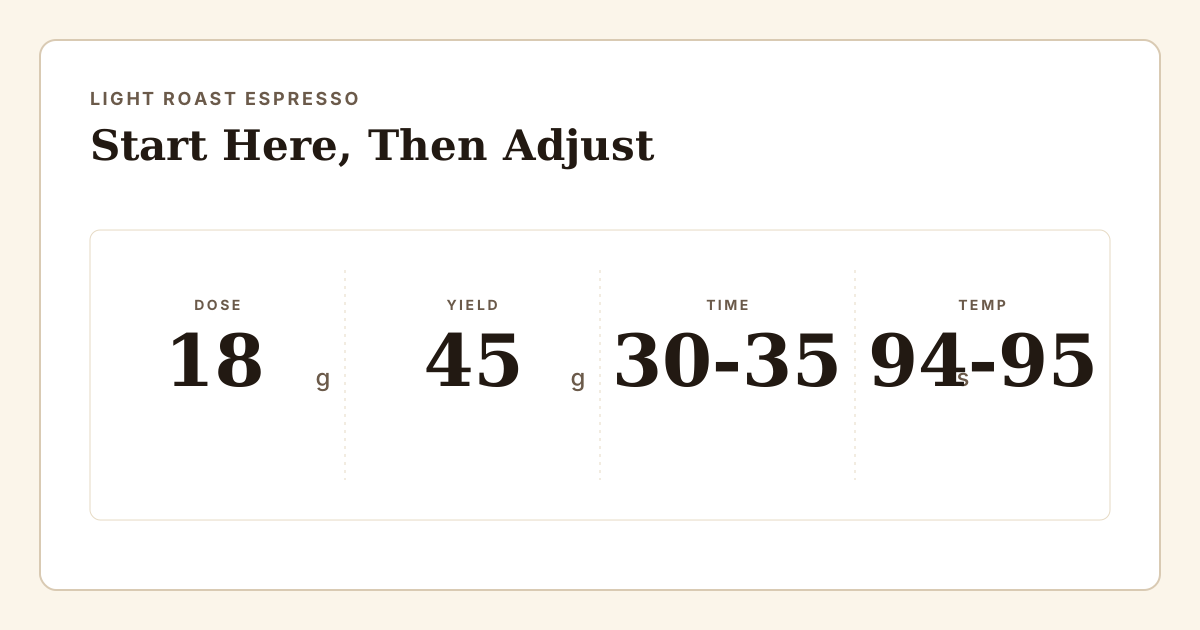
Light roasts need more heat, more time, and more water than the standard 1:2 espresso recipe. Start at 18 g in, 45 g out (1:2.5), 30 to 35 seconds, 94 to 95°C, and grind finer than you think. If it still tastes sour and grassy after two grind adjustments, raise the brew temperature by 1°C and stretch the ratio to 1:3. Rest the beans 10 to 14 days off roast before you bother.
The general dial-in loop (grind finer for sour, coarser for bitter) is the foundation and lives in how to dial in espresso. This guide is what changes when the roast is light.
Why light roast breaks the standard recipe
Light-roasted coffee is denser and less soluble than medium or dark. The cells haven’t been fractured as thoroughly by roast heat, so water has a harder time pulling flavor compounds out. Run a light roast through a 1:2, 25-second recipe and you’ll get a shot that’s technically underextracted no matter how fine you grind: sour up front, savory-flat in the middle, no sweetness on the back.
The fixes all push extraction up:
- Finer grind for more surface area and slower flow.
- Higher temperature for faster diffusion out of the bean.
- Longer ratio (more water) to keep pulling solubles once the easy ones are gone.
- Longer contact time as a consequence of the above.
Roast level is the single biggest variable in how a bean wants to be pulled, and the light/medium/dark differences explain why. Everything below is the practical recipe for light specifically.
The starting recipe
Set these numbers before you pull the first shot:
- Dose: 18 g (or whatever your basket is rated for; keep it fixed).
- Yield: 45 g. That’s a 1:2.5 ratio, wider than the standard 1:2.
- Time: 30 to 35 seconds including pre-infusion.
- Temperature: 94°C (201°F) if you can set it. If your machine is fixed around 92 to 93, that’s your first bottleneck.
- Pre-infusion: if you have it, 8 to 12 seconds at low pressure. Line pressure pre-infusion (around 3 bar) works well.
These are starting points. Adjust in the order below.
The dial-in order
Change one variable per shot. The order matters because each one affects what the next one tells you.
1. Grind, until the shot no longer gushes
Grind finer than your medium-roast setting for the same bean weight. Light roasts will accept a much finer grind before choking. Pull a shot and watch the flow: you want a slow, steady rope forming around 8 to 10 seconds, not a fast dribble at 5 seconds.
If it gushes below 25 seconds, grind finer. Keep going. Most people stop too coarse on light roasts because they’re used to how dark roasts choke.
Wall check: if you hit the finest setting on your grinder and the shot is still fast and sour, the grinder is the limit. This is the most common hardware ceiling on light roast, and it’s covered in how to choose an espresso grinder.
2. Ratio, once the time is in range
With the time now in the 28 to 35 second window, taste. Light roast that’s grind-dialed but still lacking sweetness usually wants more water, not less time. Stretch the yield in 3 g increments: 45 g, then 48 g, then 51 g. Somewhere in there the shot will click into a syrupy sweetness with the acidity still present but no longer dominant.
If it gets thin and watery past a certain yield, back off 3 g. That’s your ratio for this bean.
3. Temperature, if sourness won’t leave
If the shot is dialed on grind and ratio and still tastes sour or vegetal, raise the brew temperature 1°C. Pull, taste. Another 1°C if needed. Most light roasts finish somewhere between 94 and 96°C. Above 96, you’ll start pulling bitter compounds that weren’t there before, which tells you you’ve overshot.
Machines without adjustable temperature can fake this by flushing less between shots (heat exchangers) or by waiting longer for the thermoblock to fully saturate. Neither is as clean as a real PID.
4. Pre-infusion, for the last mile
A longer, lower-pressure pre-infusion evens out extraction across the puck and lets light roast bloom before the full 9 bars hit. If your machine has a manual paddle or flow control, try 10 to 15 seconds at 2 to 4 bar before ramping. If it doesn’t, skip this step; grind and temperature do 90% of the work.
What a dialed light roast tastes like
The best light roast espresso doesn’t taste like traditional espresso. It’s brighter, lighter-bodied, closer to a very concentrated pour-over than to a dark syrupy shot. Expect:
- Acidity present but structured. Not sour, but noticeably fruity or citric.
- Clarity of flavor. You can taste the specific origin notes (jasmine, blueberry, red apple) rather than “coffee.”
- Sweetness on the back. This is the last thing to arrive when dialing. If it’s missing, you’re not done.
- Lighter crema. Thin, pale, dissipates faster than dark roast crema. This is normal, not a fault.
If you’re chasing thick tiger-striped crema, you’re chasing the wrong bean. Light roasts don’t produce it and never will.
Common mistakes
Not resting the beans long enough. Light roasts need 10 to 21 days off roast to pull cleanly. Younger than that and the puck degasses violently under pressure, causing spitting, channeling, and unpredictable flow. If you’re dialing at day 5, stop and wait a week. Storage matters too; the mechanics are in how to store espresso beans.
Sticking to 1:2. The single most common light-roast mistake. Modern specialty roasters develop their beans expecting a 1:2.5 to 1:3 espresso ratio. Refusing to stretch the yield locks you into permanent underextraction.
Grinding “medium” because it’s espresso. Light roasts want a finer grind than dark for the same shot time. Trust the flow, not the setting number.
Blaming the recipe when the puck is channeling. A shot that tastes sour and bitter at the same time, or a bottomless portafilter with spraying jets, is channeling, not a dial-in problem. Fix the puck prep first, then dial.
Trying to dial in an ultralight filter roast on a home machine without flow control. Some Nordic-style roasts are developed for pour-over and pull as espresso only under specific pressure profiles. If you keep bouncing off one bag no matter what you change, buy a light roast the roaster explicitly labels for espresso.
Troubleshooting
Shot pulls in 32 seconds, ratio is 1:2.5, tastes lemony and thin. Underextracted despite the numbers. Raise temperature 1°C and stretch to 1:3. If that doesn’t fix it, the beans need more rest.
Shot is bitter and drying at 1:2.5, 30 seconds, 94°C. Over-extraction on a light roast is unusual and usually points to too fine a grind combined with too long a yield. Coarsen one notch and pull back to 1:2.25. Bitter light roast can also just be a badly developed roast; some “light” roasts are actually underdeveloped, which is a defect that no dial-in fixes. The full bitter breakdown is in why is my espresso bitter.
Puck sprays and hisses during pre-infusion. Beans are too fresh (under a week off roast) or the grind is too fine for the pre-infusion pressure. Rest the beans another 3 to 5 days or coarsen slightly.
Machine bogs down and the pump groans on light roast but not on medium. You’ve ground finer than the machine’s pump can push through. Coarsen a notch and compensate with more temperature or a longer ratio. This is a hardware ceiling on entry-level machines and not a technique problem.
Shots taste completely different between morning and evening on the same setting. The bean is still degassing (early in its rest window) or the grinder is holding onto old grounds. Purge 2 to 3 g through the grinder before every dial-in shot, and re-dial once a week for the first two weeks of a bag.
Everything is dialed but the cup is still lifeless and flat. The bean might be past its window. Light roasts past 6 to 8 weeks off roast lose the volatile aromatics that make them worth pulling. Check the roast date; buy fresher next time.
Frequently asked
How high should I really push the brew temperature?
Start at 94°C (201°F) and go up in 1° steps if the shot still tastes sour and grassy after you've hit the grind wall. Most light roasts land between 94 and 96°C. Above 96°C you risk scorching the more soluble notes; if you're there and still sour, the bean needs more rest, not more heat.
How long should I rest a light roast bag before dialing?
10 to 14 days off roast for most washed light roasts. Naturals and honeys often want 14 to 21. Under a week and the puck will hiss, spit, and pull unpredictably no matter what you do with the grinder.
Do I need a pressure profile or flow control machine for light roast?
No, but a lower pressure pre-infusion helps. If your machine has a manual paddle or a Flow Control, try 3 bar for 10 seconds before ramping to 9. If it doesn't, a longer pre-brew or a bloom via a manual paddle mod gets you most of the way. Fixed 9-bar machines still pull excellent light roast with grind and temp alone.
Why does my light roast taste sour even at 1:3 and 96°C?
Almost always underdeveloped roast, insufficient rest, or channeling. Some ultralight "filter roasts" are developed for pour-over and fight back on espresso no matter the recipe. Try a light roast the roaster explicitly labels for espresso before assuming your machine can't do it.
Can I dial in a light roast on a pressurized basket?
Not usefully. The pressurized insert masks the flow signals you need to read (blonde point, gushing, choking), and light roasts pull harder than the insert is designed for. Get a real single-wall basket before spending time on light roast.