
Tamping technique: pressure, levelness, and common mistakes
Levelness beats pressure. A practical guide to how hard to tamp, how to keep it flat, and which tamping rituals to stop doing.
What you'll need
- A tamper that matches your basket size : 58mm for most prosumer machines, 54mm for Breville/Sage. Within 0.1mm of the basket interior.
- A tamping mat : Flat, grippy, protects the counter. Any silicone or rubber mat works.
- A self-leveling tamper (optional) : Cheap insurance against cocked tamps. Not magic, but raises the floor for consistency.
- Your phone camera : For checking tamp angle from below. No purchase required.
TL;DR
Tamping does two jobs: it compresses the puck to a uniform density, and it seals the edge of the basket so water can’t sneak around the sides. Levelness matters far more than pressure. A level 15 lb tamp beats a cocked 30 lb tamp every time. Aim for firm, straight-down, one motion, no polish, no tap. If your shots are inconsistent, fix your tamp angle before you touch anything else.
What tamping actually does
Water follows the path of least resistance. A puck that’s denser on one side or has a gap along one edge will let water rush through the loose spot and barely touch the rest. That’s channeling, and it’s the number one reason home shots taste sour and bitter at the same time.
Tamping fixes two specific failure modes. First, uneven grounds after grinding: the dose sits in the basket like a small mountain range, and without compression the water just carves through the valleys. Second, the gap at the basket wall: espresso baskets are slightly wider at the top than the bed of grounds sits, and an untamped or cocked puck leaves a crescent-shaped void where water pours down unimpeded.
A good tamp collapses both problems. It does not, however, fix upstream distribution problems. Clumpy grounds tamped flat are still clumpy grounds; the water finds channels between the clumps once flow starts. Tamping is the last step in puck prep, not the whole thing. If your grinder throws clumps or your dose lands unevenly, handle that first with a WDT tool or a distribution technique before the tamp.
Pressure: how hard, and why it barely matters
The old advice was “30 pounds of pressure.” Bathroom-scale drills, calibrated tampers, the whole ritual. It turns out pressure above roughly 15 pounds barely moves the needle on extraction. Past a certain firmness the puck can’t get meaningfully denser; you’re just working your wrist.
What actually matters is:
- Consistency shot to shot. Whatever pressure you use, use the same pressure every time. A 20 lb tamp Monday and a 10 lb tamp Tuesday is two different recipes.
- Enough to seat the puck. You need to feel the grounds stop compressing under your hand. That’s usually 15 to 20 pounds for most people, which feels like a firm press, not a workout.
- Not so hard that you hurt yourself. Repetitive strain in the wrist and elbow from over-tamping is real. If your forearm aches after a week of pulling shots, you’re pressing way too hard.
Calibrated tampers (the kind with a spring that clicks at a set pressure) solve a problem most people don’t have. They enforce consistent pressure but do nothing for levelness, which is the actual failure mode. If you want a tool, a self-leveling tamper is more useful than a calibrated one.
The failure signal for wrong pressure is subtle: extractions drift slightly slow (over-tamped, hard puck) or slightly fast (under-tamped, loose puck), but the taste stays broadly balanced. Compare that to the failure signal for a cocked tamp, which is a shot that sprays sideways out of a naked portafilter and tastes like burnt lemon.
Levelness: the thing that actually matters
Hold the tamper like a doorknob, look straight down at the basket from directly above (not from a chair, not at an angle), and press straight down in one motion. The tamper base should meet the grounds parallel to the rim of the basket.
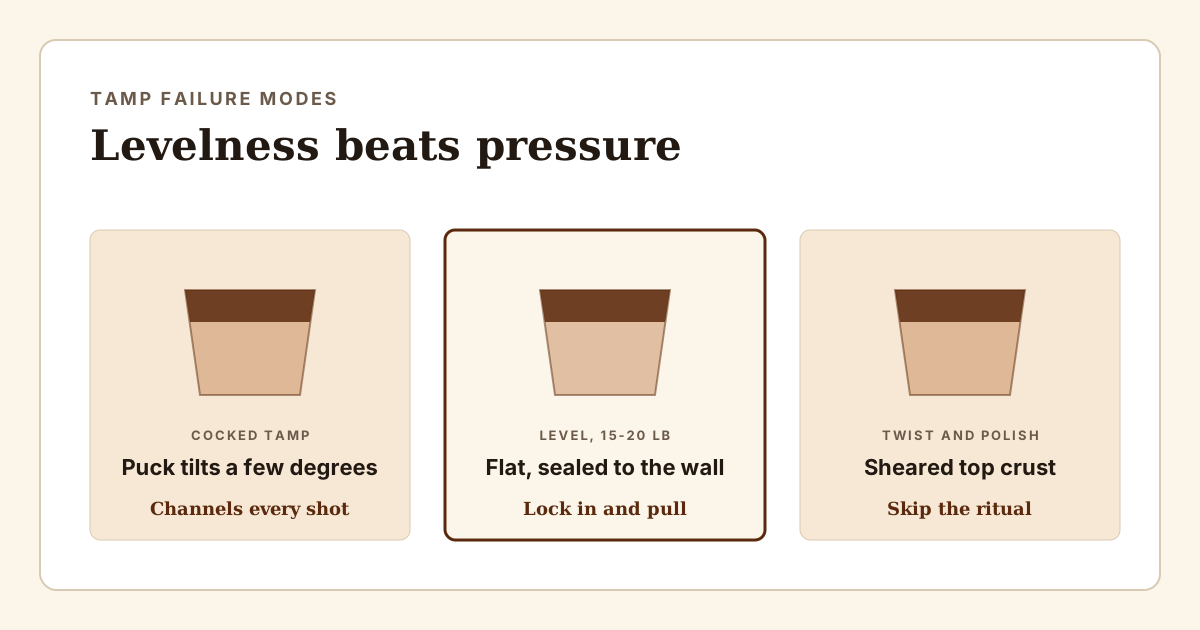
The most common tell for a cocked tamp: after you lift the tamper, look at the puck. Is the surface parallel to the basket rim, or does one side sit higher than the other? A tilted puck by even a millimeter or two produces visible channeling on a bottomless portafilter, with one side of the shot spitting or blonding earlier than the other.
Practical fixes for tamp levelness:
- Tamp on a flat surface, not the machine drip tray. Drip trays are rarely level, and the portafilter sits at whatever angle the tray happens to be. Use a tamping mat on the counter.
- Rest the portafilter on its spouts or in a tamping stand. Free-hand tamping while holding the portafilter horizontal is harder than it looks; the wrist rotates without you noticing.
- Use a self-leveling tamper if your levelness is inconsistent. These have a floating base that stays parallel to the basket wall as long as the outer collar contacts the rim. They’re not magic (you can still cock them if you push sideways), but they raise the floor.
- Check with a mirror or your phone camera. Rest the phone flat on the counter, camera up, tamp with the portafilter over it. The reflection shows tamp angle instantly.
The single-motion rule: press down, feel the puck seat, lift straight up. Don’t press, wiggle, twist, or tap the side. Every extra motion is a chance to disturb the seal.
The “polish” and other rituals to ignore
For a decade, home espresso videos taught a two-step tamp: press, then rotate the tamper a quarter turn to “polish” the surface. Some added a side-tap with a spoon or the tamper handle to “release” grounds stuck to the basket wall.
Skip all of that.
The polish twist can shear the top layer of the puck, creating a smooth crust with fractures underneath. Water hits the crust, finds a fracture, channels. The side tap is worse: it separates the puck from the basket wall by a hair, opening exactly the edge gap that tamping is supposed to close. If you’ve watched someone give the portafilter a firm bang on the counter before locking it in, they’re doing it wrong.
The one legitimate case for tapping is settling grounds before tamping, not after. A gentle tap on the counter (not the side) to level a mounded dose is fine. After the tamp, the puck should be untouched until it goes under the group head.
Common mistakes
Pressing at an angle without realizing it. Most people cock the tamp toward their dominant hand by a few degrees and never notice. Film yourself from the front once; you’ll see it. A dedicated tamping stand or a self-leveling tamper eliminates this.
Tamping too hard to “compensate” for a fast shot. If your shot pulls in 15 seconds, the fix is a finer grind, not a harder tamp. Extra pressure buys you maybe a second or two of extraction time and introduces inconsistency. Adjust upstream instead. The whole feedback loop is in how to dial in espresso.
Skipping distribution and expecting the tamp to fix it. The tamp compresses whatever pattern of grounds is in the basket. If they’re mounded or clumpy, you’re pressing an uneven puck flat on top while leaving density variations underneath. Distribute first, then tamp.
Tapping the portafilter after tamping. Breaks the wall seal. Whatever gets knocked loose isn’t worth the channeling you just created. Lock in and pull.
Using a tamper that doesn’t fit the basket. A 58mm tamper in a 58mm basket has maybe 0.5mm of clearance. If your tamper is 57mm or smaller, you’re leaving a ring of unpressed grounds around the perimeter, and that ring becomes a channel highway. Measure your basket and match the tamper within 0.1mm.
Polishing with a twist. Covered above. Press, lift. No spin.
Troubleshooting
My shots gush from one side of a bottomless portafilter. Classic cocked tamp. The high side of the puck has denser grounds, so water takes the low side. Check tamp angle with a phone camera under the basket, and consider a self-leveling tamper if the pattern persists across many shots.
My shots pull at the right time but taste both sour and bitter. Almost always channeling from an uneven puck, not a recipe issue. Distribution and tamp levelness are the first things to fix; more diagnostic paths are in why is my espresso sour and why is my espresso bitter.
I bought a calibrated tamper and my shots didn’t improve. Expected. Calibrated tampers fix pressure consistency, which wasn’t your problem. If you want a tool that improves shot quality, a self-leveling tamper or a WDT setup addresses the actual failure modes.
My puck sticks to the shower screen every time I release the portafilter. Not a tamping problem. That’s a dose or basket issue: not enough headspace between the tamped puck and the screen. Reduce the dose by a gram or check that you’re using the right basket for your machine.
My shots are inconsistent even though my tamp feels the same every time. Feels the same and is the same are different things. Tamp on a scale (bathroom scale on the counter, portafilter down, press until the number stabilizes) for a few shots to calibrate what “the same” actually feels like in pounds. Most people are within a 10 lb range of themselves when they thought they were dead consistent.
I have wrist pain from tamping. You’re pressing too hard, holding the tamper wrong, or both. Grip the handle like a doorknob, keep your wrist straight, and let your shoulder and elbow do the work. If it still hurts, drop the pressure. 15 pounds is plenty.
Frequently asked
How many pounds of pressure should I tamp with?
Around 15 to 20 pounds is plenty. Above that, extraction barely changes and your wrist starts complaining. Consistency matters more than the exact number, so pick a firmness that feels the same every time and stick with it.
Is a calibrated tamper worth buying?
For most people, no. Calibrated tampers enforce consistent pressure but do nothing for tamp angle, which is the real problem. A self-leveling tamper solves the failure mode that actually costs you shots.
Should I tamp twice, or press and then polish with a twist?
No twist. The polish shears the top of the puck and can create fractures underneath that channel during extraction. One firm press straight down, then lift straight up. Don't tap the side of the portafilter afterward either.
Does tamper diameter matter that much?
Yes. A 57mm tamper in a 58mm basket leaves a ring of loose grounds around the perimeter, which becomes a preferred channel path for water. Measure your basket and match the tamper within 0.1mm.
Can I tamp too hard?
You can hurt your wrist, and you can slightly slow the shot, but you can't crush the puck into a rock that ruins extraction. Past about 20 pounds you're doing extra work for no reward. If your forearm aches after a week of pulling shots, ease up.