
Espresso extraction explained: how it works and how to control it
What extraction is, which variables move it, and the order to change them when the cup is off. A mental model that survives past your first bag of beans.
What you'll need
- A scale that reads to 0.1 g : Extraction is a mass ratio. Without a scale you're guessing at the recipe.
- A shot timer : Built-in or a phone. You need contact time, not just start-to-stop feel.
- A grinder you can move in small steps : Extraction lives on the grinder dial. Coarse-stepped grinders make extraction hard to steer.
- Fresh beans with a roast date : Extraction behaves predictably on beans 7 to 28 days off roast. Older beans wander.
TL;DR
Extraction is the fraction of the ground coffee that ends up dissolved in your cup, typically 18 to 22 percent by mass for balanced espresso. You control it with four levers: grind size, dose, yield, and temperature, in roughly that order of impact. Sour means under-extracted (raise extraction: finer grind, longer yield, hotter water). Bitter means over-extracted (do the opposite). Everything below is the mental model behind those moves.
What extraction is
Take 18 g of ground coffee. About 30 percent of its mass is water-soluble; the rest is insoluble cellulose that stays in the puck. Espresso extraction is the process of dissolving some of that soluble 30 percent into hot water and pushing it into the cup.
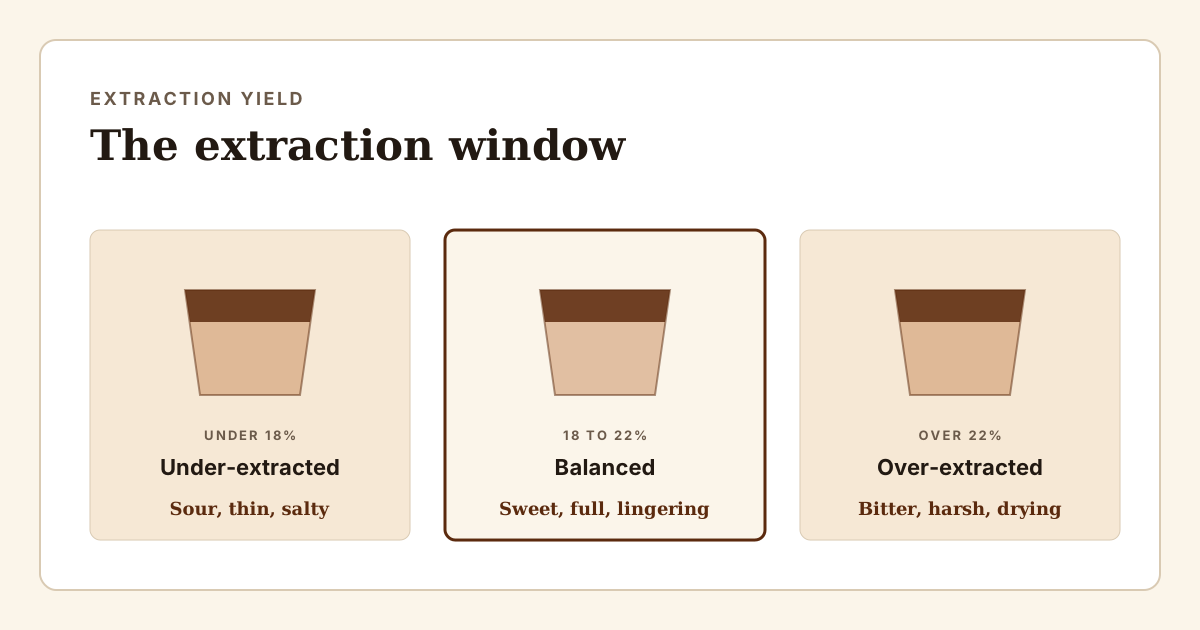
At under 18 percent extraction, you’ve mostly pulled acids and lighter aromatics. The shot tastes sour, thin, and salty, with a short finish.
At 18 to 22 percent, you’ve added sugars, some bitterness, and the heavier body compounds. This is the balanced window. Different beans and roasts land at different spots inside it.
Above 22 percent, you start dissolving the compounds that taste harsh: burnt, ashy, astringent, drying on the tongue. The shot is technically “more coffee in the cup” but nobody wants to drink it.
You can measure this directly with a refractometer (a VST or Atago reads total dissolved solids in the shot, and a spreadsheet turns that into an extraction percentage). Almost no home baristas need one. Taste plus ratio plus time gets you within a percentage point of what the meter would say.
The important idea: extraction is not “how strong the shot is.” Strength is concentration (dissolved mass per mL of shot). Extraction is yield efficiency (dissolved mass per gram of dry coffee). A ristretto is strong but under-extracted; a lungo is weak but often over-extracted. Ratio changes both at once, which is why ristretto, normale, and lungo taste so different even from the same bean.
The four levers, ranked by how much they move the cup
1. Grind size (the big one)
Grind size sets the surface area of the coffee and the resistance of the puck. Finer grind means more surface area for water to attack and more resistance slowing the water down, so both effects push extraction up. Coarser grind does the opposite.
This is the lever that moves the shot the most per unit of adjustment. A single step on a decent grinder can shift extraction by half a percent or more. That’s why dialing in is mostly grind adjustment with everything else held fixed.
Failure mode: turning the grind so fine that the puck chokes and no water flows. The shot never finishes, or drips out in a trickle that tastes over-extracted and hollow at the same time. Back off two or three steps.
2. Ratio (dose in vs. yield out)
Dose is how much dry coffee goes in the basket. Yield is how much liquid espresso ends up in the cup. The ratio between them (1:2 is the modern default) sets how much water passes through the puck relative to the coffee mass, and more water pulled through means more extraction.
A 1:1.5 ristretto stops the shot early and locks in the front half of extraction: bright, acidic, syrupy, sometimes under-extracted. A 1:3 lungo keeps pulling until the water is almost clear coming out, dragging late-stage bitters into the cup.
Dose within the ratio also matters. A 20 g dose in an 18 g basket is over-packed; the puck compresses too tight, extraction gets uneven, and channeling risk climbs. Match the dose to the basket’s rating within about a gram.
3. Water temperature
Hotter water dissolves more solubles, faster. A 5 degree Celsius jump (say, from 90 to 95) can push extraction up by a full percent. Most modern machines with PID hold temperature to within a degree, so this lever is usually set-and-forget: 93 to 94 C for medium roasts, 94 to 96 for light, 88 to 92 for dark. If you have a non-PID single boiler, temperature drifts more and shot-to-shot consistency suffers, which is one reason PID or dual-boiler machines pull more repeatable shots.
Failure mode most people don’t spot: a cold group head. If you haven’t flushed water through the group in the last few minutes, the first shot pulls 3 to 5 C cooler than the display says. That’s a whole extraction percent, gone. Always run a flush before pulling.
4. Time (mostly a consequence, not a lever)
Contact time isn’t really an independent variable. It’s what happens when you set grind, dose, yield, and pressure. When people say “aim for 25 to 30 seconds,” they mean “adjust grind until the shot lands in that window, because on a normal 9-bar machine that window usually corresponds to good extraction.”
Treating time as a direct lever leads people astray. If your shot pulls in 20 seconds and tastes sour, the answer isn’t “hold the button longer to extend it,” it’s “grind finer so the puck resists more, then the shot naturally runs 27 seconds and the cup is balanced.”
How the levers interact
Change grind, and time changes with it. Change dose, and required grind changes. Change temperature, and the acceptable grind range widens or narrows. This is why the standard advice is to move one variable at a time: if you change two, you can’t tell which one moved the cup.
A rough map of what happens when you push each lever up:
- Finer grind: extraction up, time up, channeling risk up (past a point).
- Longer yield: extraction up, strength down, mouthfeel thinner.
- Higher temperature: extraction up, sweetness peaks then drops, more clarity in light roasts.
- Fresher beans: extraction shifts unpredictably as CO2 escapes over 2 to 4 weeks off roast.
The last one catches people. A bag that dialed in at grind 12 on day 8 will often need grind 10 on day 25, because the beans have lost gas, the puck flows differently, and extraction dynamics shift. Re-taste weekly and nudge the grind.
Reading the cup
Every extraction problem has a taste signature. Learn these and you can skip the diagnostic guessing:
- Sour, thin, salty, short finish: under-extracted. Grind finer or raise yield.
- Bitter, harsh, ashy, dry aftertaste: over-extracted. Grind coarser or cut yield.
- Sour AND bitter in the same sip: uneven extraction. That’s channeling, a puck-prep problem, not a recipe problem.
- Watery, weak, no crema, tastes hollow: low extraction AND low concentration. Usually stale beans or wrong grinder for the job.
- Balanced, sweet, with a lingering finish: you’ve landed in the window.
Bean choice also sets where the window is. Light roasts are denser and less soluble, so they extract slower and often want finer grind, hotter water, and longer time. Dark roasts extract fast and burn easily; cooler water and shorter contact protects them. See roast levels for the full breakdown.
Common mistakes
Treating extraction as a single number. Even extraction and average extraction are different things. A shot with a 20 percent average and severe channeling tastes worse than a shot at 19 percent with an even puck. Puck prep buys more flavor than the last half-percent of extraction ever will.
Chasing time when the recipe is wrong. If you’re at a 1:2.5 ratio and the shot runs 22 seconds, adding 5 seconds of pull time won’t fix it. Change the grind so the shot naturally slows down.
Ignoring temperature because “it’s set by the machine.” Group head temperature is not boiler temperature. Cold groups, cold portafilters, and cold cups all steal heat from the shot and drop real extraction. Warm everything before the first pull of the day.
Refractometer worship. A meter tells you your average extraction percentage. It doesn’t tell you if the shot tastes good, if the puck extracted evenly, or if your bean is at its peak. The tongue is faster and cheaper.
Assuming pressure matters more than grind. Home barista forums love pressure profiling. In practice, moving from 9 bars flat to a sophisticated pressure curve changes the cup less than moving one notch on the grinder. Fix grind first; think about pressure later, if ever.
Troubleshooting
My shot is 28 seconds and tastes sour anyway. Time is in range but extraction isn’t. Usually one of three things: temperature too low (flush the group, check PID setting), yield stopped too early (weigh the output, don’t eyeball it), or channeling running fast paths through the puck while the visible flow looks normal. Pull a shot with a bottomless portafilter to check.
My shot is 30 seconds and tastes bitter. Extraction too high. Options in order: cut the yield by 2 to 4 g (try 1:1.8 instead of 1:2), drop temperature 1 to 2 C if your machine allows it, or grind one step coarser and accept a faster shot. Bitter-at-target-time often means the bean prefers a shorter ratio.
Extraction shifts every morning even with the same recipe. Check the roast date. Beans in the 7-to-14-day window are the most stable; beyond 4 weeks they lose CO2 fast and extraction drifts. Storage matters too: an unsealed bag on a warm counter ages twice as fast as one in a valve bag away from light. See bean storage.
I switched beans and everything I know stopped working. New beans, new recipe. A denser or lighter roast wants different grind, temperature, and often ratio. Restart the dial-in loop from a known baseline (18 g in, 36 g out, 25 to 30 seconds) and iterate from there.
My extraction is fine but the shot has no body. Body comes from insoluble oils and fine particles suspended in the shot, not just dissolved solubles. A shot can be well-extracted and still thin if the grinder produces too many fines that clog the paper filter, or if the beans are past 6 weeks and the oils have oxidized. Fresh beans and a burr grinder in good condition solve most body complaints.
Frequently asked
What extraction percentage should I aim for?
The 18 to 22 percent range is the standard target, with lighter roasts often tasting best near the top of that range and darker roasts near the bottom. You can only measure it directly with a refractometer, but you don't need one. Time, ratio, and taste will get you within a percent or two of ideal.
Is a longer shot always more extracted?
Usually, but not always. A slower shot pulls more solubles from the same dose, so yes, longer time means higher extraction if everything else is equal. But channeling can make a shot run long while extracting poorly, because water is bypassing most of the puck. Time is a proxy, not the thing itself.
Does pressure change extraction?
Less than people think. Nine bars is the traditional target because it produces good flow rates on a typical espresso grind, not because the pressure itself extracts flavor. Dropping to 6 bars slows the shot and can raise extraction; going to 12 mostly just causes channeling. Grind and temperature move the cup more than pressure does.
Why does my shot taste both sour and bitter?
That's uneven extraction, usually from channeling. Some of the puck is under-extracted (sour) and some is over-extracted (bitter) in the same cup. Fix distribution and tamp before touching the recipe; see the channeling guide linked in the body.
Should I chase a specific extraction number or just taste?
Taste wins. Refractometers are useful for cafes benchmarking across baristas, but at home you can hit balanced shots by matching ratio, time, and temperature and adjusting on flavor. Buy beans and a better grinder before a refractometer.