
How to clean a steam wand
A daily wipe-and-purge routine plus a weekly alkaline soak. The full steam wand cleaning method that keeps chrome bright and steam pressure high.
What you'll need
- Dedicated microfiber cloths : A stack of 4 or 5. Rotate through the wash. Never use the counter rag.
- Alkaline milk-line cleaner : Cafiza, Rinza, or generic. About $15 for a year's supply. Not vinegar, not citric acid.
- A tall heatproof jug or glass : Tall enough that the wand tip sits submerged when raised into steaming position.
- A pin or the manufacturer's tip wrench : For clearing steam holes and unscrewing a stubborn tip. Never pliers on chrome.
TL;DR
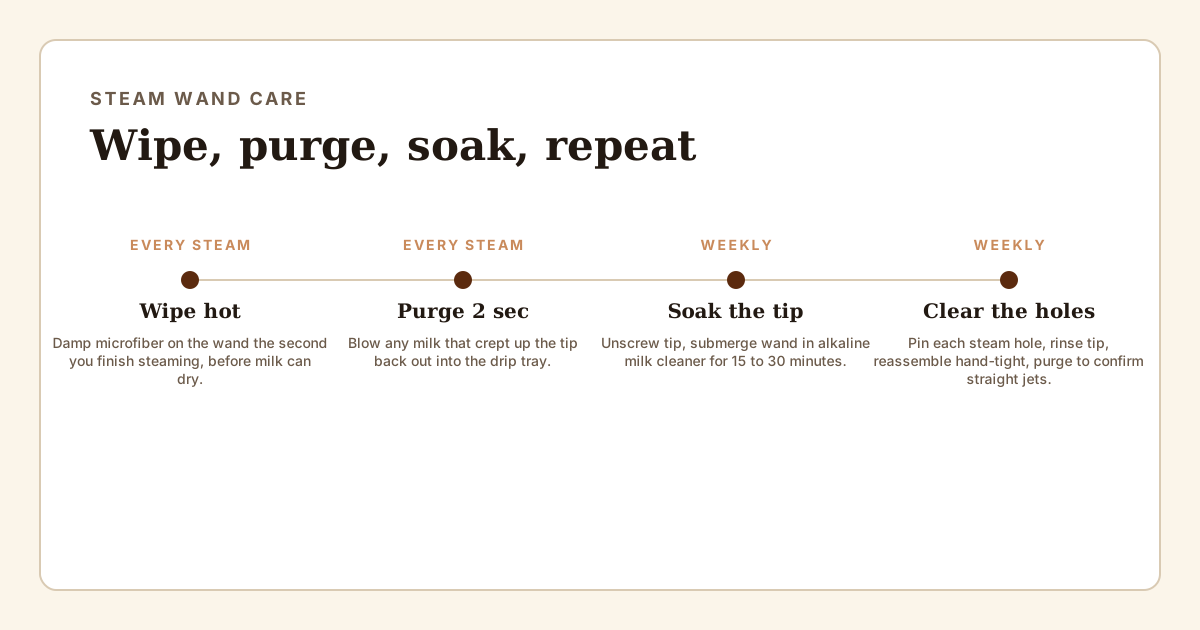
Wipe the wand with a damp microfiber cloth and purge steam the second you finish steaming milk, every single time. Once a week, unscrew the tip and soak the wand and tip in hot steam-wand cleaner (alkaline, not vinegar) for 15 to 30 minutes, then purge. That’s the whole regimen. A wand cleaned this way stays hygienic, keeps its full steam power, and never crusts.
The failure mode is obvious once you know it: dried milk inside the wand narrows the steam holes, kills your steaming pressure, and eventually goes rancid. If your wand hisses instead of roars, or your milk smells slightly off, you’ve already skipped too many wipes.
The daily routine (30 seconds, every steam)
This is the routine that prevents 95% of steam-wand problems. Do it in this order, without exception:
- Steam your milk. Finish, turn the steam off.
- Immediately wipe the wand with a dedicated damp microfiber cloth. Milk residue wipes off in one second while it’s hot and wet; it takes a scrub pad after 60 seconds; it takes a soak after 10 minutes.
- Purge the wand back into the drip tray for 1 to 2 seconds. This blows any milk that got sucked up the tip back out. Skipping the purge is how milk ends up inside the wand where you can’t reach it.
- Wipe once more to catch anything the purge spat out.
That’s it. The whole thing takes less time than pouring the drink. The cloth stays wet on the machine’s drip tray or a small dish; rinse it under hot water at the end of the session and let it dry.
Two rules that people get wrong:
- Wipe first, purge second. If you purge with dried milk on the outside, you bake it on with the steam heat. Wipe the outside while it’s still soft, then purge to clear the inside.
- Use a dedicated cloth. Not the one you wipe the counter with. Milk cloths get funky fast; keep a stack of 4 or 5 microfiber squares and rotate them through the wash.
The weekly soak
Even with perfect daily habits, a thin milk film builds up inside the tip’s steam holes and inside the wand itself. Once a week, do this:
- Unscrew the steam tip. On most machines the tip is a small threaded piece at the end of the wand. It comes off by hand or with the little wrench that came with your machine. If yours won’t budge, wrap it in a rubber band for grip. Don’t use pliers on chrome, you’ll scar it.
- Mix steam-wand cleaner in a heatproof jug or a tall glass, following the dose on the bottle. Urnex Rinza, Cafiza, and generic alkaline milk-line cleaners all work. Do not use vinegar. Vinegar is acidic; steam wands have brass internals and rubber seals that acid degrades. Vinegar is for descaling (and not even a great choice for that, see how to descale your espresso machine).
- Submerge the wand in the solution. Raise the wand into the jug or use a small container that can sit on the drip tray with the wand dipped in. Drop the loose tip in the same solution.
- Soak 15 to 30 minutes. Longer isn’t better; the alkaline cleaner will start attacking chrome plating if you leave it overnight.
- Purge the wand through the solution for 2 seconds, then pull it out and purge into the drip tray several times with fresh water flowing (turn the steam on with the tip still off, briefly, to blow the passage clear).
- Rinse the tip under running water, poking each steam hole with a pin or the wire that came with the machine if any hole is blocked. Screw the tip back on hand-tight.
- Purge one more time with the tip back on to confirm every hole shoots a straight jet.
If a hole is shooting sideways or not at all after the soak, that hole is still blocked. Redo the pin, or re-soak the tip alone in a small dish of cleaner while you make coffee.
What “clean” looks like
A clean wand:
- Has a mirror-bright chrome finish with no yellow or brown film.
- Shoots straight, roughly-equal jets from every steam hole.
- Sounds like a jet engine when you open the valve fully into an empty jug, not a wheeze.
- Doesn’t leave any milk smell on a fresh cloth after wiping.
A neglected wand:
- Has a yellowish or crusty film near the tip, especially in the seam where the tip screws on.
- Shoots weak, uneven jets, some sideways.
- Struggles to build a good whirlpool in the jug, forcing you to overstretch milk to get any texture, which wrecks your milk steaming for latte art.
- Smells faintly sour when cold.
The wheeze is the tell most people miss. Steam wands lose power gradually as the tip clogs, and you compensate without noticing by holding the jug longer or angling it differently. A clean wand steams a 6oz jug of milk in about 15 to 20 seconds; if yours is taking 40, the wand is the problem, not your technique.
Where the steam wand fits in the bigger cleaning picture
The wand is the item most vulnerable to skipped cleaning because the damage is invisible for weeks and then permanent. Group head, portafilter, and drip tray tolerate abuse; the wand doesn’t. For the full cadence of what to clean and when, see the espresso machine cleaning schedule. Steam wand daily wipe and weekly soak sit at the top of that list.
Two related routines people conflate with wand cleaning but shouldn’t:
- Backflushing is for the brew group, not the steam circuit. See how to backflush an espresso machine.
- Descaling targets scale from mineral water on internal boilers. Steam wands can scale on the inside if you have hard water, but the weekly alkaline soak handles that far better than a descale cycle does.
Common mistakes
Purging before wiping. Bakes the milk skin onto the outside of the wand. By the third day it’s a yellow ring that requires a soak to remove. Wipe first, always.
Leaving the wand until “later.” Later is 20 seconds too long. Dried milk goes from wipeable to scrubbable in about a minute of contact with hot chrome. If you have to leave the wand for any reason, at least purge it hard once before you walk away.
Using vinegar or citric acid to soak. Both are acids. Steam wands have brass fittings and rubber o-rings inside the valve; acids pit the brass and swell the rubber. Use a purpose-made alkaline milk-line cleaner. It costs $15 for a year’s supply.
Scrubbing chrome with abrasive pads. Green scrubbies and steel wool scratch chrome permanently. Milk residue does not require abrasion; it requires heat and an alkaline. A microfiber and a soak solve everything.
Ignoring the tip. The tip unscrews for a reason: the inside of it is where milk collects worst, and you can’t reach it with the tip on. If you’ve never unscrewed yours, do it now. The gunk you find will explain a lot.
Forgetting the wand exists on plumbed-in or heat-exchanger machines. Bigger machines with dedicated steam boilers still have the same wand hygiene needs as a Bambino. The size of the boiler doesn’t clean the tip for you.
Troubleshooting
My steam pressure has dropped and the wand looks clean. Unscrew the tip and hold it up to a light. If any hole is blocked or narrowed, that’s your problem. A pin clears most; a 30-minute soak clears the rest. If the tip is spotless and pressure is still weak, the issue is upstream (boiler pressure, steam valve wear, or on a single-boiler machine, insufficient boiler recovery time), not cleaning.
The wand hisses instead of roaring. Almost always a partially blocked tip. Occasionally a failing steam valve seal, but try the soak first, 90% of the time that fixes it. If the hiss persists after a fresh soak with the tip visibly clear, get the valve seals inspected.
Milk tastes slightly off even though the wand looks clean. Check the inside of the wand shaft, not just the tip. Milk gets sucked up into the shaft when you turn steam off while the tip is submerged, and it sits there souring. The weekly soak reaches this; a purge-only routine does not. Also swap out the milk cloth, funky cloths cross-contaminate more than dirty wands.
The tip won’t unscrew. Milk has cemented the threads. Soak the whole wand-end in hot cleaner for an hour, then try again with a rubber band or the manufacturer’s wrench for grip. Do not use pliers directly on the tip, the knurling will strip. If it truly won’t budge, most manufacturers sell replacement tips for $10 to $20.
There’s a brown ring where the tip meets the wand. Baked-on milk protein at the seam. A soak with the tip removed dissolves this. If it comes back within a week, you’re skipping the wipe on some steams. The seam is the first place residue collects because it’s the coolest part of the assembly and milk clings there when you purge.
My machine has a Panarello / auto-frother instead of a bare wand. These have a plastic sleeve over the actual steam tip that injects air for foam. The sleeve must come off for cleaning every single day, not weekly, because milk collects inside the air holes and turns into a science project fast. Slide the sleeve off, soak it in cleaner, rinse, and reassemble. Better yet, replace it with a bare tip if your machine allows, you’ll steam better milk anyway.
Frequently asked
How often do I really need to soak the wand?
Once a week if you steam milk daily. Once every two weeks if you steam a few drinks a week. If you only pull straight espresso, the wand still needs an occasional purge to keep the valve seals working, but the milk-cleaner soak is unnecessary.
Can I use dish soap instead of milk-line cleaner?
Dish soap removes surface grease but doesn't break down milk protein deposits inside the wand. It also leaves a soapy film you'll taste in the next milk drink. Alkaline milk cleaner is formulated for exactly this job and costs pennies per soak.
Is it bad to leave milk residue on the wand between drinks in one session?
Wipe and purge between every drink, even if you're pulling four cappuccinos in a row. Milk sits at body temperature on the wand between drinks and starts growing bacteria within an hour. A quick wipe adds two seconds per drink.
My wand tip is chrome and the finish is peeling. Can I still use it?
Chrome peels when the underlying brass has been attacked by acidic cleaners or scratched through by abrasive pads. The wand still works but will collect residue faster in the pitted spots. Replacement tips are cheap; get one and switch to alkaline cleaner going forward.
Do I need to clean the wand differently if I steam plant milk?
Oat and soy leave a stickier residue than dairy because of the added stabilizers and oils. Same routine, but be more diligent about the immediate wipe. A weekly soak is not optional if you steam plant milk daily.