
How to choose your first espresso machine
A budget, a class, and a few non-negotiables. The framework that prevents most beginner regret on a first machine purchase.
What you'll need
- A realistic budget : Including the grinder. The combined budget is what matters; splitting it wrong is the most common first mistake.
- An honest answer about your daily volume : Two drinks a day or twelve? The right machine for one isn't the right machine for the other.
- A spot on the counter with outlet access : Most prosumer machines need 12–14 inches of depth and a real countertop outlet within 3 feet. Measure before buying.
- A grinder : Not optional. Pre-ground espresso doesn't work. Set aside half your total budget here.
TL;DR
For most people, a sensible first setup is $400–700 on the machine + $300–500 on the grinder, with two non-negotiables: a real 58mm portafilter and a real steam wand (not a “panarello”). Skip everything under $300 (false economy; you’ll replace it within a year). Skip pod machines if you want to learn anything about espresso. Buy the grinder before you buy the machine if budget is tight.
Machines, sorted by what they actually do
1. Pod / capsule (Nespresso, Vertuo, Lavazza)
Skip if you want to learn espresso. The machine pre-pressurizes the puck, so technique doesn’t matter and bean choice is limited to what the brand sells in pods. Convenient if all you want is a caffeinated drink in 60 seconds. Not the same product as cafe espresso.
2. Pressurized / “convenience” machines ($150–300)
Sub-$300 pump machines (DeLonghi Dedica, lower Krups models) come with pressurized portafilter baskets: a perforated plastic insert that fakes the back-pressure of a real puck. They produce something foamy that looks like espresso but extracts inconsistently.
These exist to make the machine work without a good grinder. The trap: they hide grind and technique problems, so you can’t actually improve. Owners typically replace them within a year.
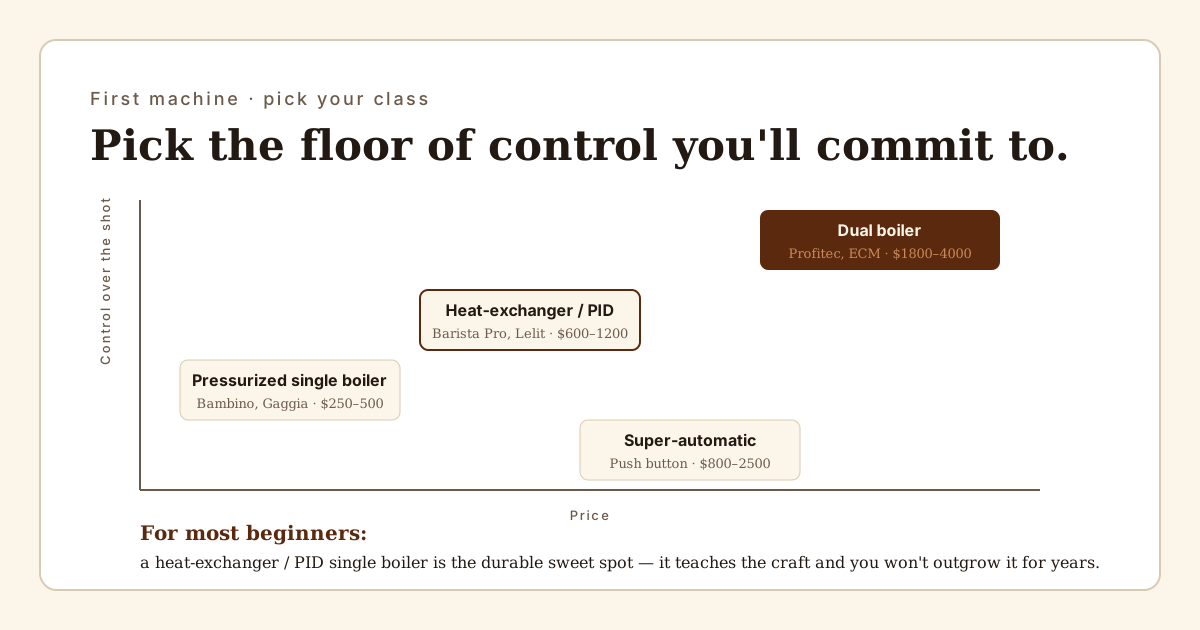
3. Single-boiler / thermoblock prosumer ($400–800)
The sweet spot for learners. Real 58mm portafilter, real steam wand, real PID temperature control on most. Examples: Breville Bambino Plus, Breville Barista Express, Gaggia Classic Pro, Rancilio Silvia. Each has tradeoffs but all are capable of cafe-quality shots with a decent grinder.
The “single boiler” name means brewing and steaming share a heating element, so you wait between shots and milk. For two-drink mornings, fine. For a household pulling six drinks back-to-back, frustrating.
4. Heat exchanger / dual boiler ($1,200+)
Two boilers (or one boiler with a heat exchanger) means you can steam milk while a shot pulls. Faster and more consistent. Examples: Rocket Appartamento, Profitec Pro 300, Lelit Mara X. A real upgrade once you know you’ll keep doing this.
Don’t buy this as a first machine unless you’re certain. The single-boiler machines pull equally good espresso; the extra money buys workflow, not a better-tasting shot.
The non-negotiables
A first machine needs all four of these to leave you room to improve:
- Real 58mm portafilter (or 54mm for Breville/Sage). Pressurized inserts are the tell.
- Steam wand that produces actual pressurized steam (not a frothing aid that injects air). The wand should be metal, with at least one open hole.
- Manual control. Buttons that start and stop the brew, not just a single “espresso” button that pre-programs volume. Volumetric control without manual override is a learner’s trap.
- Replaceable parts. Gaskets, screens, wand tips. Espresso machines need maintenance. A machine you can’t service is one you’ll throw away.
Why the grinder eats half the budget
A $700 machine with a $50 grinder makes worse espresso than a $300 machine with a $400 grinder. The grinder controls particle size distribution; the machine controls everything that happens after.
This is the most common first-machine regret on home-espresso forums, by a wide margin: people put 80% of their budget on a beautiful machine and pair it with whatever entry-level grinder fit the leftover. Six weeks in, they’re shopping for a real grinder and wishing they’d inverted the split. Don’t be that person.
Budget allocation that works:
- Total budget under $700: spend half on the grinder.
- Total budget $700–1,200: at least 40% on the grinder.
- Total budget over $1,200: scale up the grinder along with the machine.
Recommended entry grinders: Baratza Encore ESP, Eureka Mignon Specialita, Niche Zero (used). Skip blade grinders entirely. For the full breakdown of burr type, retention, and price tiers, see how to choose an espresso grinder.
Common mistakes
Buying the cheapest machine and a “real” grinder later. The cheap pump machines have pressurized baskets that won’t accept normal espresso grind. You’ll need to replace the machine before the grinder pays off.
Buying the most expensive machine you can afford with no grinder. Pre-ground espresso is stale within hours of grinding. Even a $1,500 machine produces mediocre shots from store-bought ground.
Picking based on looks. The “espresso machine” aesthetic (chrome, brass, lever-shaped) shows up on machines with cheap internals. Read reviews focused on the brew group, the steam circuit, the pump type. Not the case.
Underestimating the learning curve. The first month of espresso is humbling regardless of machine. Don’t blame the gear after week one.
Neglecting service costs. A machine that needs a $200 service every two years is a different proposition from one with $20 in user-replaceable gaskets. Check parts availability before buying.
Troubleshooting (budget edition)
I have $500 total to spend. Get a Gaggia Classic Pro ($450) or used Breville Bambino ($200), and a Baratza Encore ESP ($170). Total around $620. Stretch for it; below this you’re buying frustration.
I have $300 total. Honestly: wait, save more, or buy a manual lever (Flair Neo Flex around $100) plus a hand grinder ($150). The lever is real espresso; the sub-$300 pump machines aren’t.
The cafe near me has good espresso. Can I just buy what they use? No. Commercial machines (La Marzocco, Synesso) are 220V plumbed-in and three-group. They cost $8,000+ and don’t fit on a residential counter. Look at their entry-level home siblings (La Marzocco Linea Mini at $7,000, sigh).
I want one machine for the next decade. Step up to a heat exchanger or dual boiler. The Lelit Mara X ($1,600) and Rocket Appartamento ($1,900) both have ten-year reputations and a parts-availability story that single-boiler machines can’t match. The common upgrade arc is Bambino → Mara X around 18–24 months in, and most people who do it say they should have started here.
Frequently asked
Can I use a Nespresso for "real" espresso?
A Nespresso makes a coffee-shaped beverage but not espresso. It pre-pressurizes the puck, and the result is consistent, fine, and uninteresting. If you want to learn espresso (taste differences in beans, develop technique), a pod machine teaches you nothing. If you want a fast caffeinated drink with no thought, a pod machine is great. Different products.
Breville Bambino vs. Barista Express, which?
The Bambino is the machine; the Barista Express is machine + grinder in one. If you don't already have a grinder and want one purchase, the Barista Express makes sense. If you'd rather have a separate grinder (better long-term, since grinders outlast machines), the Bambino plus a dedicated grinder is the better setup. Both are widely-recommended starting points.
Are lever machines a bad idea for beginners?
Manual lever machines (Flair, Cafelat Robot) are excellent for learning. They make every variable visible (pressure, timing) and produce great espresso. They're slower and more involved than pump machines, which suits learners. Spring-lever machines (La Pavoni, traditional Italian) are charming but harder; not the recommended first choice unless you already love espresso.
What about used machines?
A used prosumer machine in good condition is often a better buy than a new entry-level one. Rancilio Silvias, Gaggia Classics, and older Brevilles are robust. Watch for descaling neglect (heavy scale damages pumps), cracked group head gaskets, and seller refusal to demo. Don't buy without seeing it pull a shot.
Do I need a plumbed-in machine?
No. Plumbed-in (direct water line) is for cafes pulling 200 shots a day. For home use, a tank-fed machine is simpler, cheaper, and lets you choose your water. Plumbing also requires under-counter space and a shutoff valve, which most kitchens don't have.